A throttle can adjust speed, but the same opening does not guarantee the same flow under changing loads. Decide how much speed variation the process can tolerate before choosing a basic throttle or a compensated flow-control function.
Describe the speed requirement
Record the desired speed range, load variation and whether both travel directions require control. A cylinder's effective area differs between extension and retraction. Equal flow settings therefore do not normally produce equal speeds in both directions.
Evaluate pressure compensation
A compensated design attempts to maintain a defined pressure difference across its metering element within its working range. It still needs sufficient pressure margin and has flow, viscosity and dynamic limits. Ask for the operating envelope rather than expecting perfect regulation everywhere.
Choose a circuit location deliberately
Meter-in and meter-out arrangements behave differently when the load can drive the actuator. An overrunning load needs a circuit designed for controlled motion, not just an arbitrary restriction. Check heat generation, reverse-flow paths and any interaction with load-holding devices.
Practical checklist
- Define permitted speed variation under load changes.
- Calculate flows for both cylinder directions.
- Confirm available pressure margin and load behavior.
Discuss your application
Explore related hydraulic products, or send JIUDING your model code and application details. Include the circuit drawing and the operating conditions relevant to the checks above so the required configuration can be reviewed.
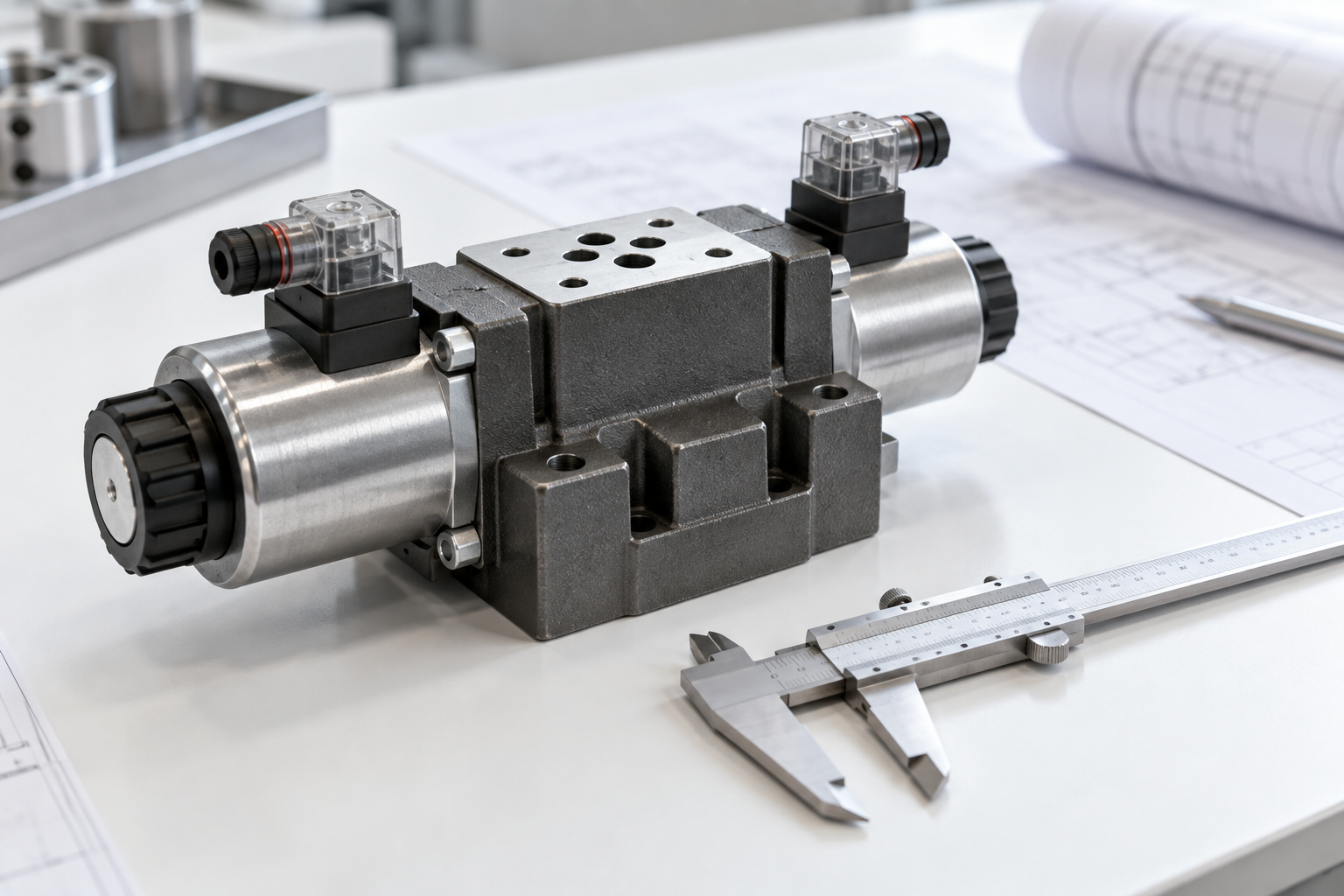
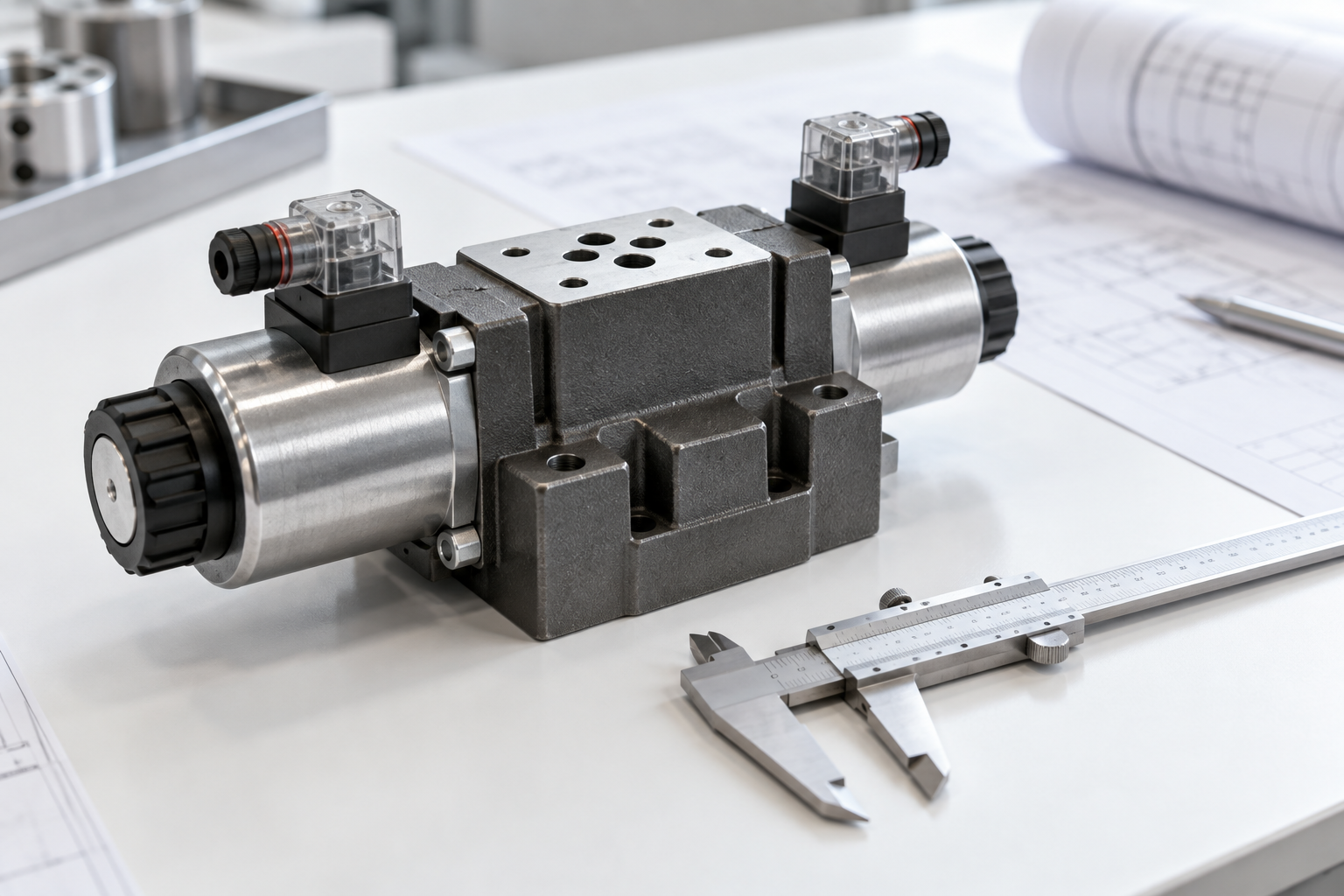
Cover image: AI-generated editorial illustration, not a model-specific product drawing or a photograph of a JIUDING facility.