A pilot-operated check valve can block reverse flow until a pilot signal opens it. It is useful in holding circuits, but its release behavior must be evaluated with the actuator geometry and the pressure acting on each port.
Identify what must remain trapped
Mark the chamber that supports the load and locate the valve relative to that chamber. Leakage elsewhere, including across a cylinder piston, can still cause movement. A valve cannot correct every source of position drift.
Check the available opening force
Opening depends on the design's pilot ratio and the pressures acting on the valve. Backpressure and cylinder area ratios can change the required pilot pressure. Request a manufacturer-supported opening calculation for the actual circuit rather than selecting the highest pilot ratio by default.
Distinguish release from controlled lowering
A blocking valve may open abruptly and is not automatically a stable motion-control device for an overrunning load. Review whether counterbalance control or another engineered arrangement is required. Provide mechanical support and isolate stored energy before servicing a held load.
Practical checklist
- Provide actuator areas and the maximum supported load.
- Specify pilot source, downstream pressure and mounting position.
- Define whether the requirement is holding, lowering or both.
Discuss your application
Explore related hydraulic products, or send JIUDING your model code and application details. Include the circuit drawing and the operating conditions relevant to the checks above so the required configuration can be reviewed.
Further reading
HydraForce: Load-holding valve families. Manufacturer information applies to the products it identifies; it does not establish JIUDING product ratings or interchangeability.
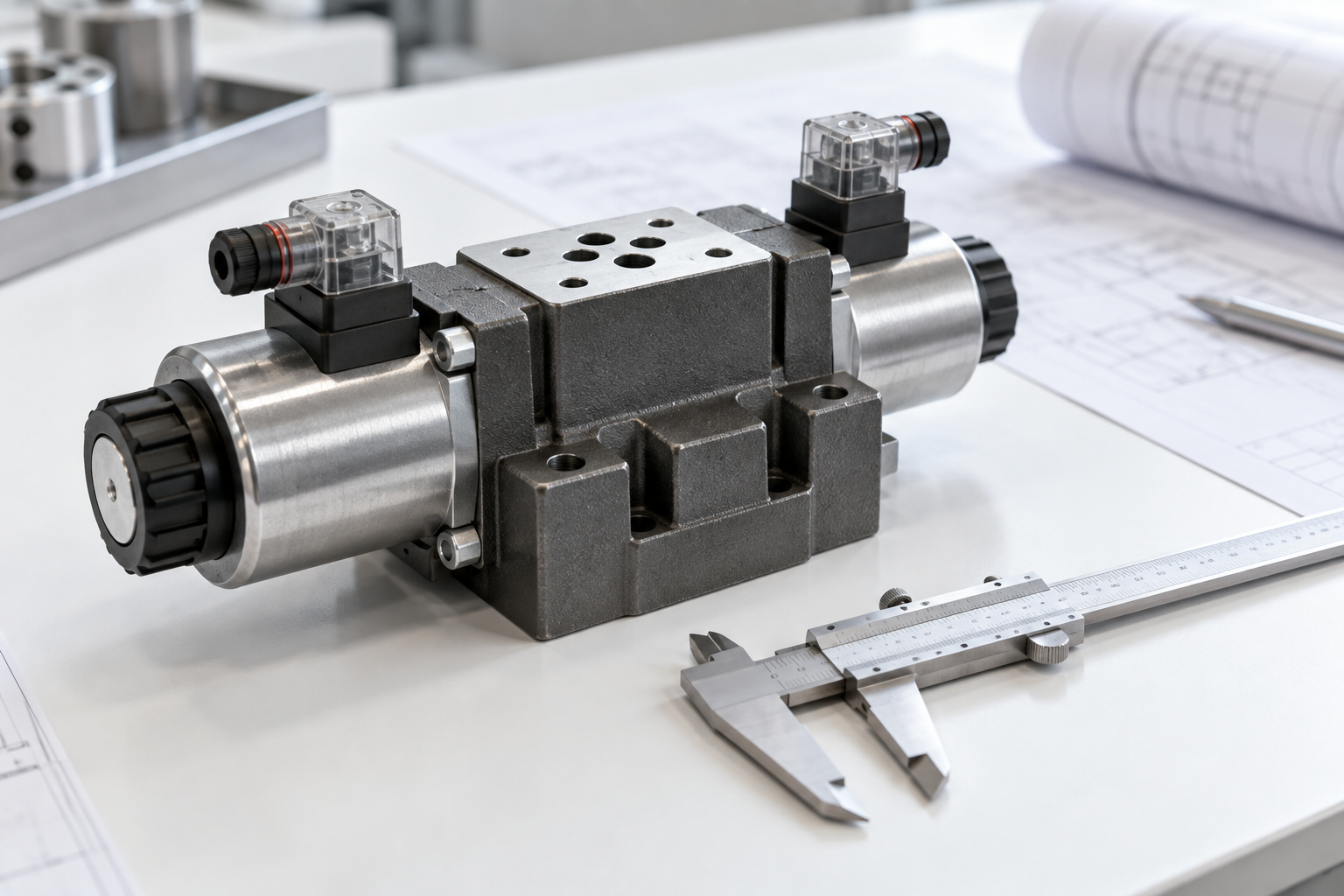
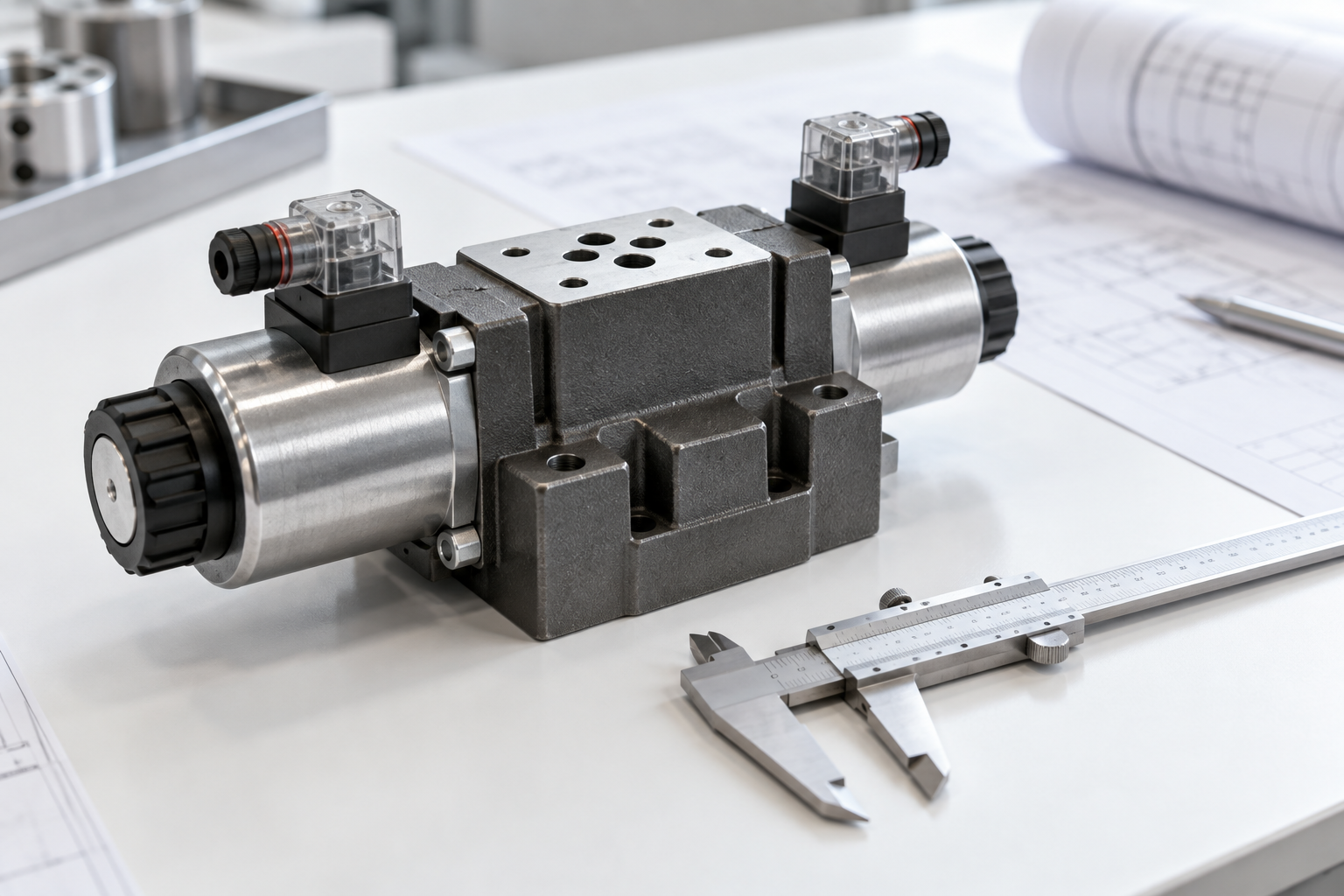
Cover image: AI-generated editorial illustration, not a model-specific product drawing or a photograph of a JIUDING facility.