A voltage printed on a machine supply does not fully specify a replacement coil. The electrical supply type, connector, operating duty and control output all influence whether the valve will actuate reliably.
Identify the complete electrical rating
Record AC or DC, nominal voltage and AC frequency where applicable. A similarly shaped coil is not automatically interchangeable. Check the permitted voltage range, connector orientation and any built-in rectifier or suppression device on the exact assembly.
Consider the voltage at the load
Cable length, connector corrosion and an overloaded power supply can reduce voltage at the energized coil. A qualified electrical technician should measure at the relevant terminals under operating conditions using the machine's approved procedure. An unloaded reading at the power supply can miss the problem.
Confirm mechanical and environmental fit
The coil must match its tube, retaining hardware and valve design. Check ambient temperature, duty rating and the assembled connector's environmental protection. Do not substitute a higher voltage or bypass a control interlock to overcome a sticking hydraulic mechanism.
Practical checklist
- Photograph the complete coil label and connector.
- Identify the control output and any suppression polarity.
- Confirm the exact coil-to-valve compatibility with the supplier.
Discuss your application
Explore related hydraulic products, or send JIUDING your model code and application details. Include the circuit drawing and the operating conditions relevant to the checks above so the required configuration can be reviewed.
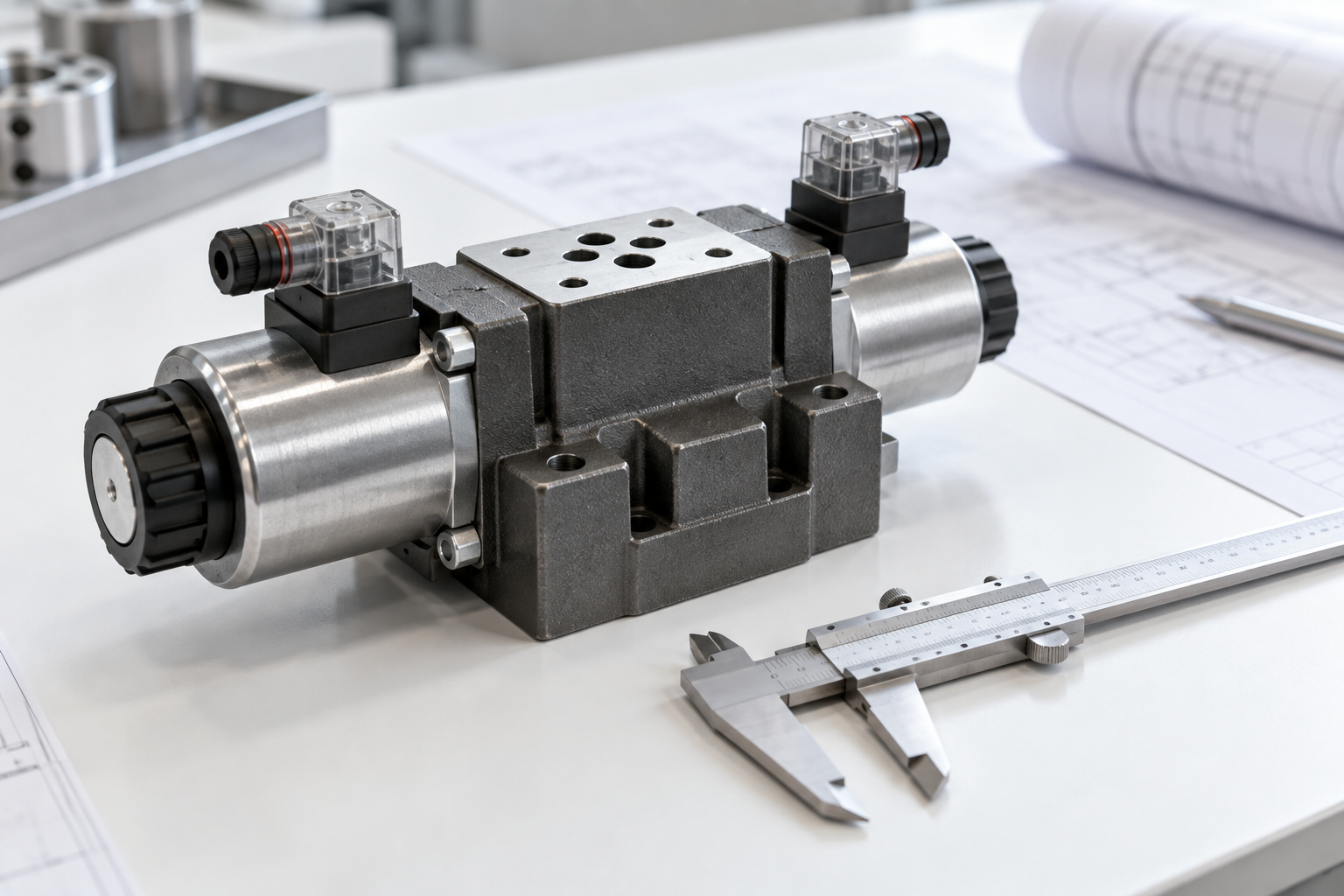
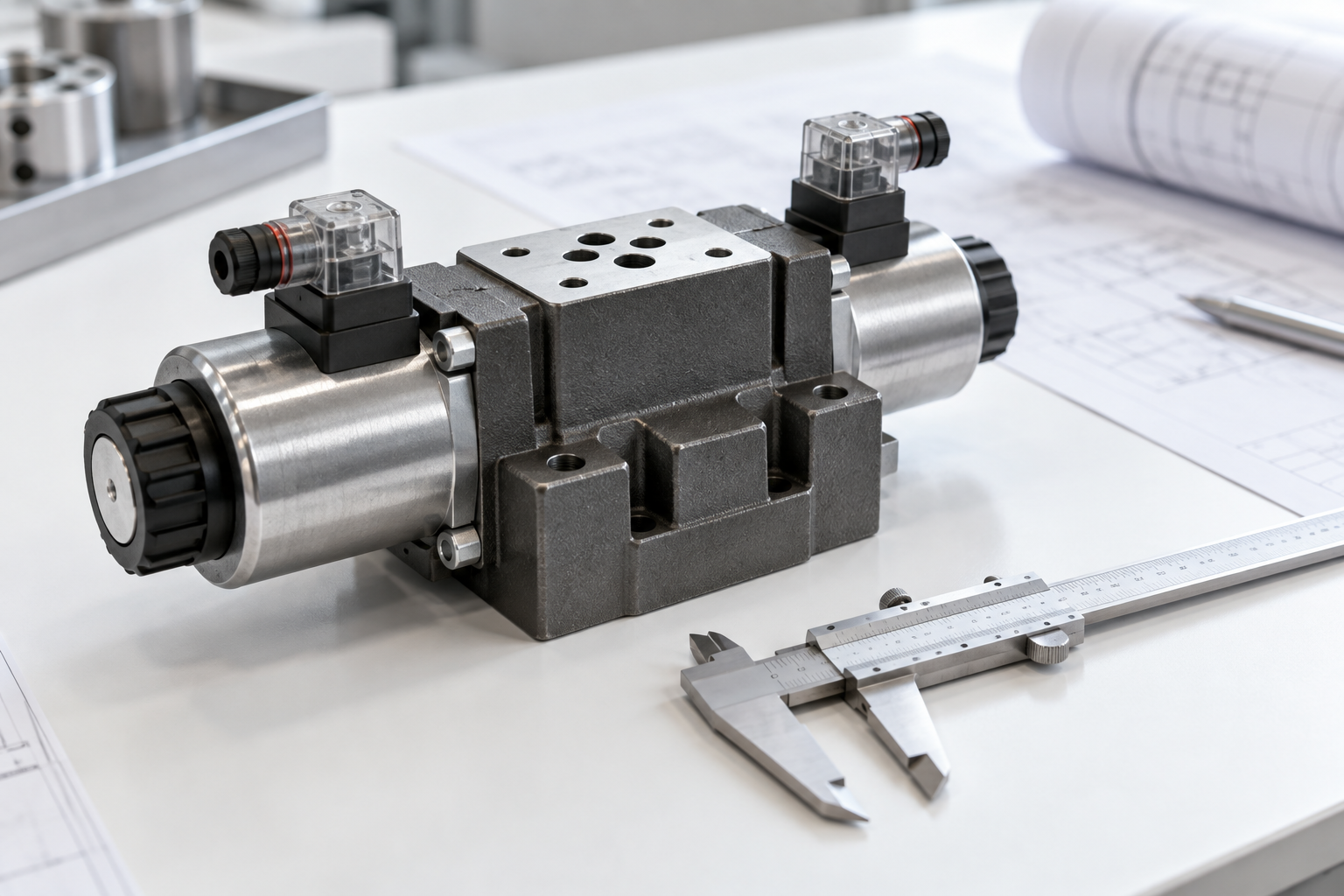
Cover image: AI-generated editorial illustration, not a model-specific product drawing or a photograph of a JIUDING facility.