A failed pump or valve can leave debris elsewhere in the system. Replacing only the visibly damaged component may expose the new part to the same contamination immediately after start-up.
Assess where material could travel
Review the flow paths, filter positions and bypass behavior. Debris can collect in manifolds, lines, coolers and actuators. Preserve failed parts and filter elements for analysis rather than discarding the evidence before the cause is understood.
Agree on a recovery procedure
The machine or component supplier should define cleaning, flushing, inspection and replacement requirements. There is no universal flushing duration that guarantees cleanliness. Protect sensitive components during the process and use the specified fluid and equipment.
Verify before normal duty
Document the cleaning work, filter changes and representative fluid-test results. Confirm the required cleanliness target and sampling method. Monitor the system after return to service so an abnormal trend can be identified before another failure occurs.
Practical checklist
- Map affected flow paths and collect failure evidence.
- Use a documented cleaning and flushing procedure.
- Verify fluid condition before loading the replacement component.
Discuss your application
Explore related hydraulic products, or send JIUDING your model code and application details. Include the circuit drawing and the operating conditions relevant to the checks above so the required configuration can be reviewed.
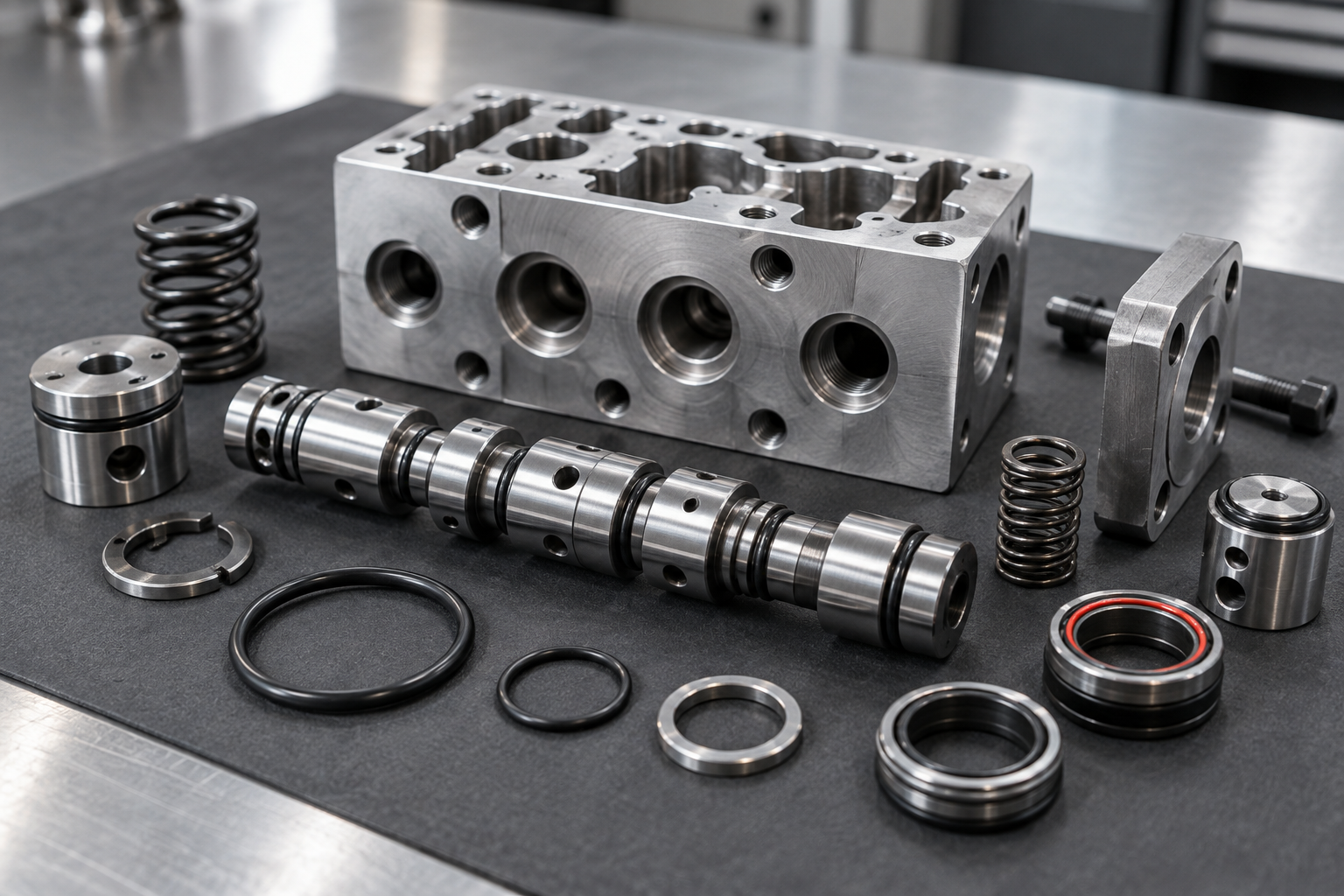
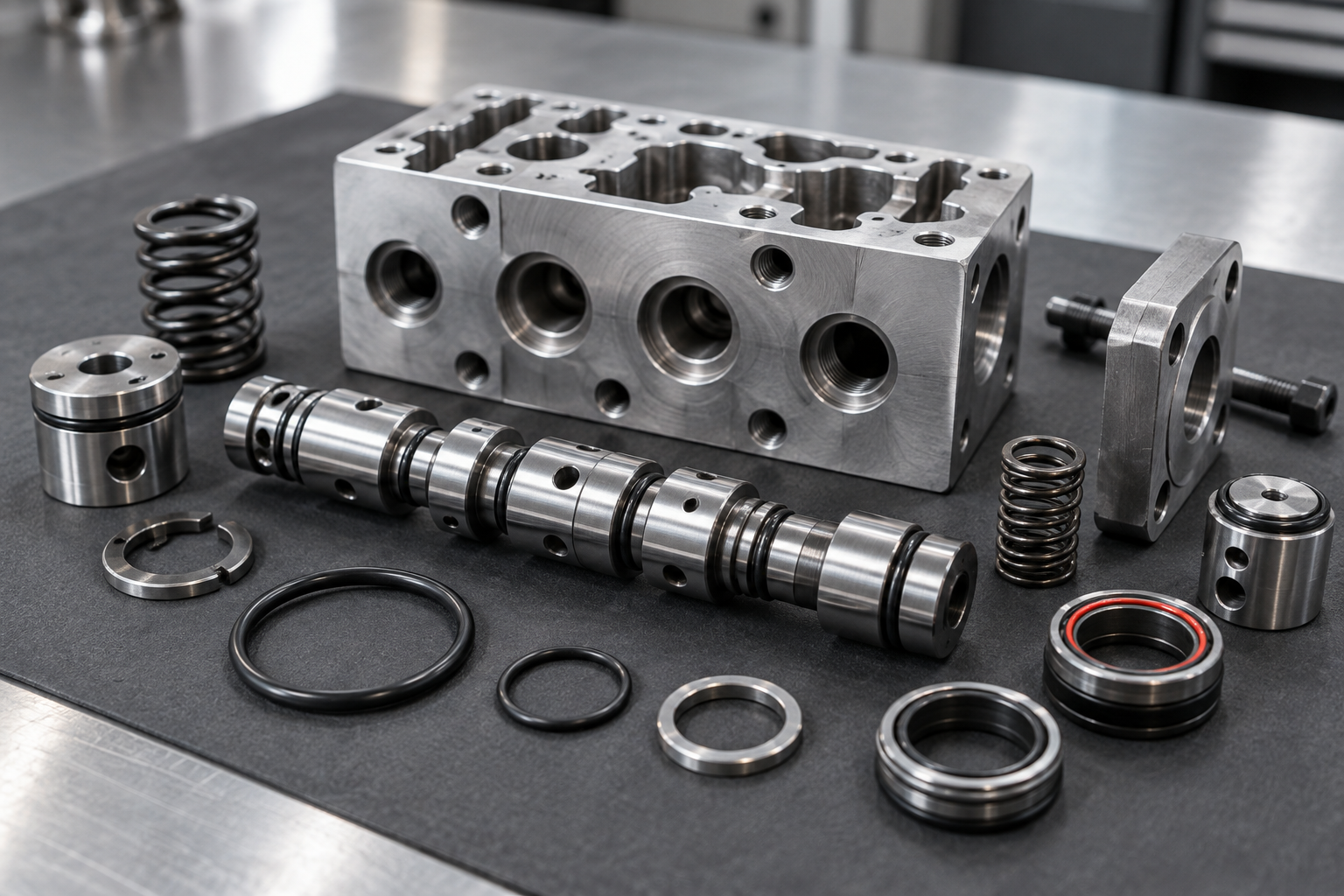
Cover image: AI-generated editorial illustration, not a model-specific product drawing or a photograph of a JIUDING facility.