Several pressure values can appear on the same datasheet. They answer different questions, and substituting one for another can lead to a valve that opens too early, restricts flow or operates outside its limits.
Cracking pressure describes an event
For a check or relief function, cracking pressure is associated with the start of opening under specified test conditions. It is not necessarily the pressure drop at the flow your machine needs. Look for the associated test definition and curve.
Working pressure describes the application
Normal operating pressure, continuous maximum and short-duration peaks should be recorded separately. The supplier needs the duration and repetition of peak events, not just the largest number seen on a gauge. Different ports can have different allowable pressures.
Rated limits describe the component
A published maximum is a component limit under stated conditions, not a recommended machine setting. Temperature, materials and configuration may affect applicability. Keep protective settings within the approved machine design and evaluate transient events separately where ordinary gauges cannot capture them.
Practical checklist
- Label each pressure value with its meaning and port.
- Record flow and temperature alongside measured pressures.
- Ask for the relevant pressure-flow and operating-limit information.
Discuss your application
Explore related hydraulic products, or send JIUDING your model code and application details. Include the circuit drawing and the operating conditions relevant to the checks above so the required configuration can be reviewed.
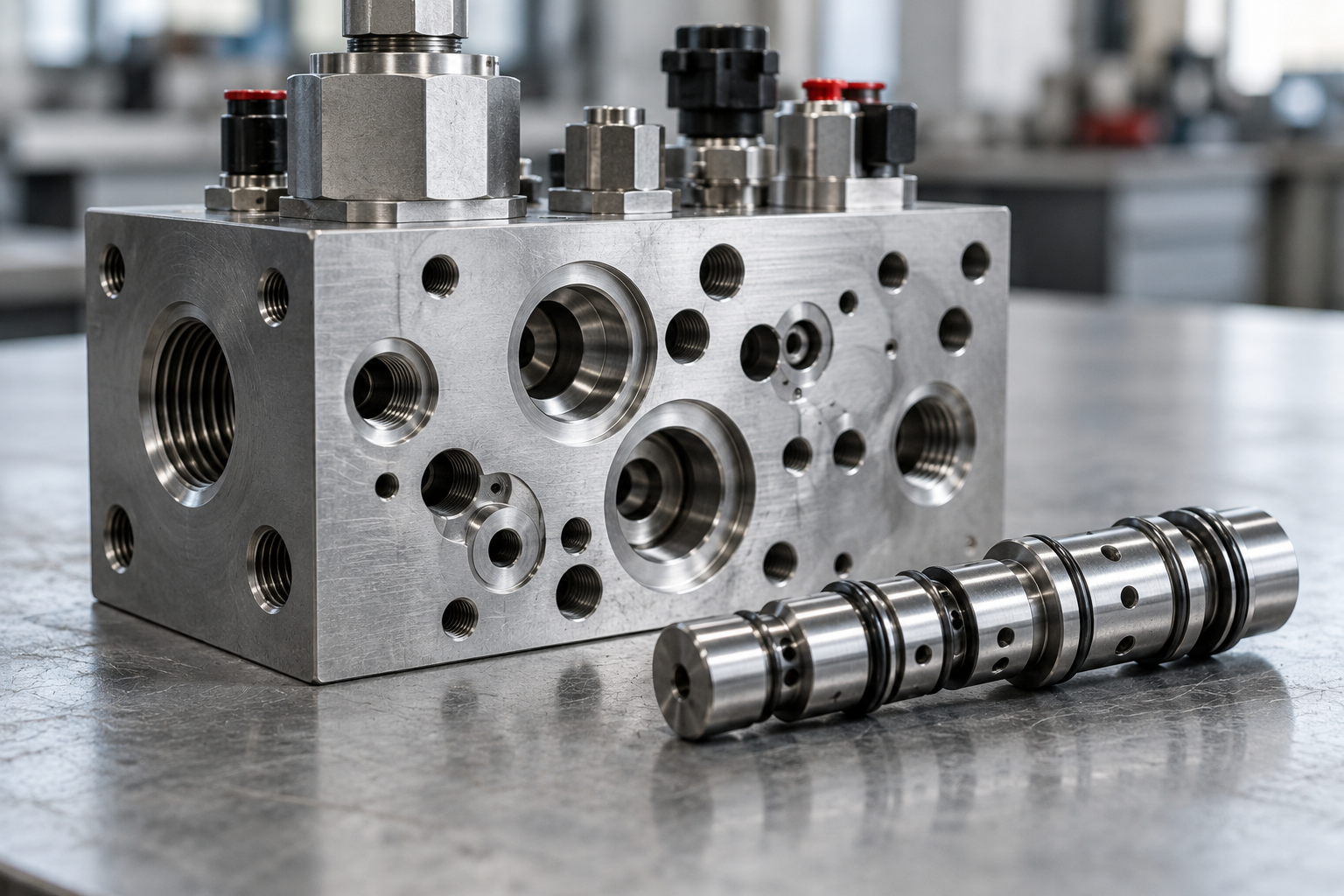
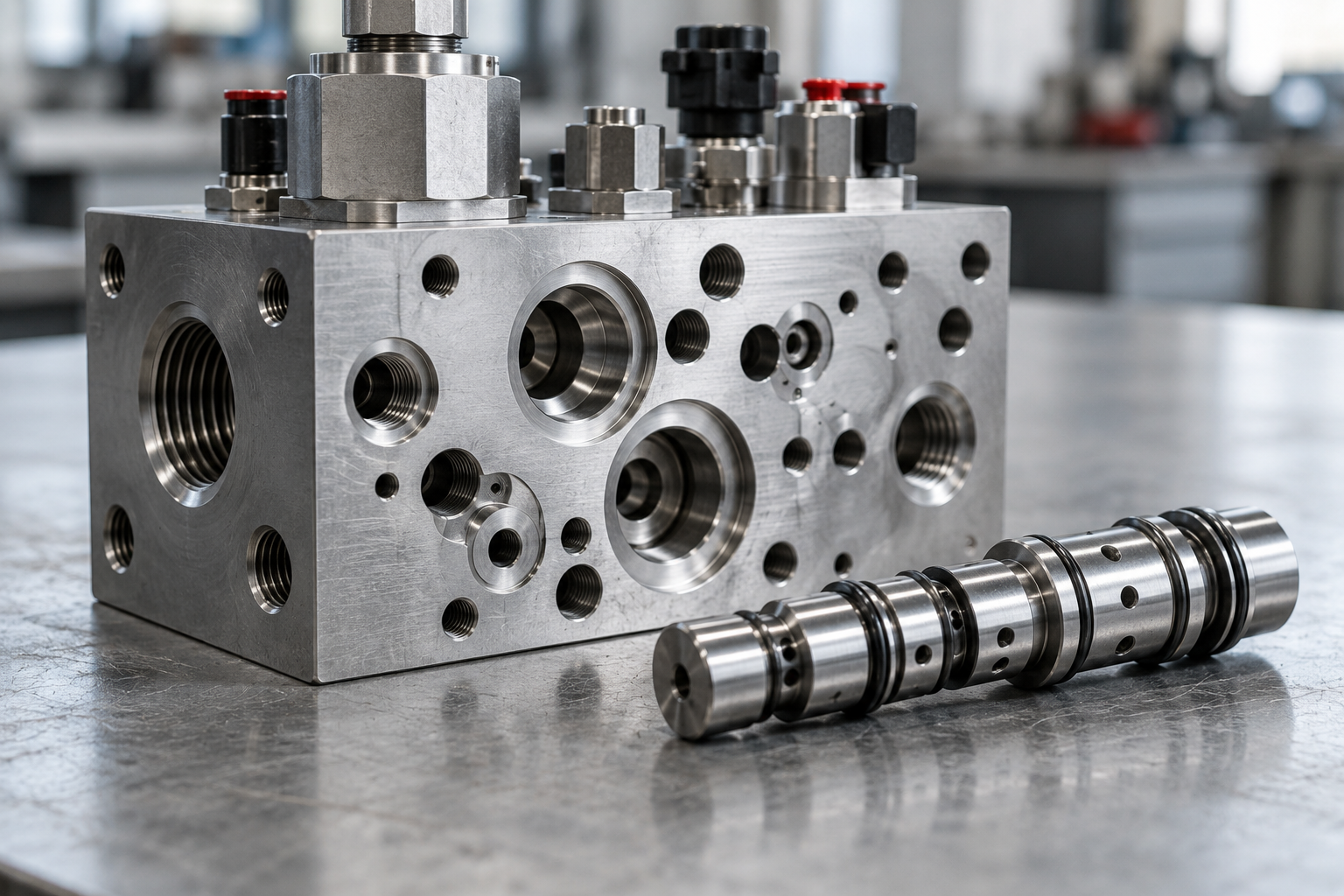
Cover image: AI-generated editorial illustration, not a model-specific product drawing or a photograph of a JIUDING facility.