The same machine can behave differently at morning start-up and after an hour of production. Fluid viscosity changes with temperature, affecting inlet conditions, internal leakage and the pressure drop through the circuit.
Cold oil changes the flow conditions
Higher viscosity can increase resistance in lines and restrictions. Pump inlet conditions may become particularly demanding during a cold start. The correct start-up procedure and allowable operating range come from the pump, fluid and machine documentation.
Hot oil changes leakage and lubrication
Lower viscosity can increase internal leakage and reduce the effectiveness of the lubricating film in components. A system that becomes slow only when warm may have several possible causes; temperature dependence is a diagnostic clue, not proof of a worn pump.
Choose from the operating envelope
An ISO viscosity grade describes a reference condition, not every operating temperature. Review the fluid's viscosity-temperature information against the component limits over the expected range. Changing to a thicker oil without checking start-up behavior and material compatibility can exchange one problem for another.
Practical checklist
- Record actual cold-start and stabilized fluid temperatures.
- Identify the complete fluid product and grade.
- Compare viscosity across that range with component requirements.
Discuss your application
Explore related hydraulic products, or send JIUDING your model code and application details. Include the circuit drawing and the operating conditions relevant to the checks above so the required configuration can be reviewed.
Further reading
Bosch Rexroth: Hydraulic fluid selection resources. Manufacturer information applies to the products it identifies; it does not establish JIUDING product ratings or interchangeability.
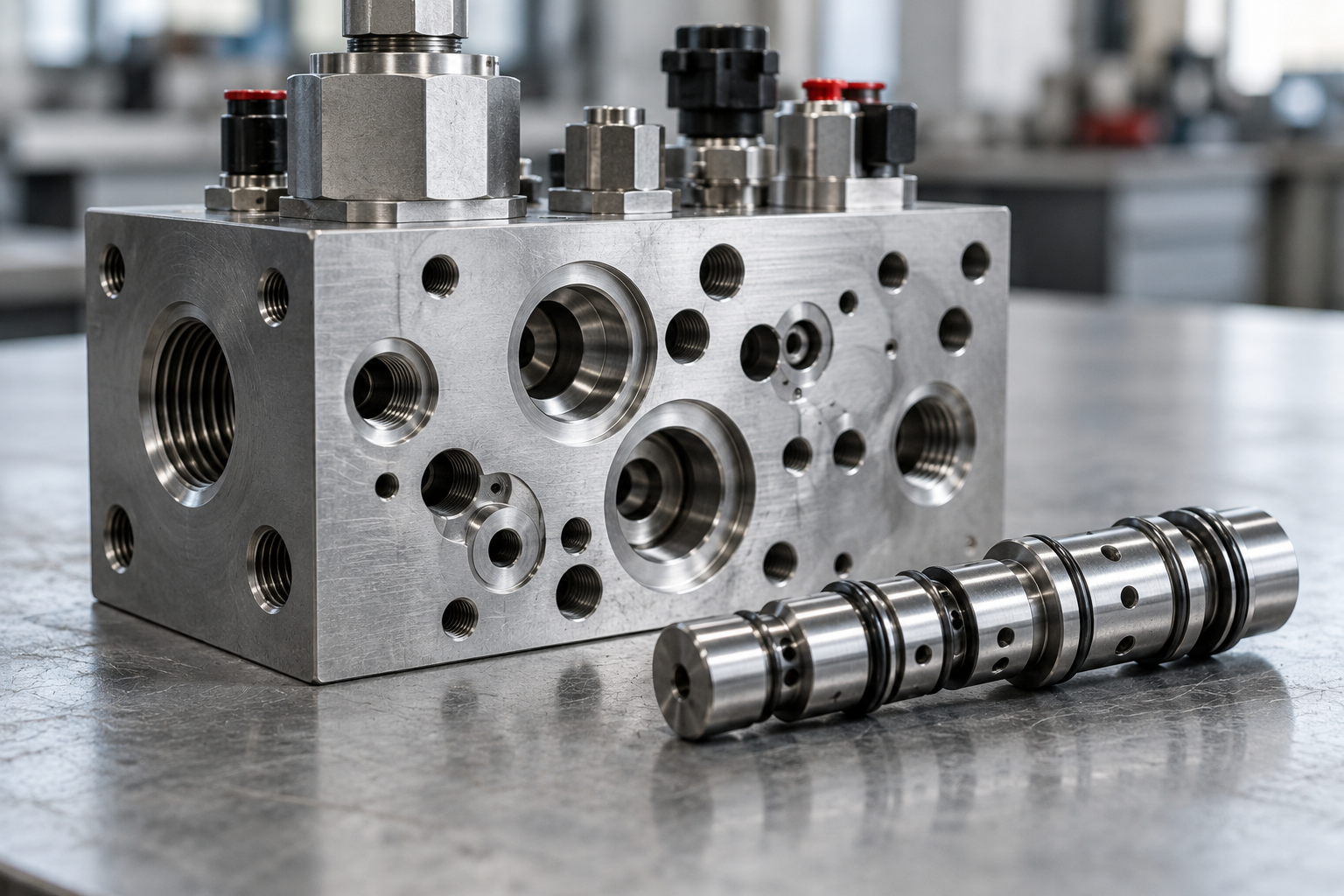
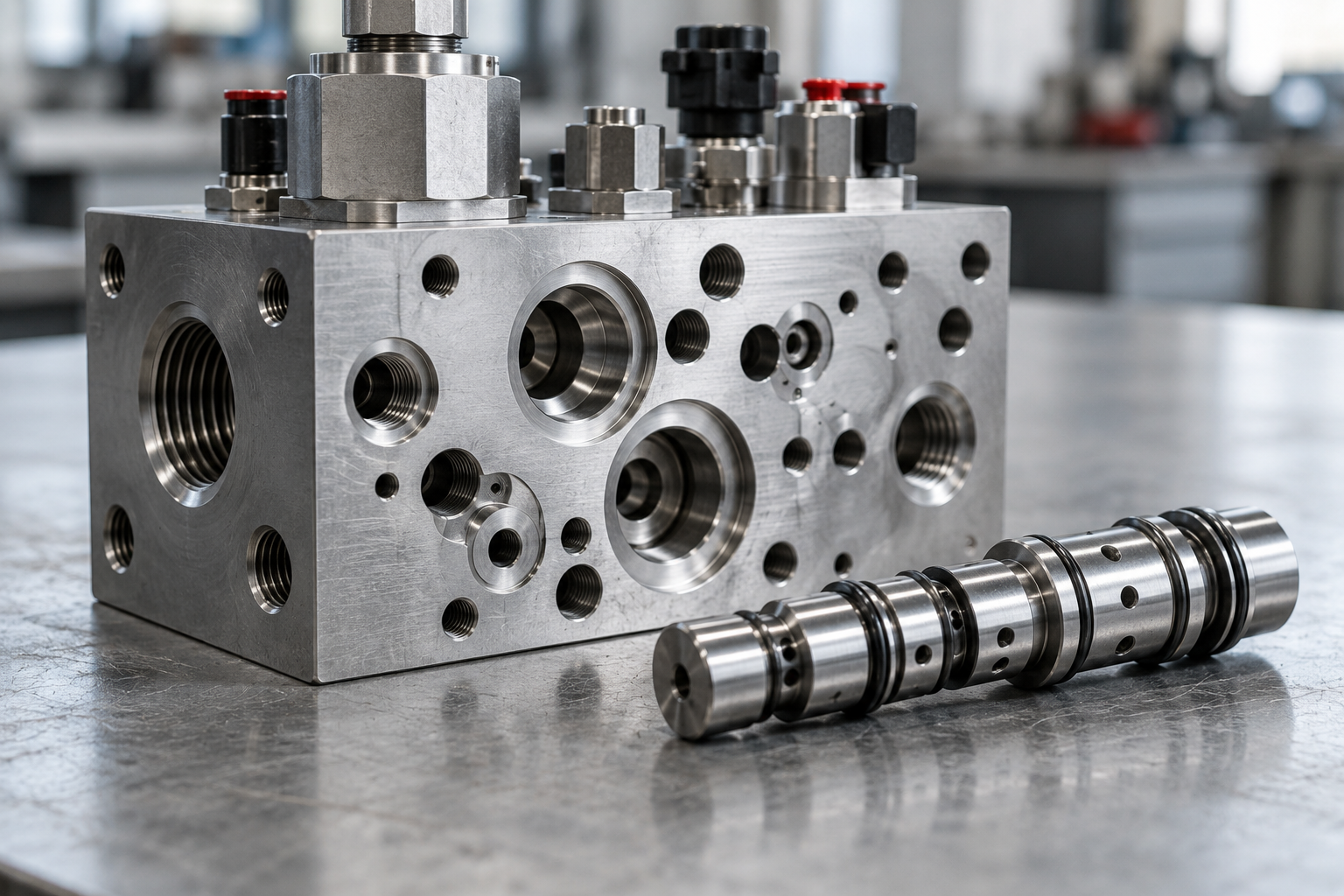
Cover image: AI-generated editorial illustration, not a model-specific product drawing or a photograph of a JIUDING facility.