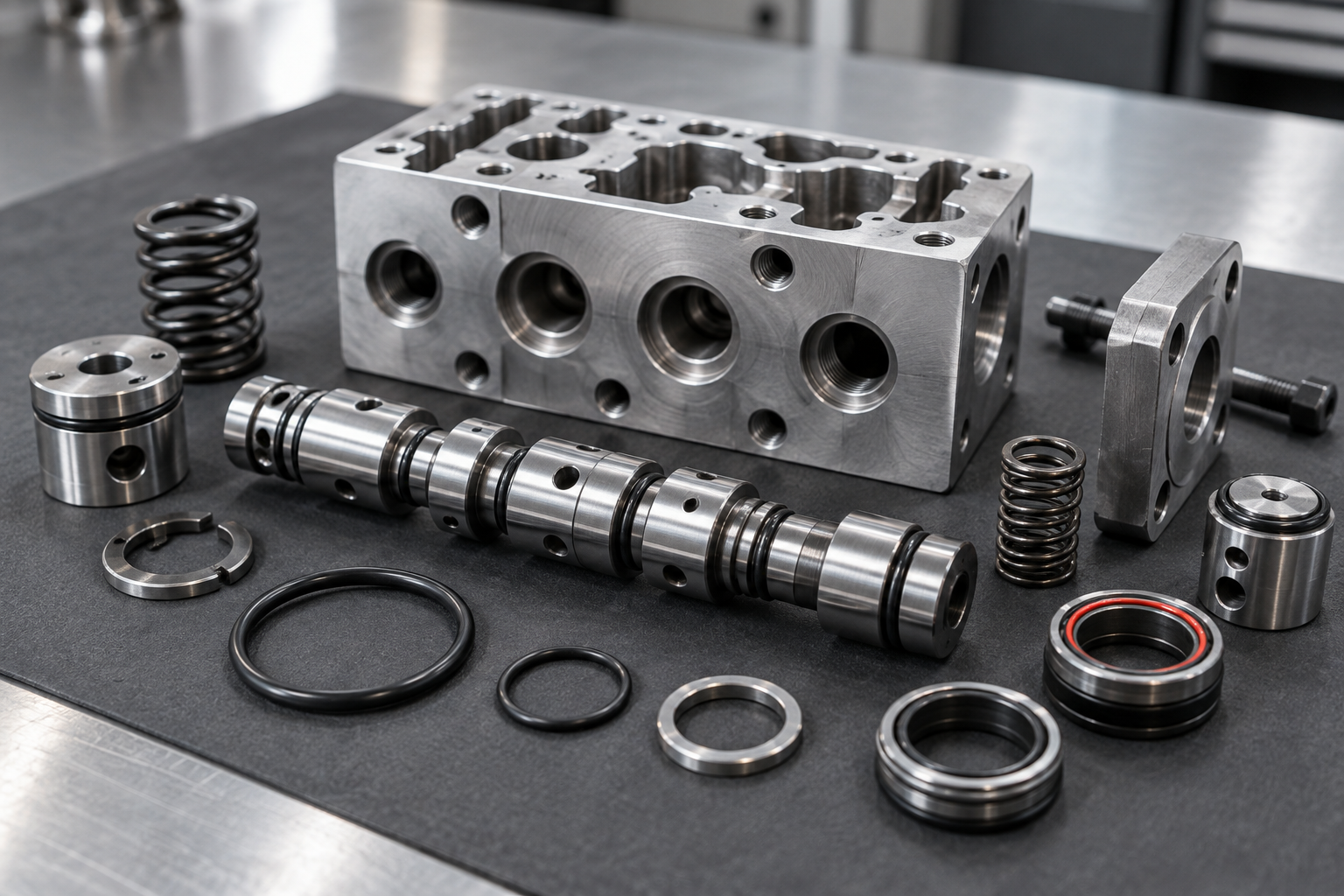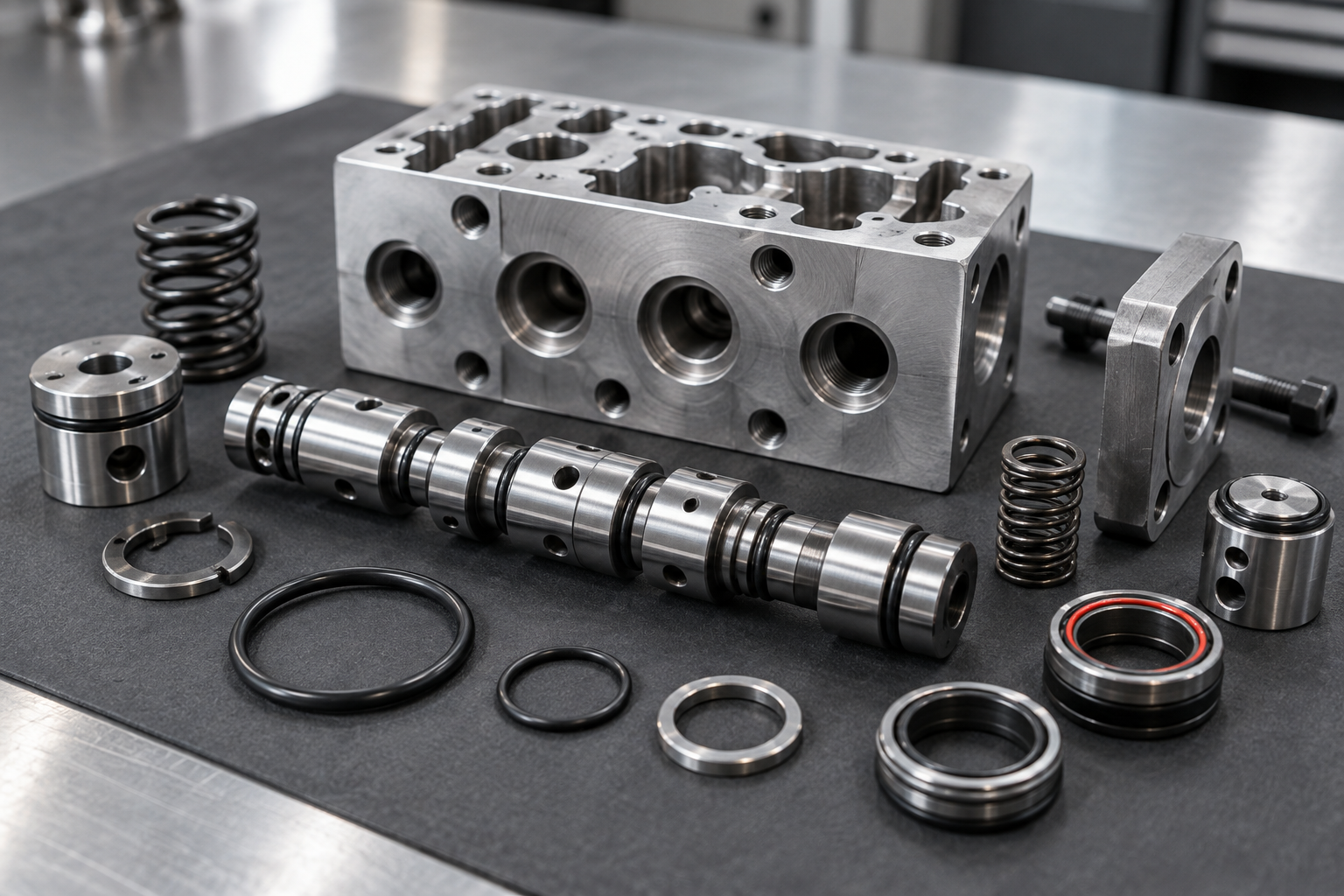
A replacement valve depends on the manifold surface beneath it. Dirt, a damaged seal groove or an incorrect fastener can compromise an otherwise correct component.
Document before disassembly
With the machine safely isolated, photograph the original orientation, stack order and connections. Identify the exact valve and seal set. Cap or cover exposed openings using clean, suitable materials to reduce contamination during the work.
Inspect the mating interface
Check the mounting face for damage and contamination according to the service instructions. Verify port and seal alignment. Do not use abrasive methods or sealants indiscriminately; they may change the surface or introduce material into the circuit.
Reassemble to the approved specification
Use the correct fastener type, length and tightening requirements for the assembly. Excessive tightening can be harmful as well as insufficient clamping. Follow the approved recommissioning procedure, checking for leakage and correct function without placing anyone in the movement zone.
Practical checklist
- Confirm the interface drawing and seal specification.
- Preserve cleanliness while ports are open.
- Use documented fastener and tightening requirements.
Discuss your application
Explore related hydraulic products, or send JIUDING your model code and application details. Include the circuit drawing and the operating conditions relevant to the checks above so the required configuration can be reviewed.
Cover image: AI-generated editorial illustration, not a model-specific product drawing or a photograph of a JIUDING facility.