Tank return is frequently described as a low-pressure connection, but it is not automatically at zero pressure. Filters, hoses, coolers and simultaneous flows can create meaningful backpressure.
Identify every restriction to the reservoir
Trace the return route from each valve, including shared manifolds and optional accessories. Cold fluid or a loaded filter can increase pressure drop. A pressure reading at one return point does not necessarily represent every other branch.
Check which functions are sensitive
Pilot drains, relief outlets, reducing valves and load-control functions may respond to outlet pressure differently. Some components have lower allowable pressure at their drain or tank port than at their work ports. Use the exact design's documentation.
Measure at the demanding condition
Compare warm normal operation with start-up and peak combined return flow. Do not reroute a drain or remove filtration as an improvised fix. Have the complete return arrangement reviewed and confirm that a proposed change preserves component protection and contamination control.
Practical checklist
- Mark shared return lines and peak simultaneous flows.
- Check T and drain-port pressure limits separately.
- Record pressure at the relevant port, not only at the reservoir.
Discuss your application
Explore related hydraulic products, or send JIUDING your model code and application details. Include the circuit drawing and the operating conditions relevant to the checks above so the required configuration can be reviewed.
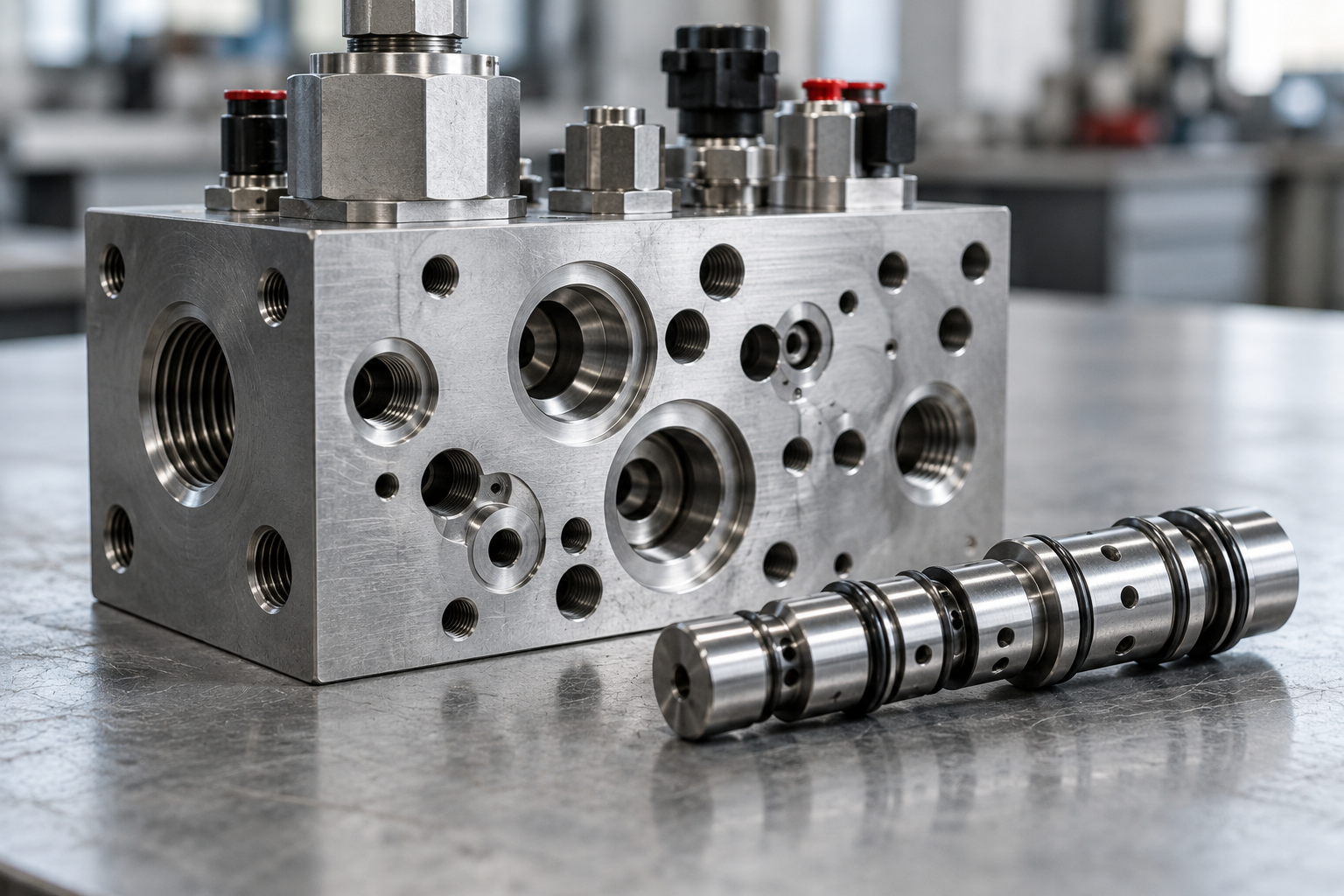
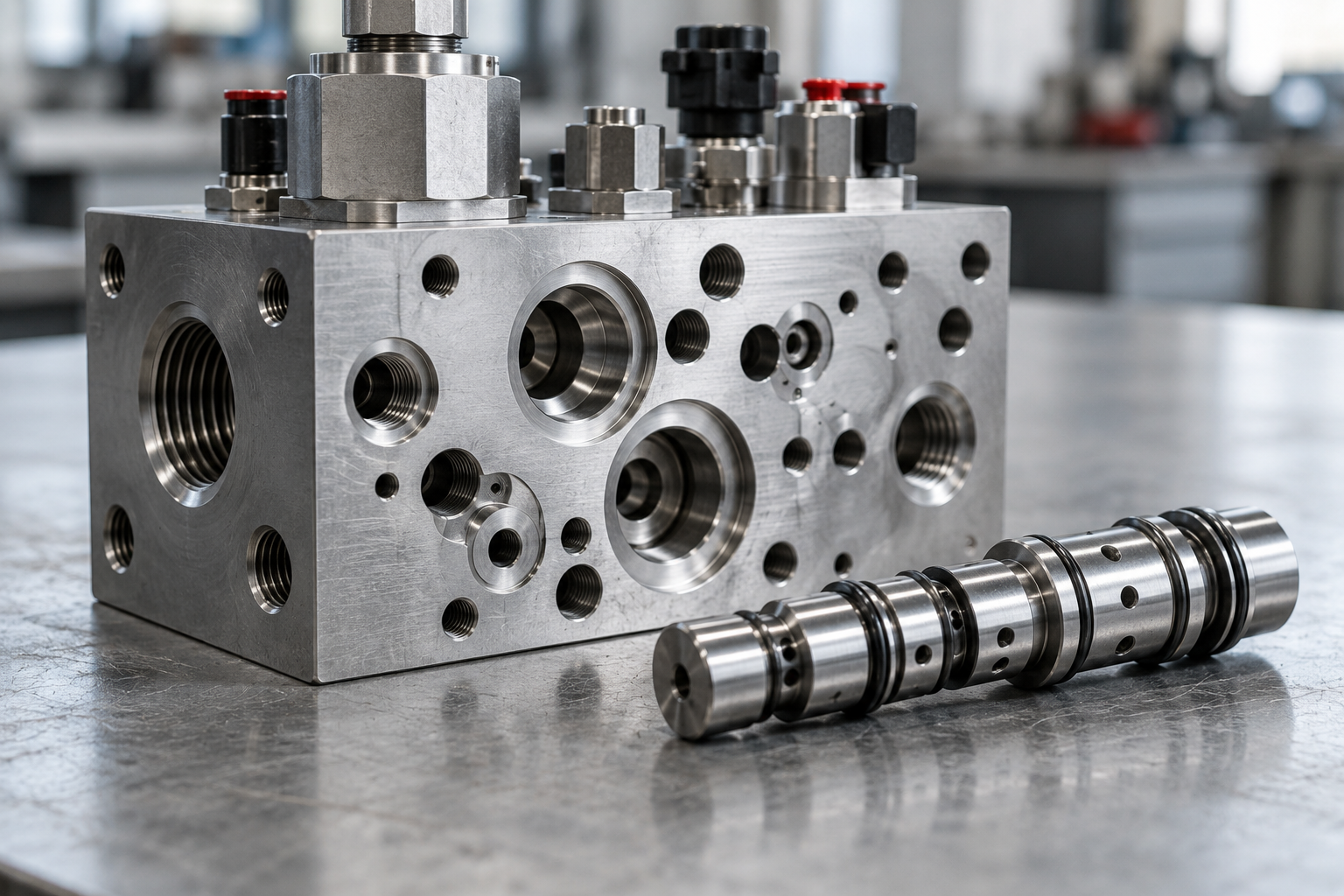
Cover image: AI-generated editorial illustration, not a model-specific product drawing or a photograph of a JIUDING facility.