A branch may need less pressure than the rest of a machine, such as a clamp supplied by a higher-pressure power unit. A reducing valve controls the downstream branch, but its circuit role must be distinguished from main-system relief protection.
Define the branch requirement
State the required pressure range and the flow while the actuator is moving. Include upstream pressure variation. Select a setting range that can cover the intended adjustment without assuming that the widest available range gives the best control.
Consider pressure generated downstream
An external load or temperature change can raise pressure in a trapped branch. A two-way reducing function does not necessarily relieve that pressure. Determine whether a reducing-relieving function or a separate protective path is needed, and confirm its capacity.
Review drain and reverse flow
Some designs need a separate drain; its pressure can influence regulation. Reverse actuator flow may need an integral or external check path. Confirm the hydraulic symbol and pressure-versus-flow behavior before using the valve in a bidirectional line.
Practical checklist
- List branch flow, desired pressure and upstream range.
- Identify downstream pressure sources and relief needs.
- Verify reverse flow and drain arrangements.
Discuss your application
Explore related hydraulic products, or send JIUDING your model code and application details. Include the circuit drawing and the operating conditions relevant to the checks above so the required configuration can be reviewed.
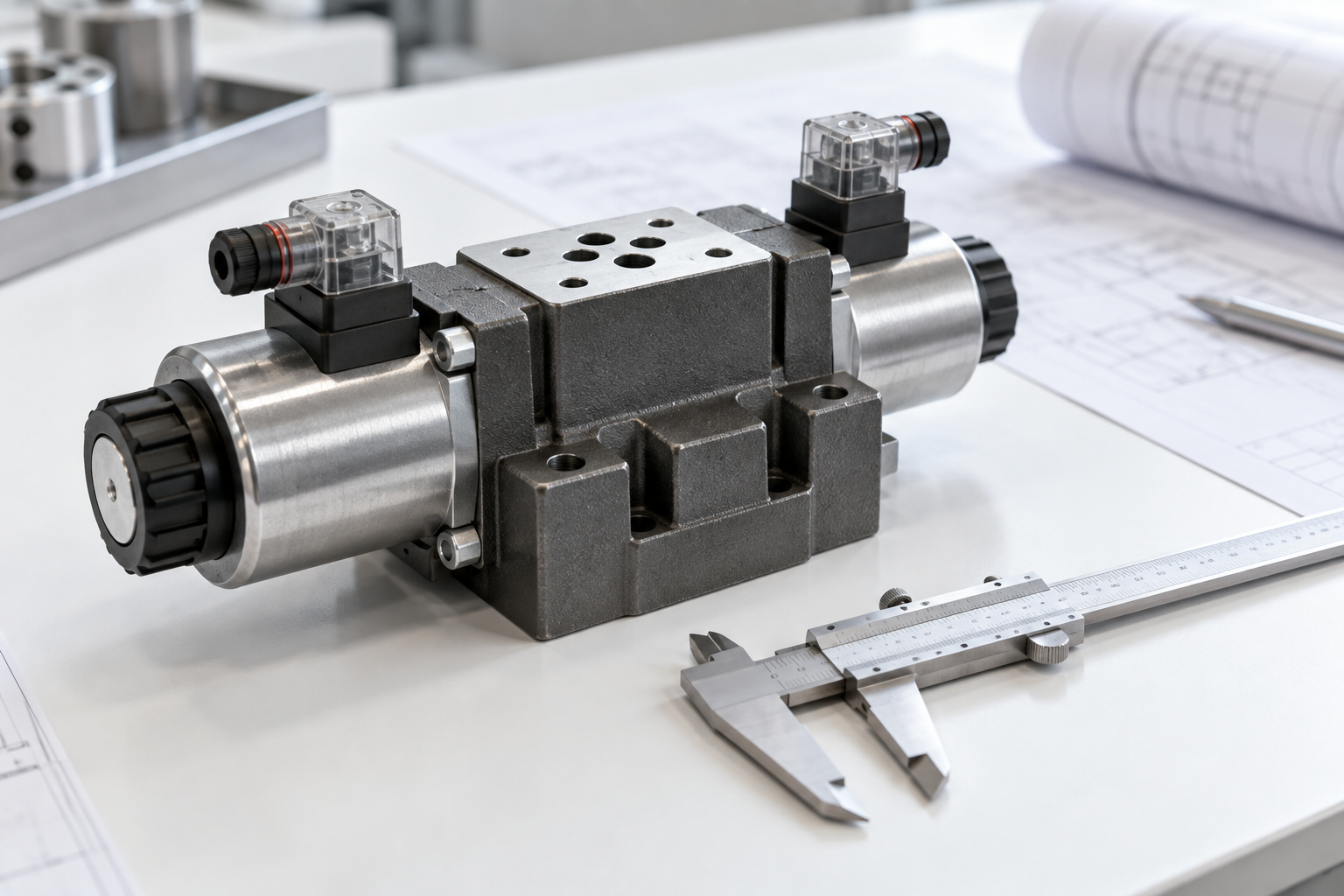
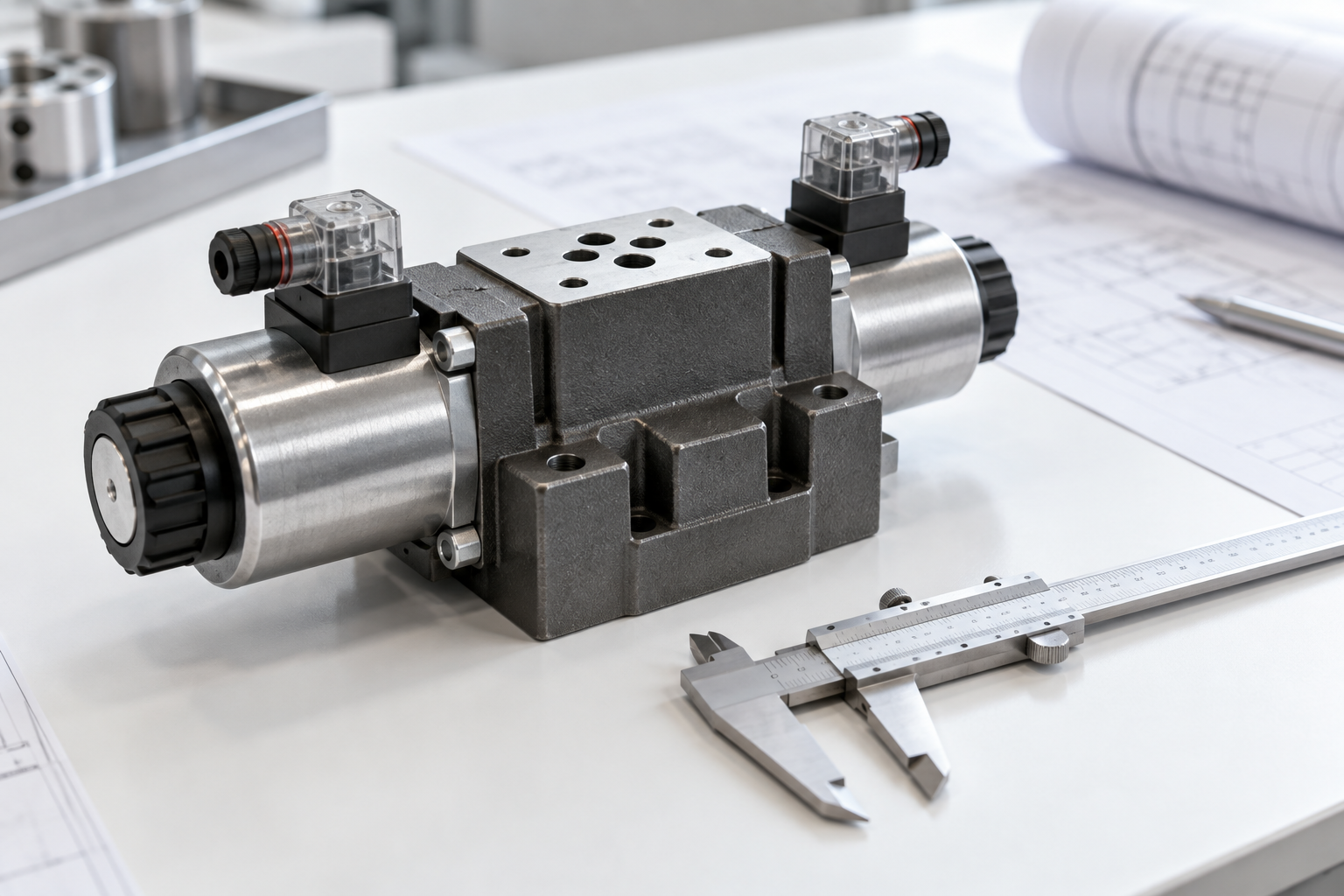
Cover image: AI-generated editorial illustration, not a model-specific product drawing or a photograph of a JIUDING facility.