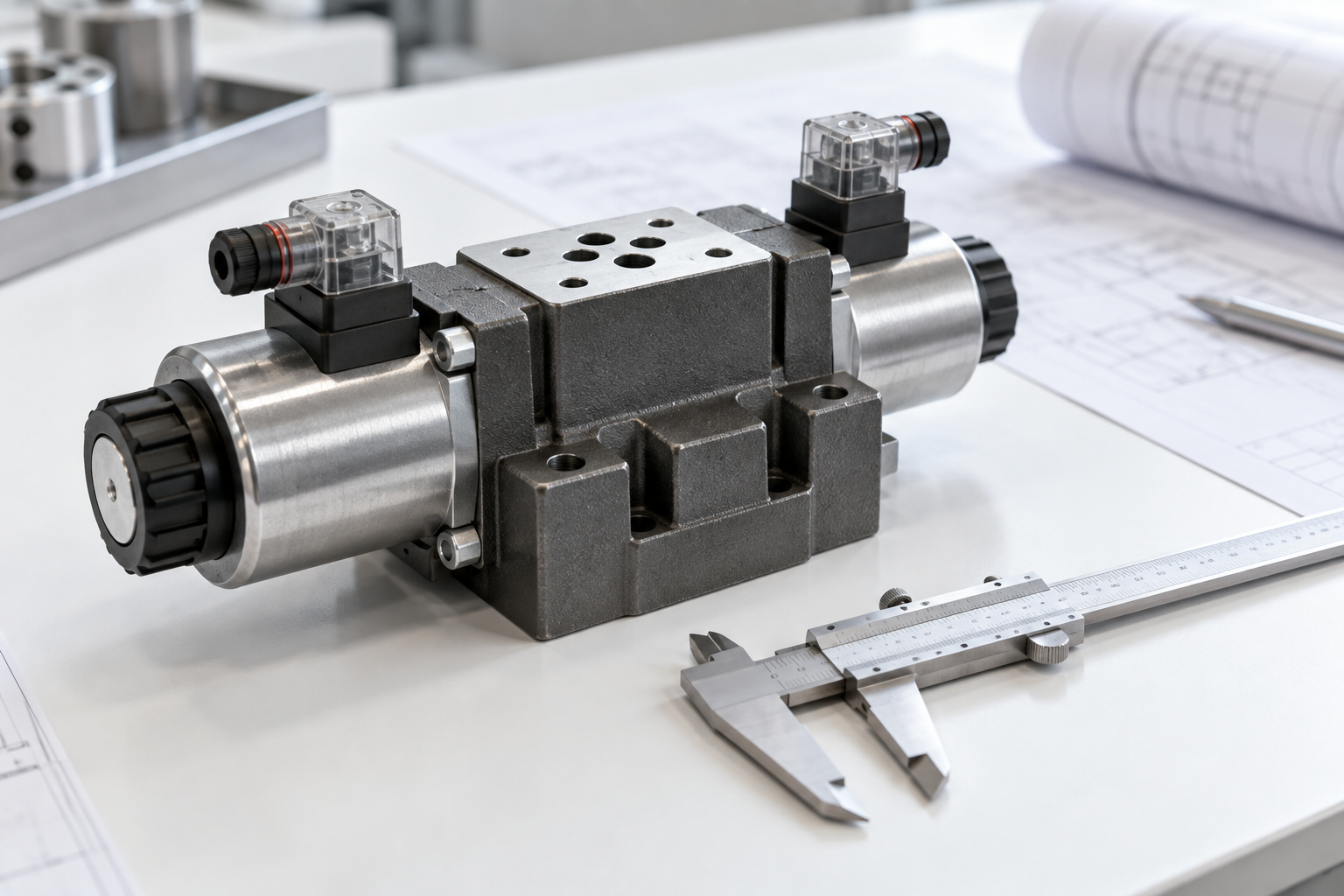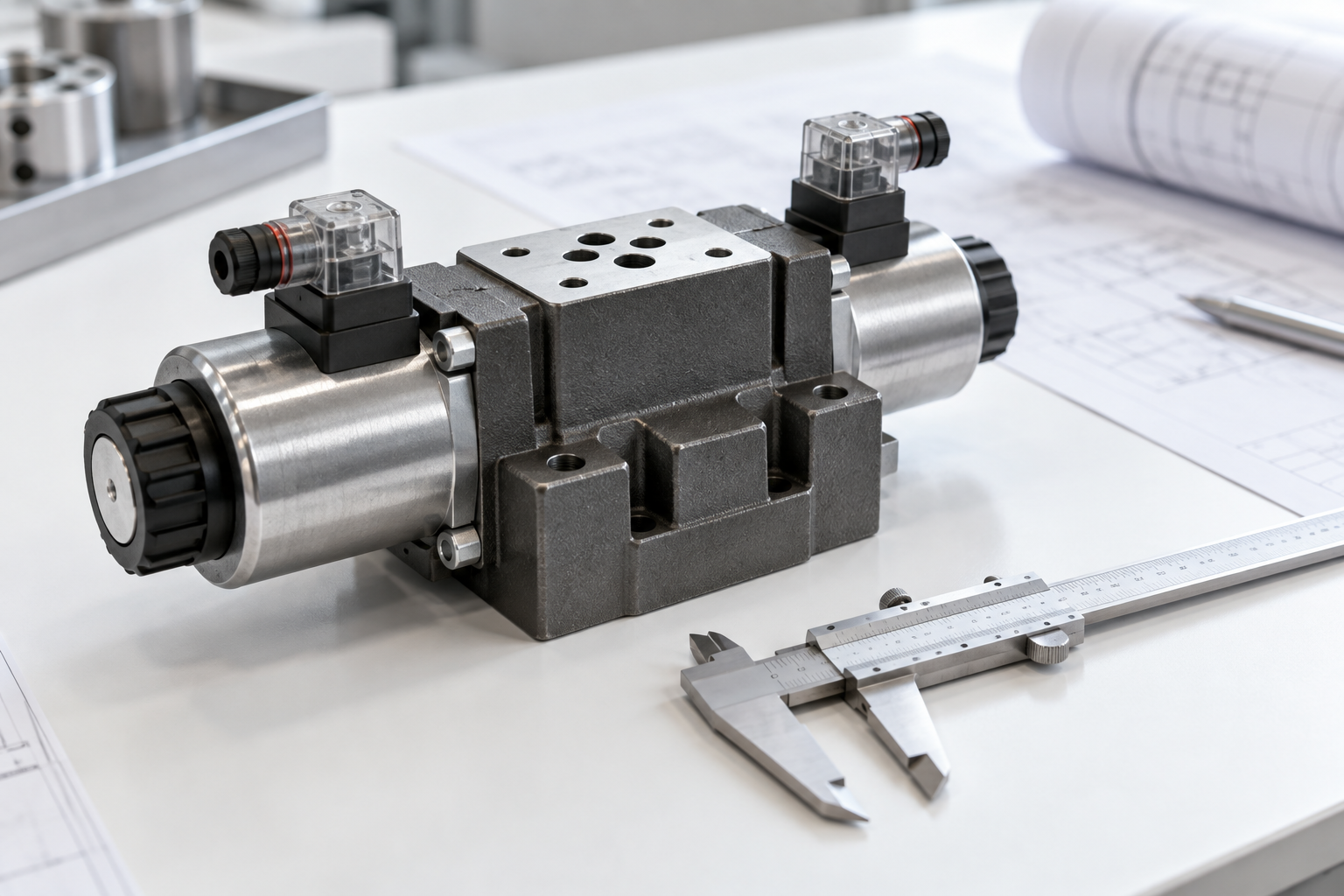
A proportional valve is part of a control chain. The command signal, driver, coil and hydraulic load must work together; buying the valve first and solving the electronics later can create avoidable integration problems.
Define what the command controls
A proportional pressure valve and a proportional directional valve regulate different quantities. State whether the machine needs pressure, flow or motion control. A voltage command does not by itself guarantee a particular actuator speed under changing loads.
Match electrical interfaces
Confirm whether electronics are integrated or external. Record supply voltage, command format, enable input and any feedback signal. For an external driver, use the specified current range and manufacturer guidance on dither and ramp settings rather than copying another machine's settings.
Set realistic performance criteria
Define repeatability, response time and behavior after command or power loss. Open-loop performance differs from a system using position or pressure feedback. Agree on acceptance conditions including fluid temperature and load, then verify the complete assembly during commissioning.
Practical checklist
- State controlled variable and required operating range.
- Identify driver, command signal and feedback arrangement.
- Define safe loss-of-signal behavior and measurable acceptance criteria.
Discuss your application
Explore related hydraulic products, or send JIUDING your model code and application details. Include the circuit drawing and the operating conditions relevant to the checks above so the required configuration can be reviewed.
Cover image: AI-generated editorial illustration, not a model-specific product drawing or a photograph of a JIUDING facility.