A relief valve limits pressure by opening a flow path, but the pressure at which it first opens differs from its behavior at substantial flow. Selecting the correct valve requires both a pressure requirement and a flow requirement.
Start with the weakest relevant component
The system designer should establish the allowable pressure for every affected component and operating state. Include transient behavior and manufacturer limits. A pump's headline pressure rating does not authorize setting the complete machine to that value.
Distinguish cracking from full-flow pressure
Cracking pressure describes the beginning of opening under specified conditions. Pressure can rise as relief flow increases. Read the pressure-flow characteristic and confirm that the valve can pass the required flow without exceeding the circuit's acceptable pressure.
Account for return conditions
Backpressure and drainage arrangements can affect the effective setting. Record where the outlet returns and whether other functions share that line. Adjustment must follow the approved machine procedure using suitable instruments; never raise a relief setting simply to compensate for a blocked or overloaded mechanism.
Practical checklist
- State the required relief flow and operating fluid.
- Request the pressure-flow curve, not only an adjustment range.
- Document outlet backpressure and the approved commissioning setting.
Discuss your application
Explore related hydraulic products, or send JIUDING your model code and application details. Include the circuit drawing and the operating conditions relevant to the checks above so the required configuration can be reviewed.
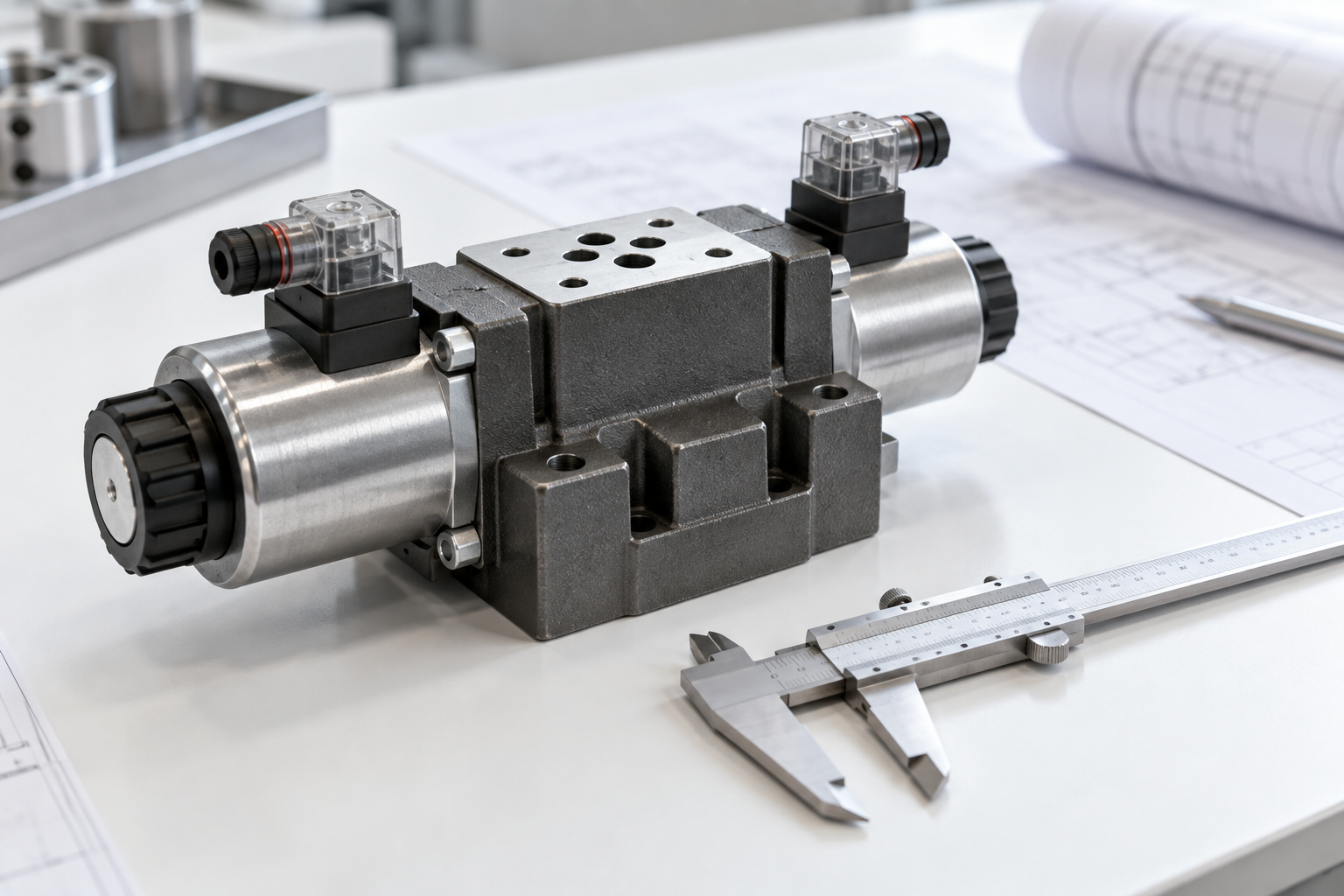
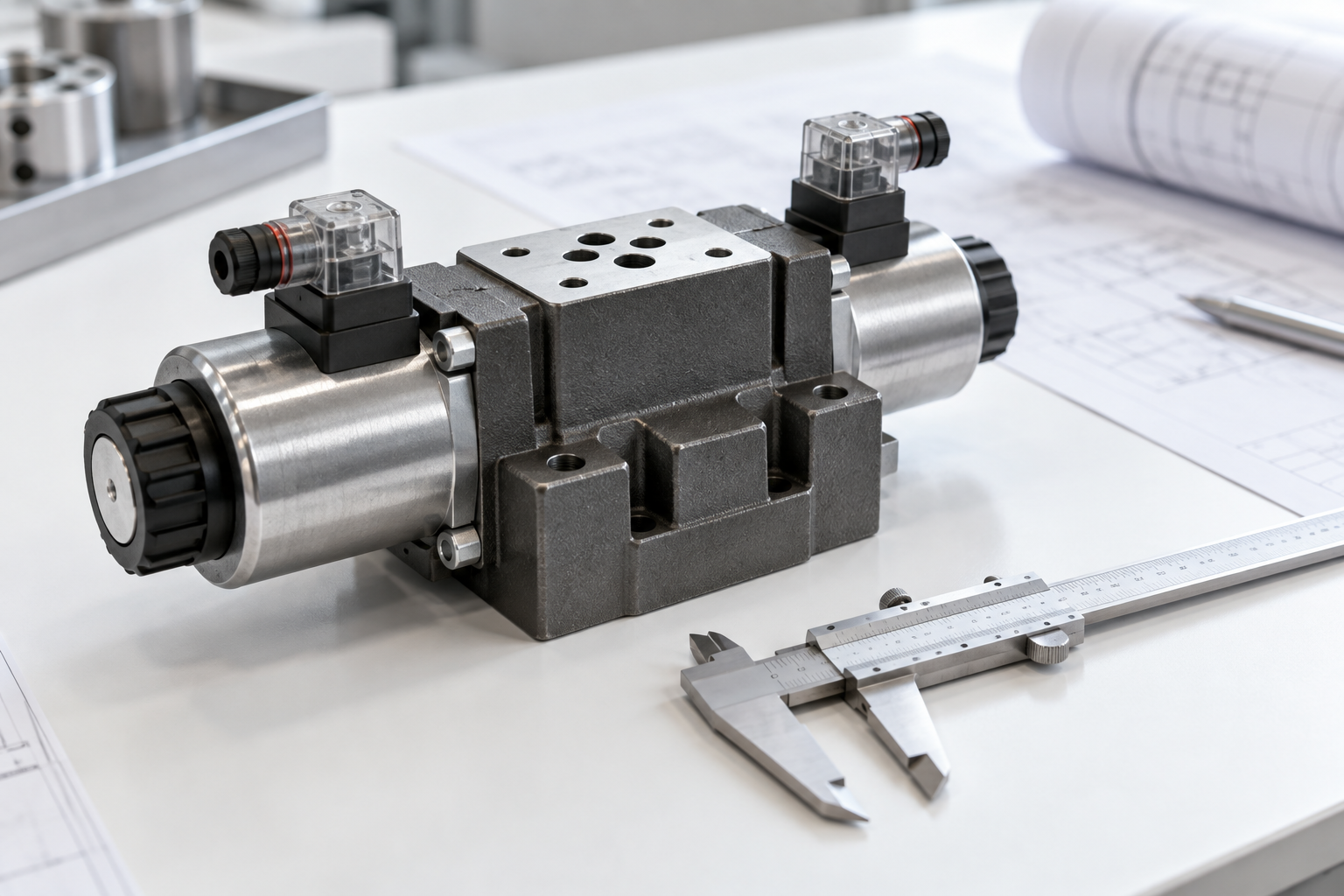
Cover image: AI-generated editorial illustration, not a model-specific product drawing or a photograph of a JIUDING facility.