A valve symbol with blocked work ports describes the intended circuit connection. It does not state that the internal clearances are perfectly sealed or that the actuator will remain motionless indefinitely.
Separate intended paths from leakage
Spool valves generally require running clearances. Leakage depends on the design, pressure difference, fluid viscosity, temperature and wear. The relevant datasheet leakage condition matters more than a broad description such as closed center.
Consider the actuator as well
Piston-seal leakage, external leakage, fluid compression and temperature changes can contribute to movement. The direction and rate of drift alone do not identify the failed part. Diagnosis should compare the complete circuit under controlled conditions.
Specify an acceptable holding result
Define allowable movement over a stated time, load and temperature range. If the application involves a suspended or hazardous load, use an engineered holding and mechanical support strategy. Never assume that replacing one directional spool establishes safe holding performance.
Practical checklist
- Record drift distance, elapsed time, temperature and load.
- Check the specified leakage conditions for relevant components.
- Identify the circuit's dedicated load-holding function.
Discuss your application
Explore related hydraulic products, or send JIUDING your model code and application details. Include the circuit drawing and the operating conditions relevant to the checks above so the required configuration can be reviewed.
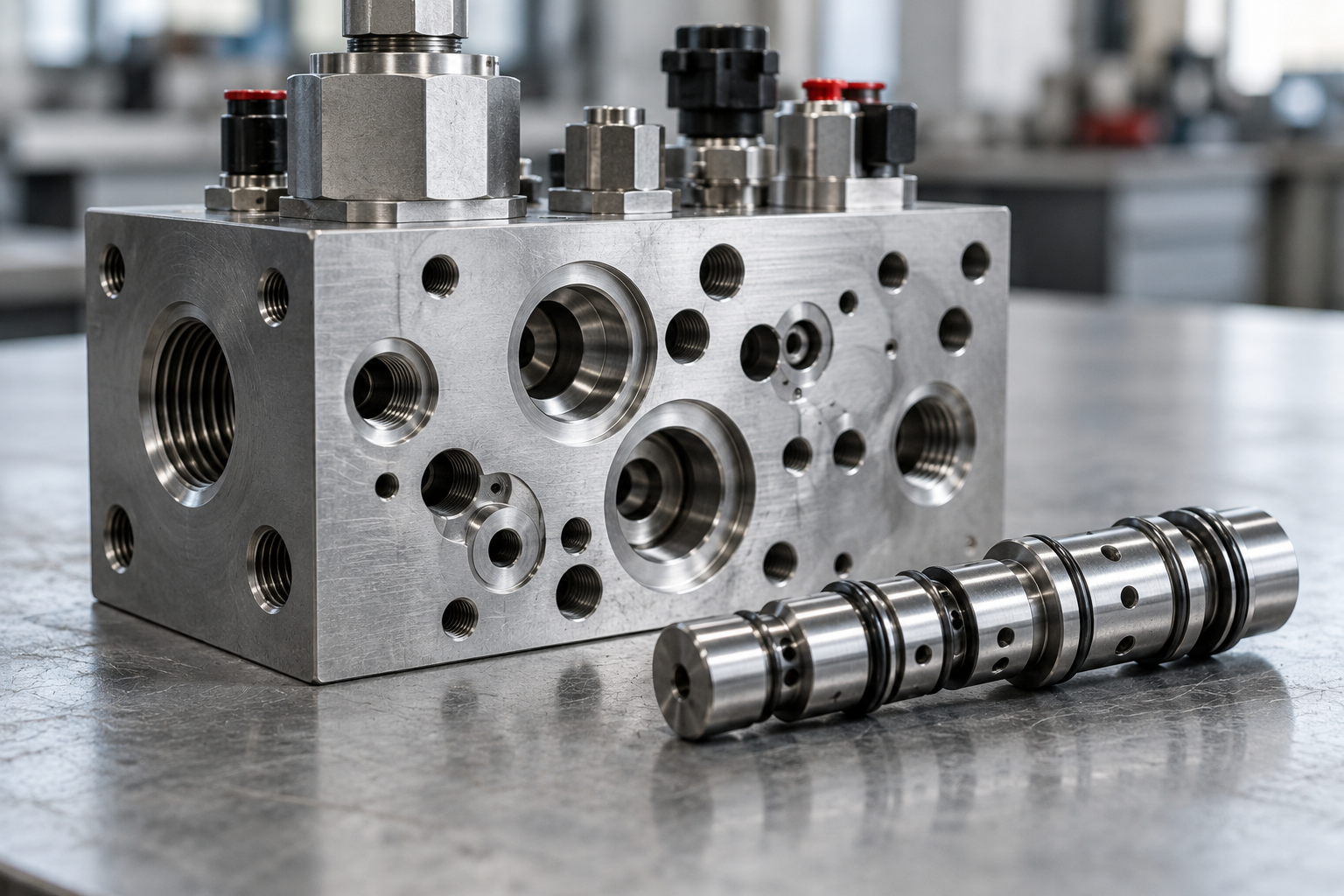
Cover image: AI-generated editorial illustration, not a model-specific product drawing or a photograph of a JIUDING facility.