A hydraulic restriction can perform useful control while also consuming energy. Understanding where pressure is lost helps explain why a machine can become hot even when its actuator is doing little work.
Estimate the hydraulic loss
For incompressible flow, pressure-drop power in kilowatts is approximately pressure drop in bar multiplied by flow in litres per minute, divided by 600. A 10 bar drop at 30 L/min corresponds to about 0.5 kW. This is an illustrative calculation, not a rating for any product.
Find sustained losses
A short switching event and a continuous restriction have different thermal effects. Examine flow through relief valves, throttles, long lines and undersized return paths during idle as well as working cycles. Average heat input depends on how long each state lasts.
Address the source before enlarging the cooler
Cooling capacity matters, but reducing unnecessary pressure loss can lower the cooling burden. Changes to valve size, unloading or speed control must preserve required motion and protection. Verify losses at actual fluid temperature instead of assuming a room-temperature test represents full duty.
Practical checklist
- Measure pressure on both sides of the suspected restriction.
- Record flow and time spent in each operating state.
- Distinguish useful load power from circuit losses.
Discuss your application
Explore related hydraulic products, or send JIUDING your model code and application details. Include the circuit drawing and the operating conditions relevant to the checks above so the required configuration can be reviewed.
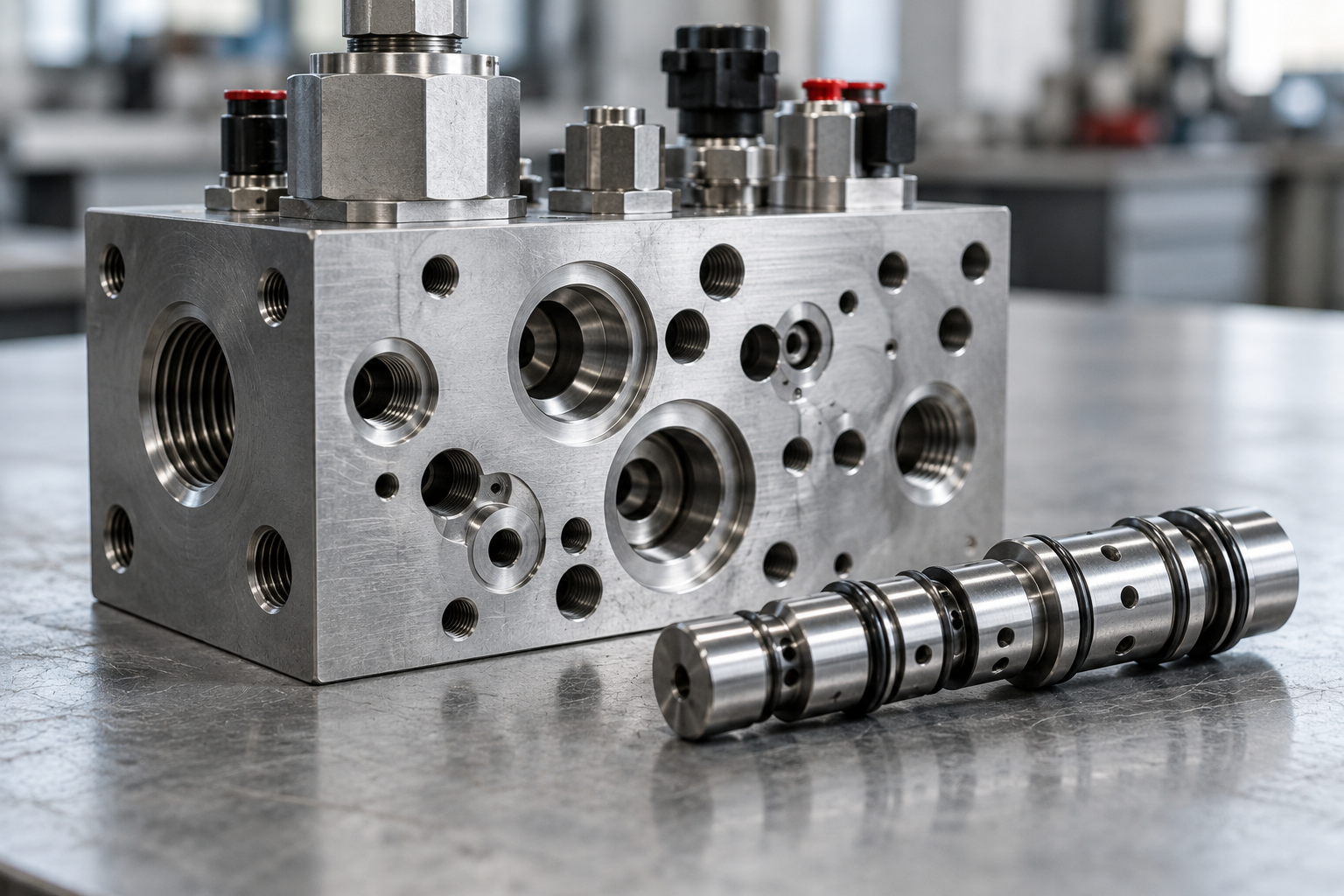
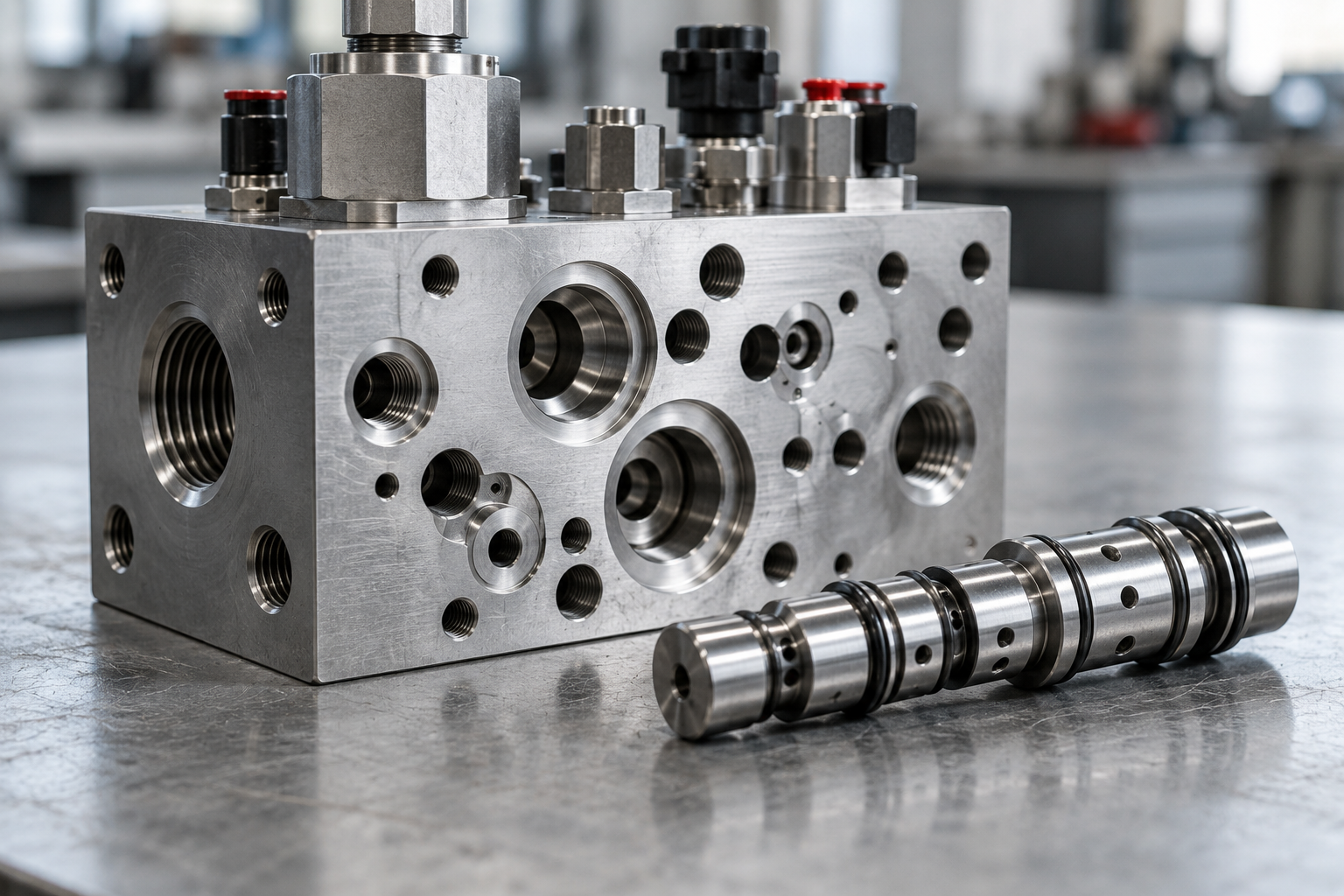
Cover image: AI-generated editorial illustration, not a model-specific product drawing or a photograph of a JIUDING facility.