An OEM project needs repeatable supply of a defined configuration, not just one successful purchase. Early agreement on technical scope and change control can reduce later production surprises.
Separate development from production
During development, operating conditions and interfaces may still change. Mark prototype assumptions clearly and keep configuration revisions controlled. Do not treat an early trial unit as the final production specification without review.
Qualify the application
Use representative tests to confirm function and performance across the intended operating envelope. Define inspection and documentation needs for production parts. Any reliability or life requirement needs an agreed validation basis rather than an unsupported promise.
Plan repeat orders
Discuss forecast quantities, packaging, traceability and how configuration changes will be communicated. Keep the approved drawing and model code with the purchasing record. Evaluate supply and technical requirements together rather than letting repeated short-form orders become the only specification.
Practical checklist
- Control prototype and production revisions separately.
- Agree on application qualification and production acceptance.
- Define traceability and change-notification expectations.
Discuss your application
Explore related hydraulic products, or send JIUDING your model code and application details. Include the circuit drawing and the operating conditions relevant to the checks above so the required configuration can be reviewed.
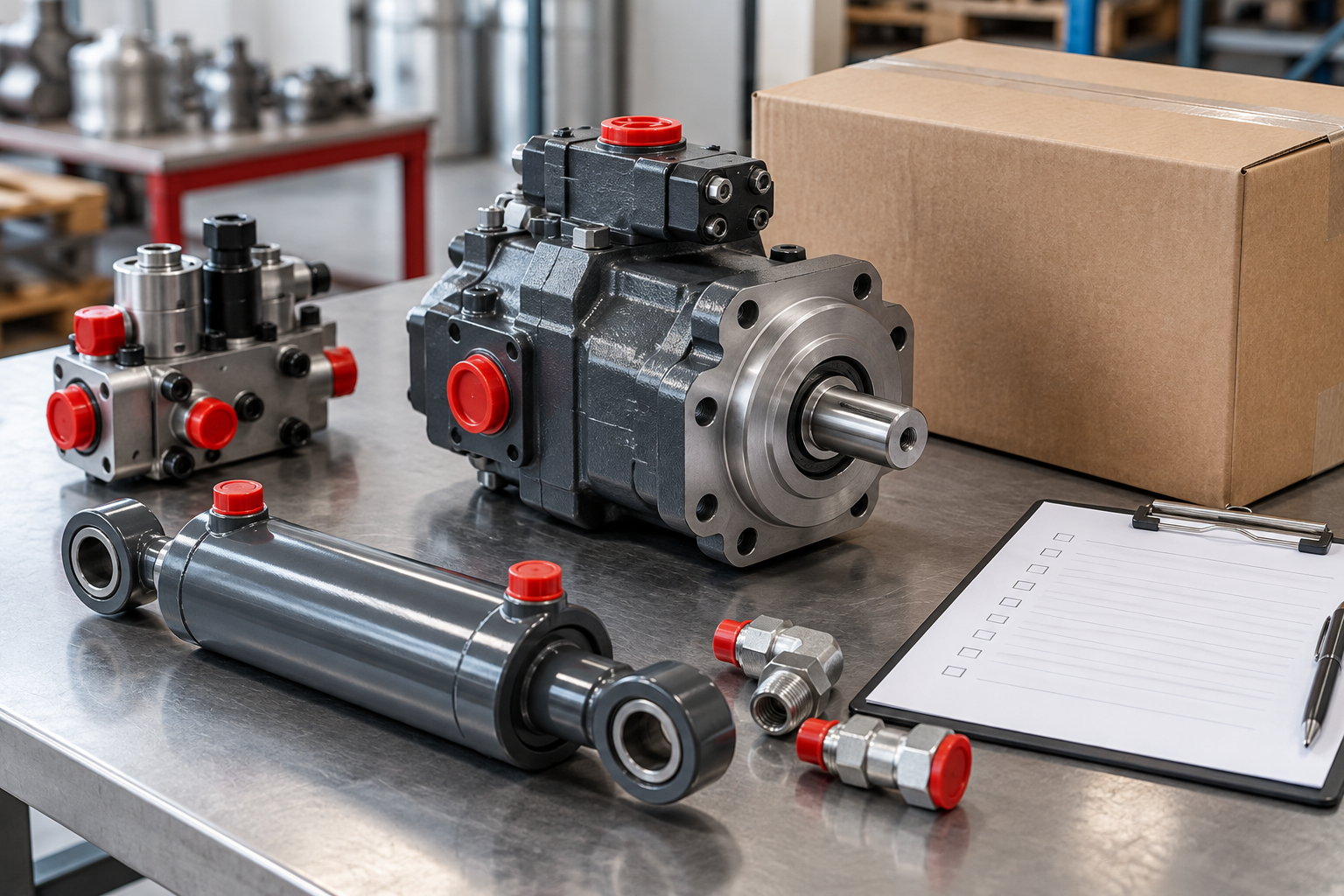
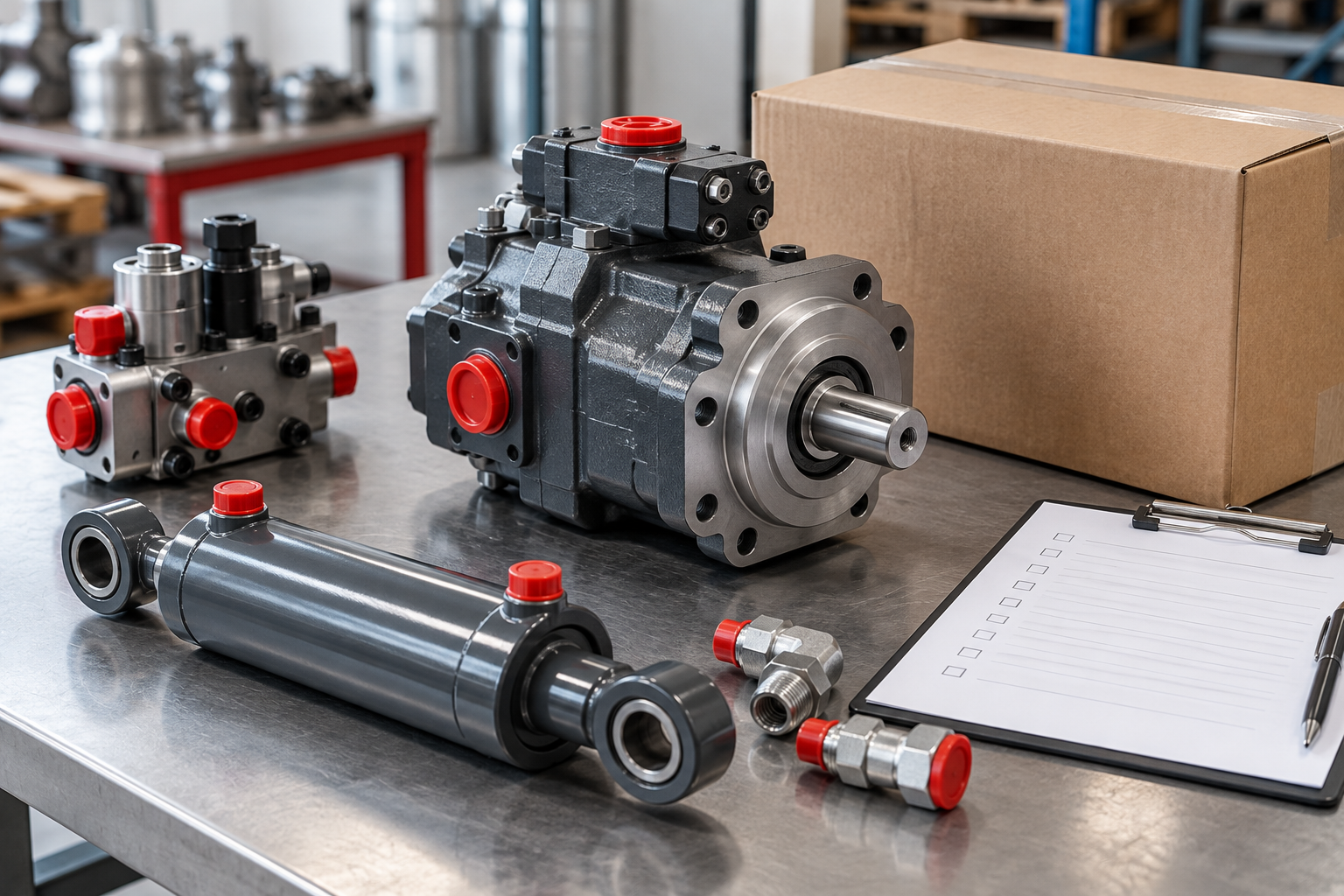
Cover image: AI-generated editorial illustration, not a model-specific product drawing or a photograph of a JIUDING facility.