A hydraulic motor circuit must be evaluated beyond steady running flow. Starting torque, changing load and load-driven rotation can create different pressure and control requirements.
Describe the mechanical duty
Record required speed, torque, inertia and reversals. Identify whether the load can drive the motor, such as during deceleration or downhill operation. Starting requirements may differ from those at a stable running speed.
Check all fluid connections
Review supply, return and any required case drain against the exact motor documentation. A case drain may have a much lower pressure limit than a work port. Include valve and line losses when estimating available pressure at the motor.
Define stopping behavior
Directional flow interruption alone may not provide controlled braking or secure holding. The circuit may require an engineered braking, makeup or load-control arrangement. Review cavitation risk and transient pressure using the machine's design process.
Practical checklist
- Provide torque-speed duty, inertia and reversal frequency.
- Confirm case-drain and return-pressure requirements.
- Specify stopping and overrun behavior before valve selection.
Discuss your application
Explore related hydraulic products, or send JIUDING your model code and application details. Include the circuit drawing and the operating conditions relevant to the checks above so the required configuration can be reviewed.
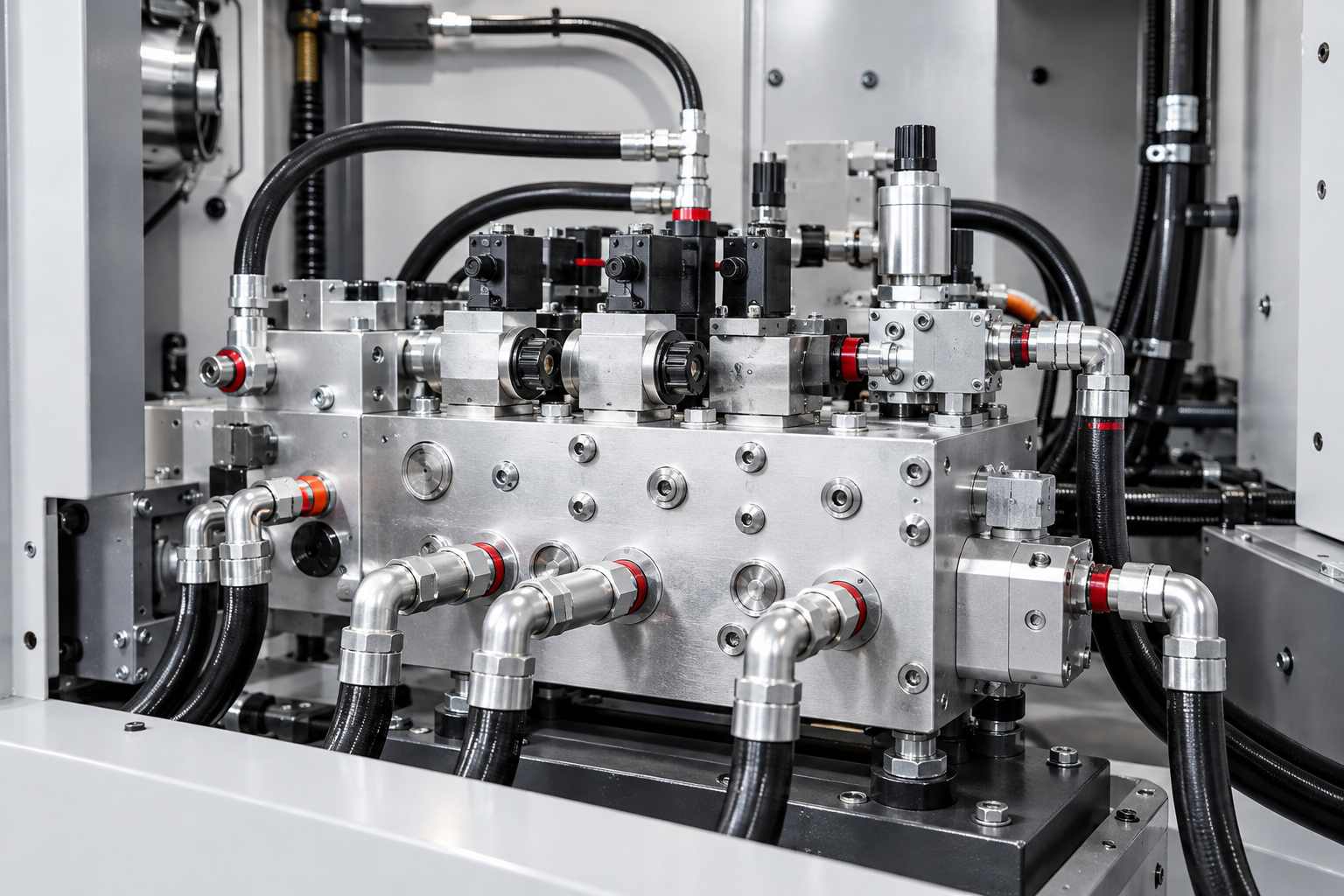
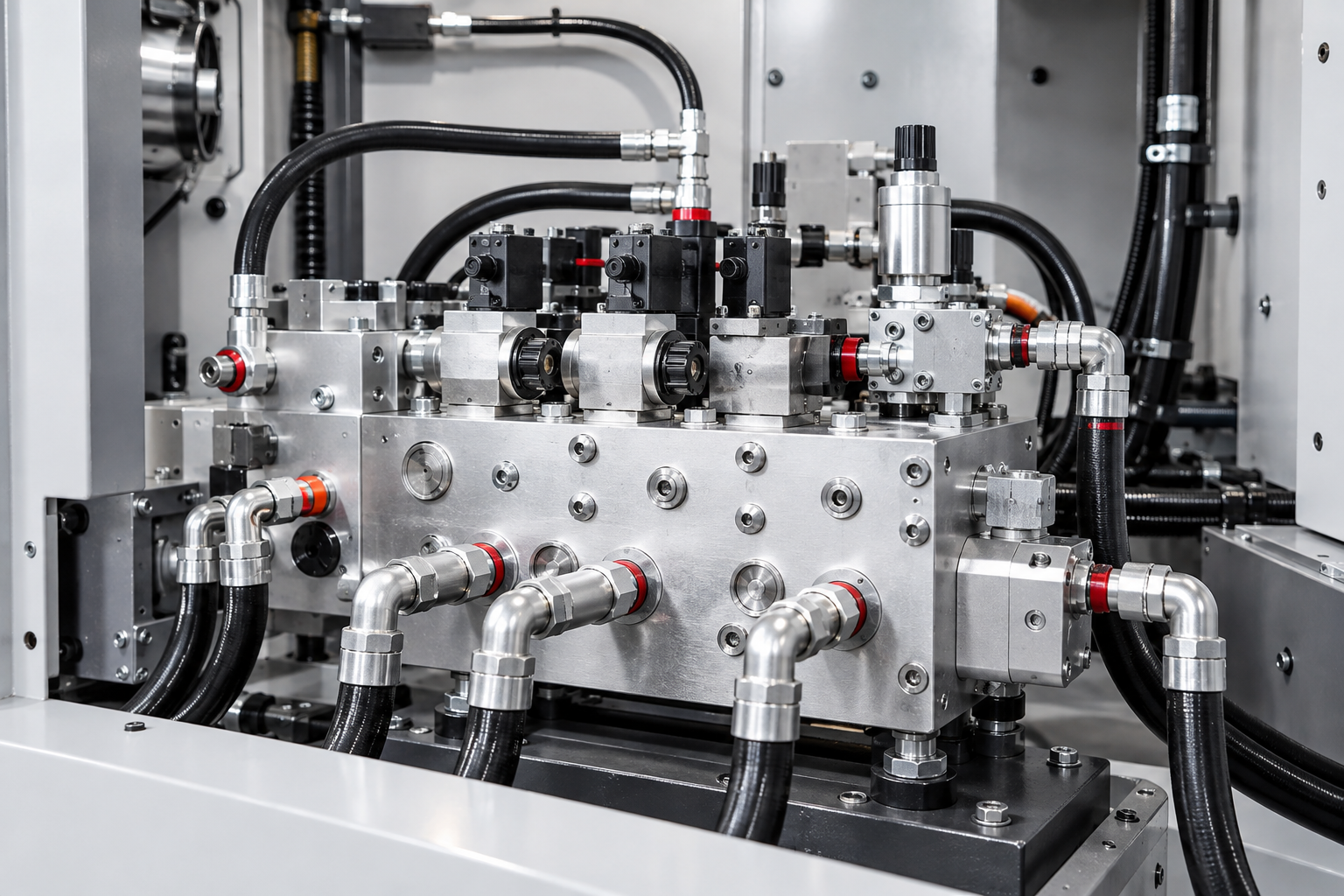
Cover image: AI-generated editorial illustration, not a model-specific product drawing or a photograph of a JIUDING facility.