A press cycle often contains movements with very different demands. Treating the complete cycle as one maximum pressure and one maximum flow can lead to an oversized or poorly matched control arrangement.
Describe each phase
Record approach speed, working force, dwell requirements and return speed. Identify when the workpiece is contacted and how transitions are detected. The required flow and pressure usually change across these phases.
Review transition behavior
A smooth approach does not guarantee a controlled transition into pressing or release. Fluid compression, load stiffness and valve switching can affect shocks and motion. The circuit designer should evaluate decompression and control sequencing for the specific machine.
Keep protection independent of production tuning
Presses can present serious crushing hazards. Component selection and settings must fit the approved machine safety design. Do not use a generic article as an adjustment procedure or infer safety performance from a valve's nominal pressure rating.
Practical checklist
- Provide phase-by-phase force, speed and duration.
- Define sensing and transition requirements.
- Validate the complete cycle using the machine's approved test plan.
Discuss your application
Explore related hydraulic products, or send JIUDING your model code and application details. Include the circuit drawing and the operating conditions relevant to the checks above so the required configuration can be reviewed.
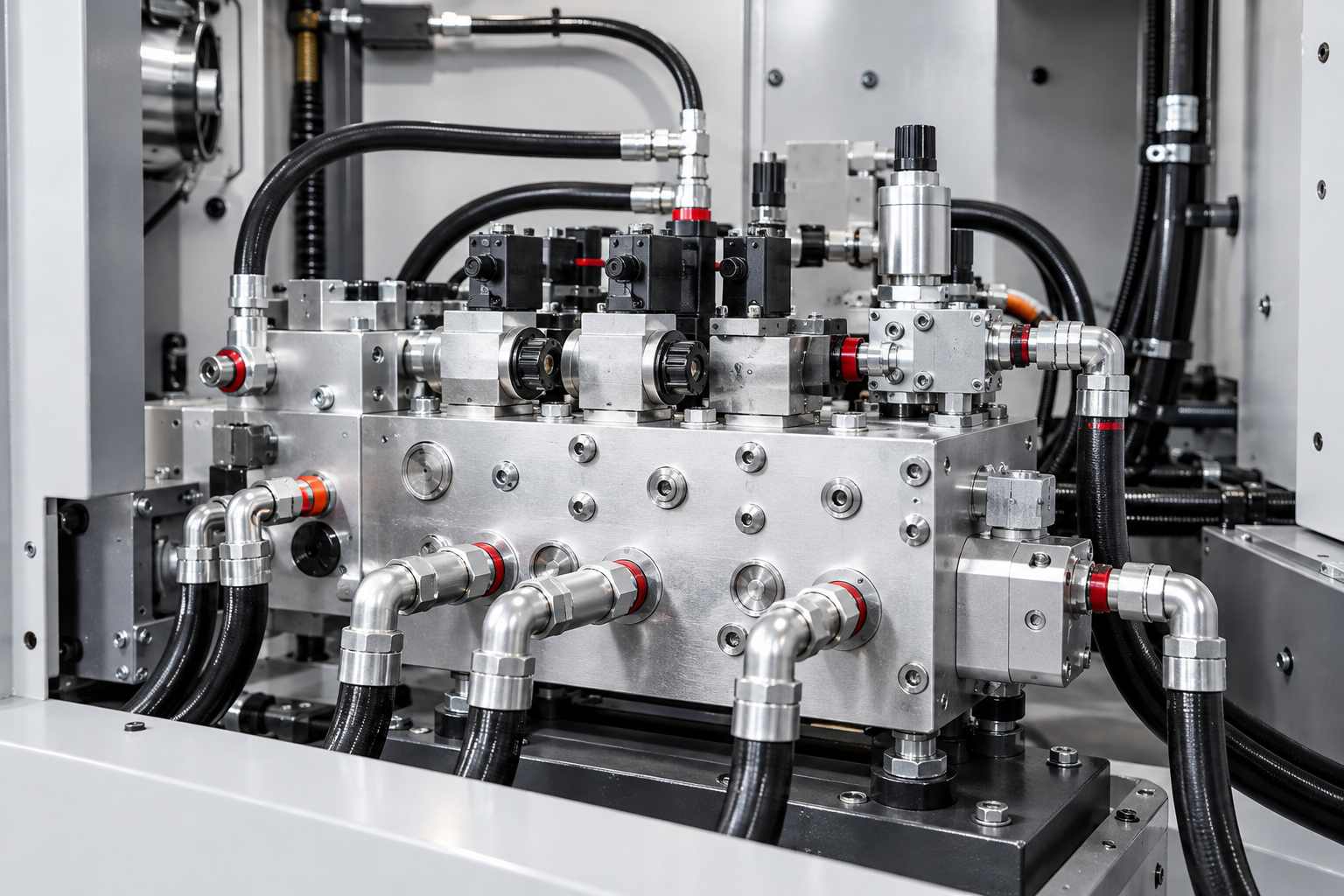
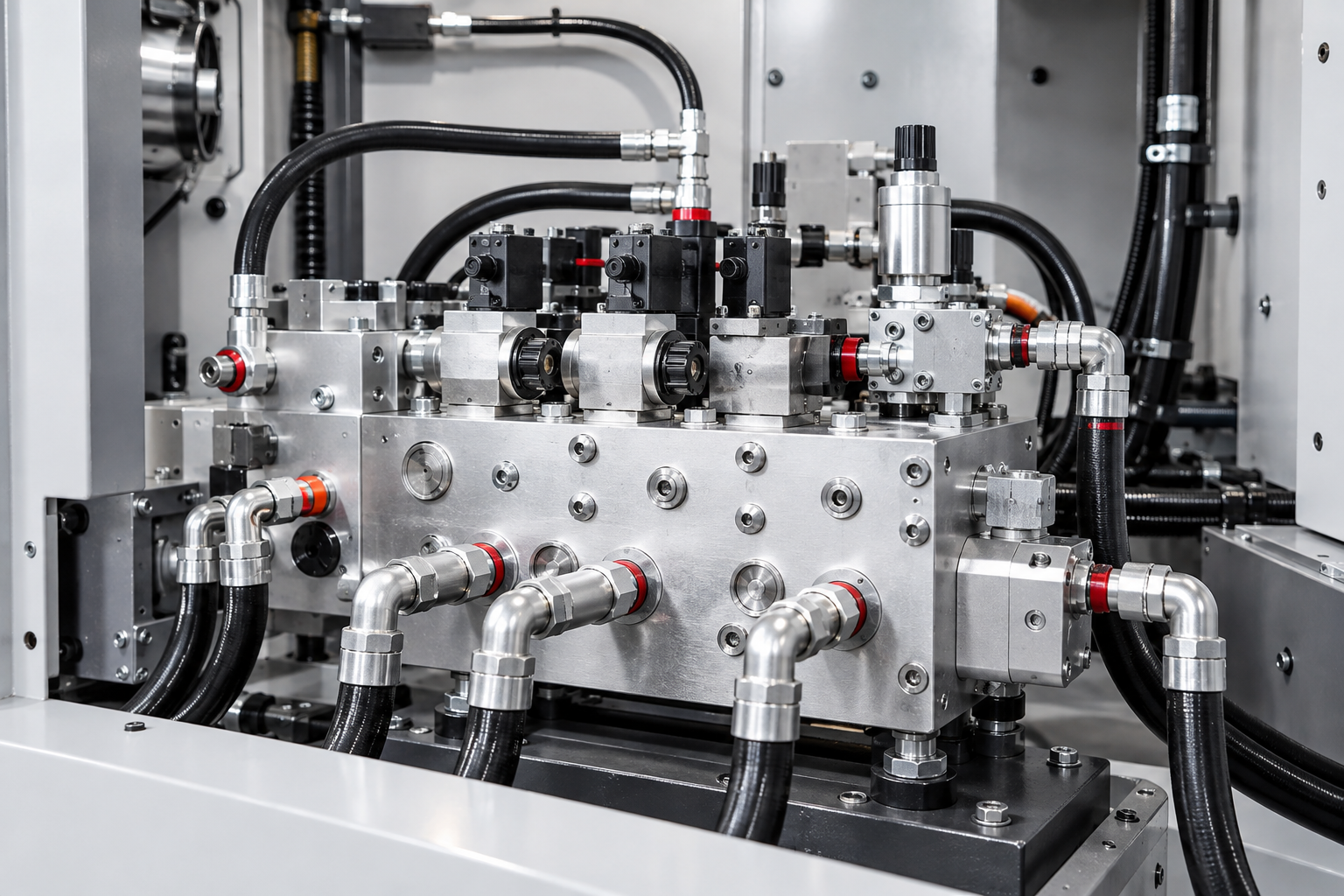
Cover image: AI-generated editorial illustration, not a model-specific product drawing or a photograph of a JIUDING facility.