Gravity makes a vertical axis different from a horizontal actuator with a resisting load. A suitable circuit must address stationary holding, controlled movement and loss of power as separate operating states.
Map the load through travel
Record load mass, actuator geometry and any changing mechanical leverage. Determine whether the load can overrun the supplied flow and whether its direction can reverse. Include the lightest operating condition, not only the maximum load.
Specify motion and holding functions
A directional valve routes flow but may not provide the required holding performance. A dedicated load-control arrangement may be needed. Its placement, pilot conditions and return-pressure sensitivity should be reviewed as part of the complete circuit.
Plan service and failure conditions
Define what happens after electrical or hydraulic power loss. Provide mechanical support for service work and consider trapped pressure. Validate the machine's protective functions through qualified engineering review rather than assuming a single valve makes the axis safe.
Practical checklist
- Document load range and actuator geometry.
- Define stationary leakage and lowering stability requirements.
- Review power loss and maintenance support separately.
Discuss your application
Explore related hydraulic products, or send JIUDING your model code and application details. Include the circuit drawing and the operating conditions relevant to the checks above so the required configuration can be reviewed.
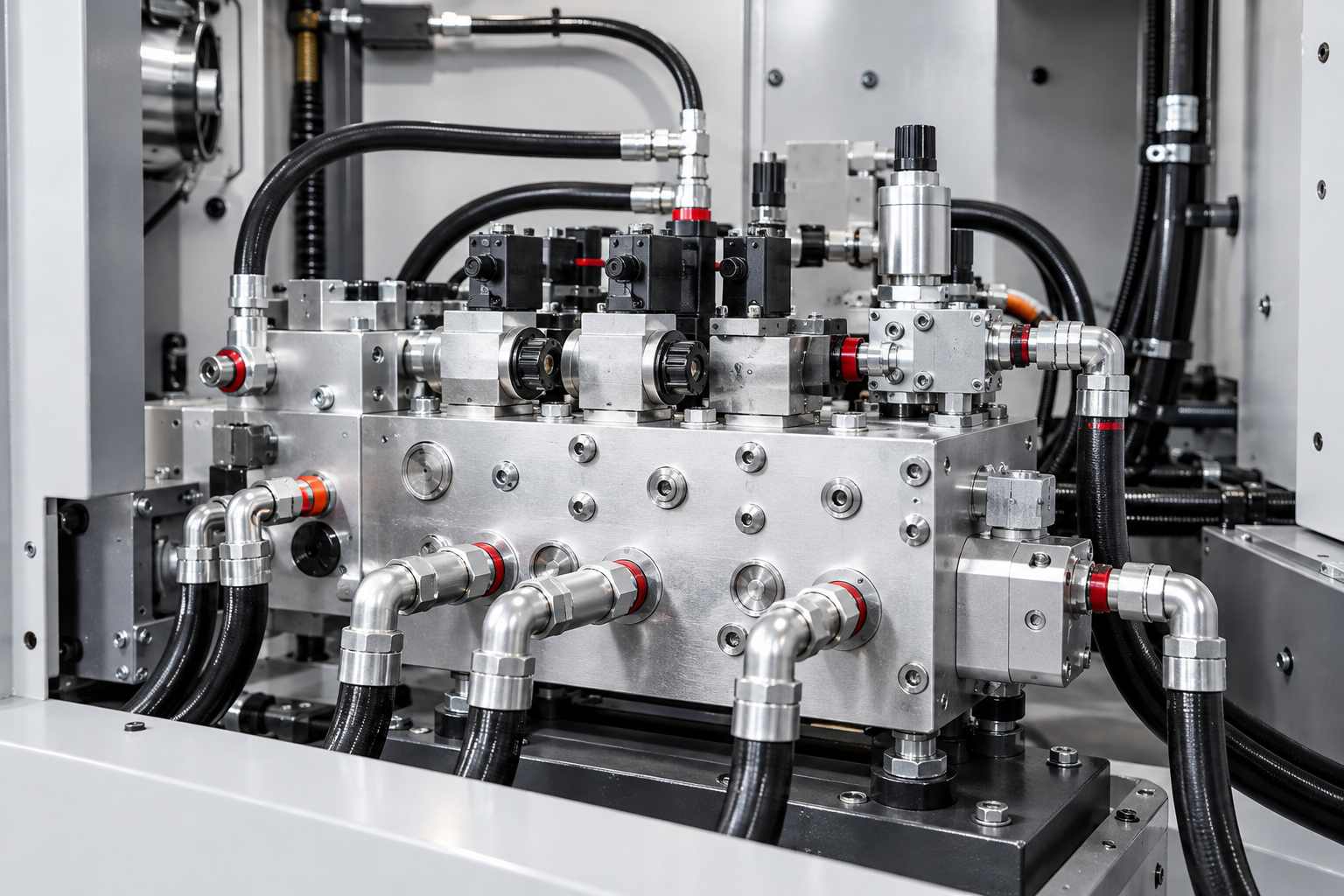
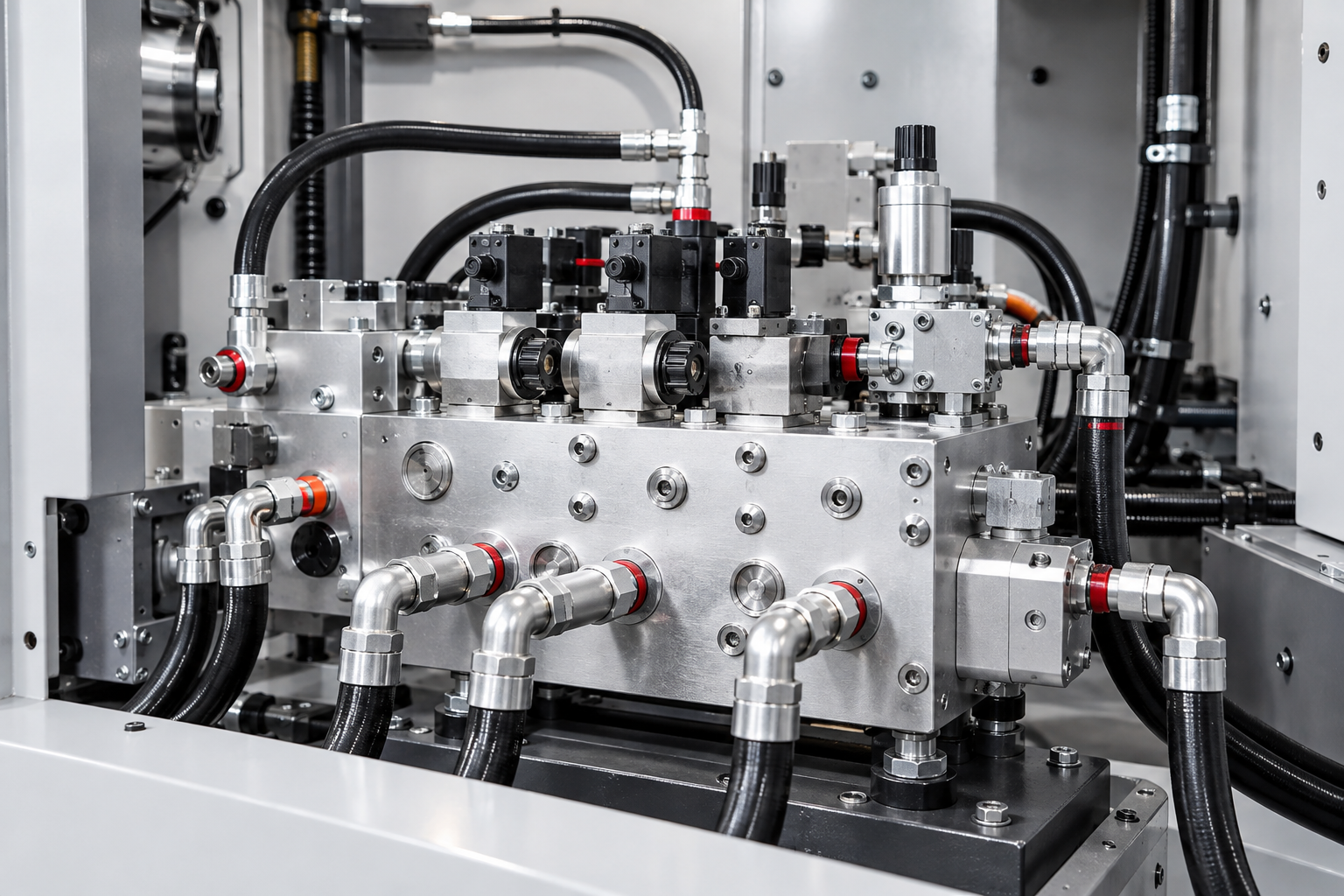
Cover image: AI-generated editorial illustration, not a model-specific product drawing or a photograph of a JIUDING facility.