The position of a flow restriction changes how a cylinder responds to its load. A restriction before the actuator and one after it can produce different pressure conditions even when both achieve a similar speed in one test.
Meter-in controls incoming flow
Restricting the supply can regulate motion against a resisting load. If the load drives the actuator, however, the cylinder may demand fluid faster than the restricted inlet provides. The circuit must address that possibility rather than assuming the load always resists.
Meter-out controls outgoing flow
Restricting exhaust can help control some load-driven movements, but it can also raise pressure in the exhausting chamber. Cylinder area ratios and the remaining circuit influence those pressures. A meter-out restriction is not a universal substitute for a designed load-control valve.
Review both movement directions
One-way flow controls can meter one direction and bypass in the other. Confirm the check orientation and trace the full cycle. Compare starting behavior, stopping behavior, pressure intensification and thermal loss before choosing the arrangement.
Practical checklist
- Identify resisting and overrunning load states.
- Calculate both chamber pressures and return flows.
- Verify check-valve orientation and shutdown behavior.
Discuss your application
Explore related hydraulic products, or send JIUDING your model code and application details. Include the circuit drawing and the operating conditions relevant to the checks above so the required configuration can be reviewed.
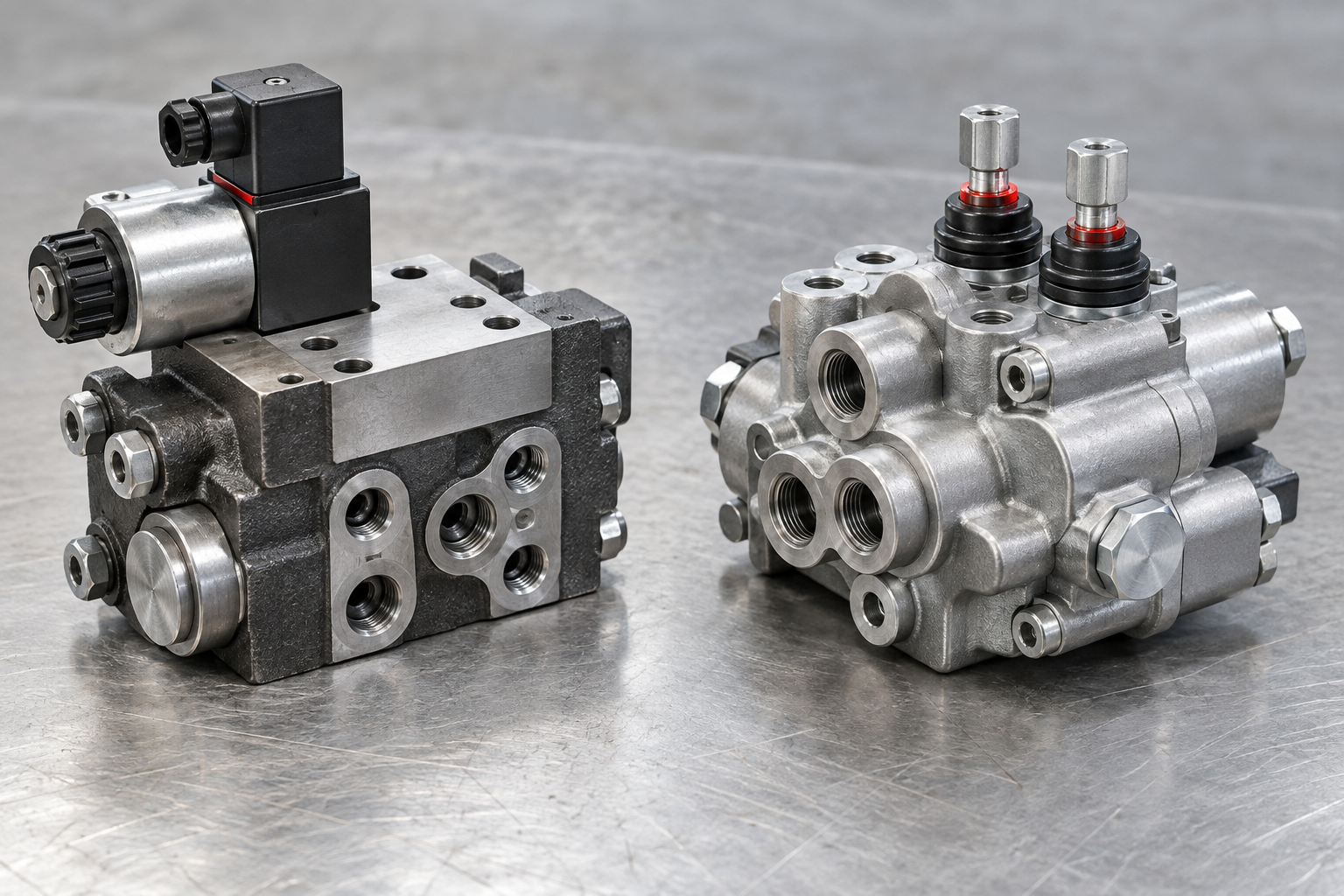
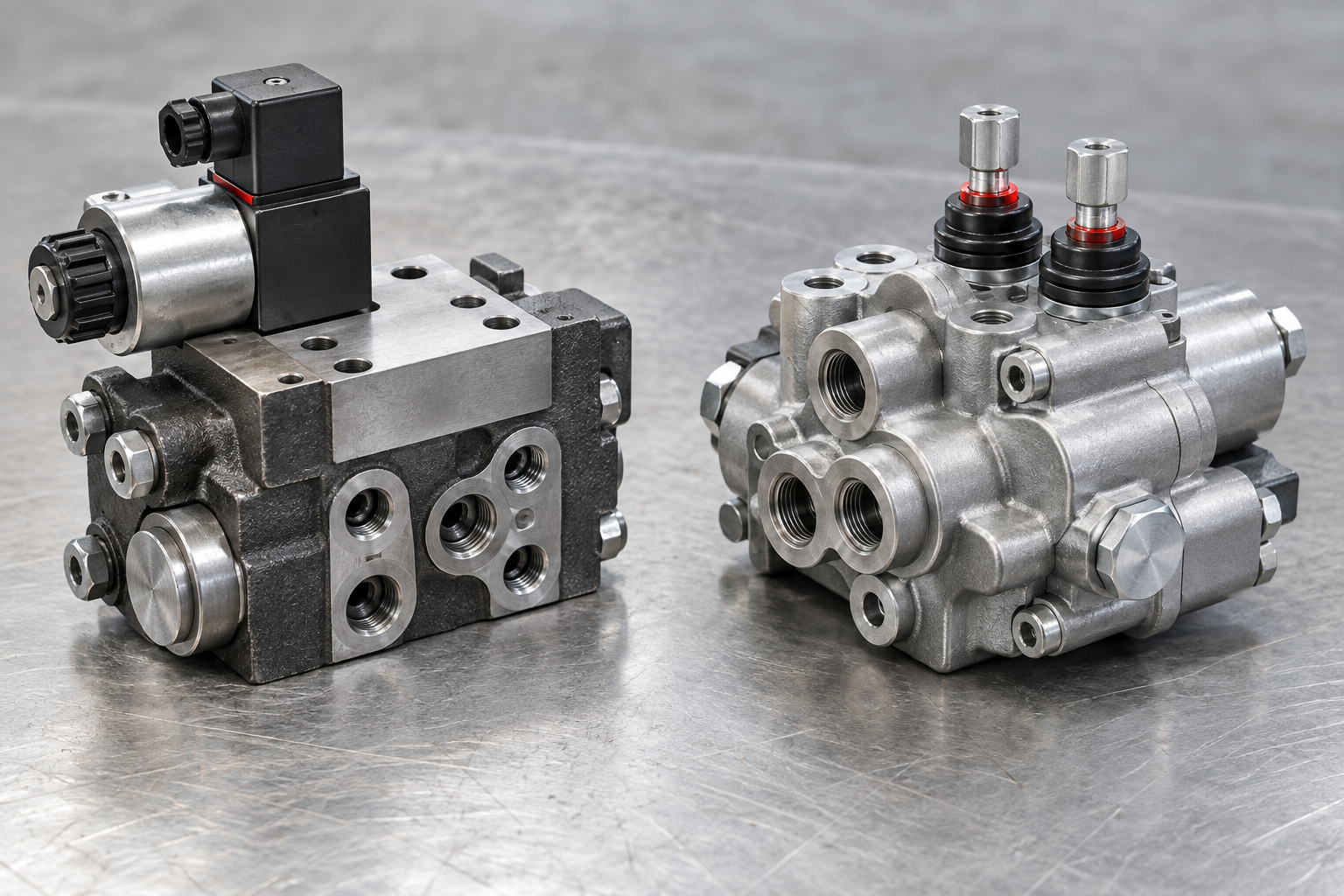
Cover image: AI-generated editorial illustration, not a model-specific product drawing or a photograph of a JIUDING facility.