A needle valve is a simple adjustable restriction. A compensated flow-control valve adds regulation intended to reduce the effect of pressure changes within its operating range. The right choice depends on acceptable speed variation.
Compare behavior as the load changes
At a fixed opening, a basic restriction's flow changes with the pressure difference across it and fluid conditions. A compensated design adjusts internally to stabilize the metering pressure difference, subject to sufficient pressure margin and its rated limits.
Compare cost and operating complexity
A simple needle valve can be suitable when conditions are stable and precise speed is unnecessary. Compensation adds capability but also requires the correct pressure budget, flow direction and return arrangement. Neither type removes the energy loss associated with throttling.
Compare the complete installation
Check whether reverse flow needs a bypass check and whether the load can overrun. Use flow curves across the intended range, not only the maximum rating. Test speed at minimum and maximum load after the oil reaches representative operating temperature.
Practical checklist
- Define the acceptable speed change as load varies.
- Check the minimum pressure margin for compensation.
- Include reverse-flow and heat-generation requirements.
Discuss your application
Explore related hydraulic products, or send JIUDING your model code and application details. Include the circuit drawing and the operating conditions relevant to the checks above so the required configuration can be reviewed.
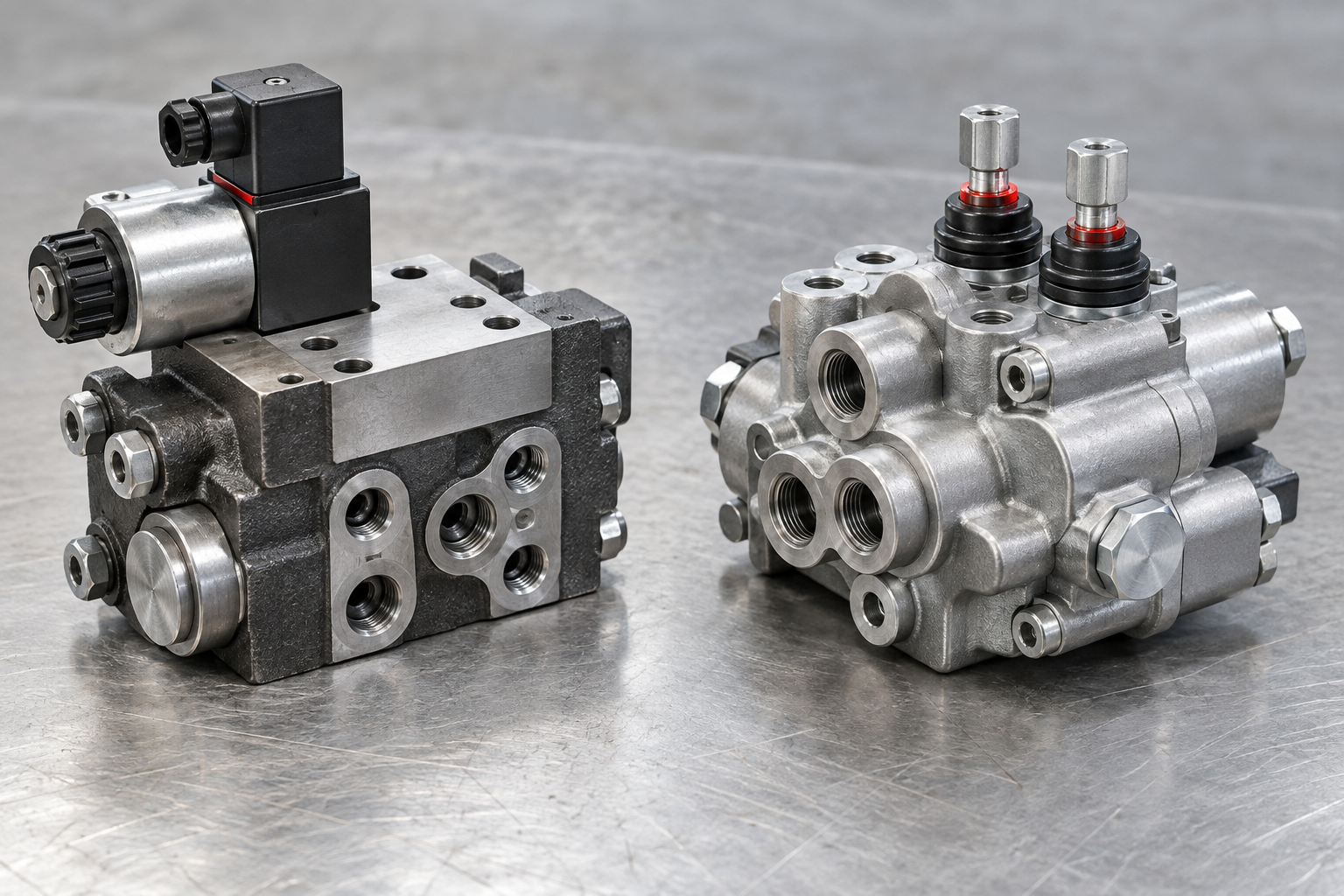
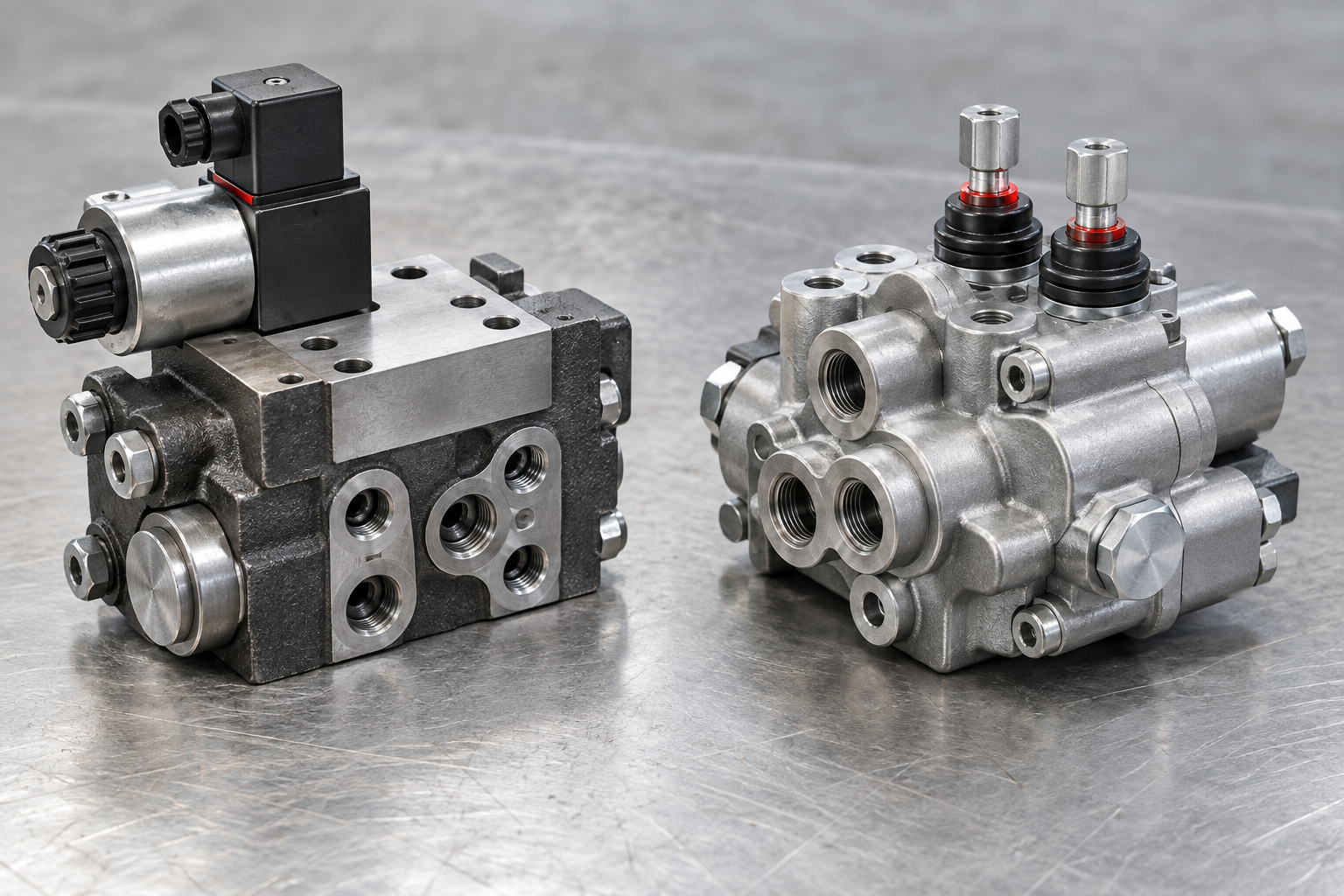
Cover image: AI-generated editorial illustration, not a model-specific product drawing or a photograph of a JIUDING facility.