Outdoor equipment can encounter changing ambient conditions, dirty service environments and variable engine speed. Those conditions belong in the component specification from the beginning.
Define the operating envelope
State cold-start and stabilized temperatures, fluid type, engine or motor speed range and expected duty. Avoid selecting a pump or valve from one nominal room-temperature operating point. Include vibration and installation exposure where relevant.
Protect the installed assembly
Connector seals, cable routing, hose support and reservoir breathing affect reliability. A component's protection rating may depend on the correct mating connector and assembly. Verify the complete installation rather than treating the bare part's label as sufficient.
Design for practical service
Provide accessible sampling and inspection points where the machine design permits. Make model identification and maintenance instructions available to field technicians. Keep filling and replacement procedures clean so environmental exposure does not become internal contamination.
Practical checklist
- Record the temperature, speed and duty envelope.
- Confirm assembled electrical and mechanical protection.
- Plan clean field replacement and fluid handling.
Discuss your application
Explore related hydraulic products, or send JIUDING your model code and application details. Include the circuit drawing and the operating conditions relevant to the checks above so the required configuration can be reviewed.
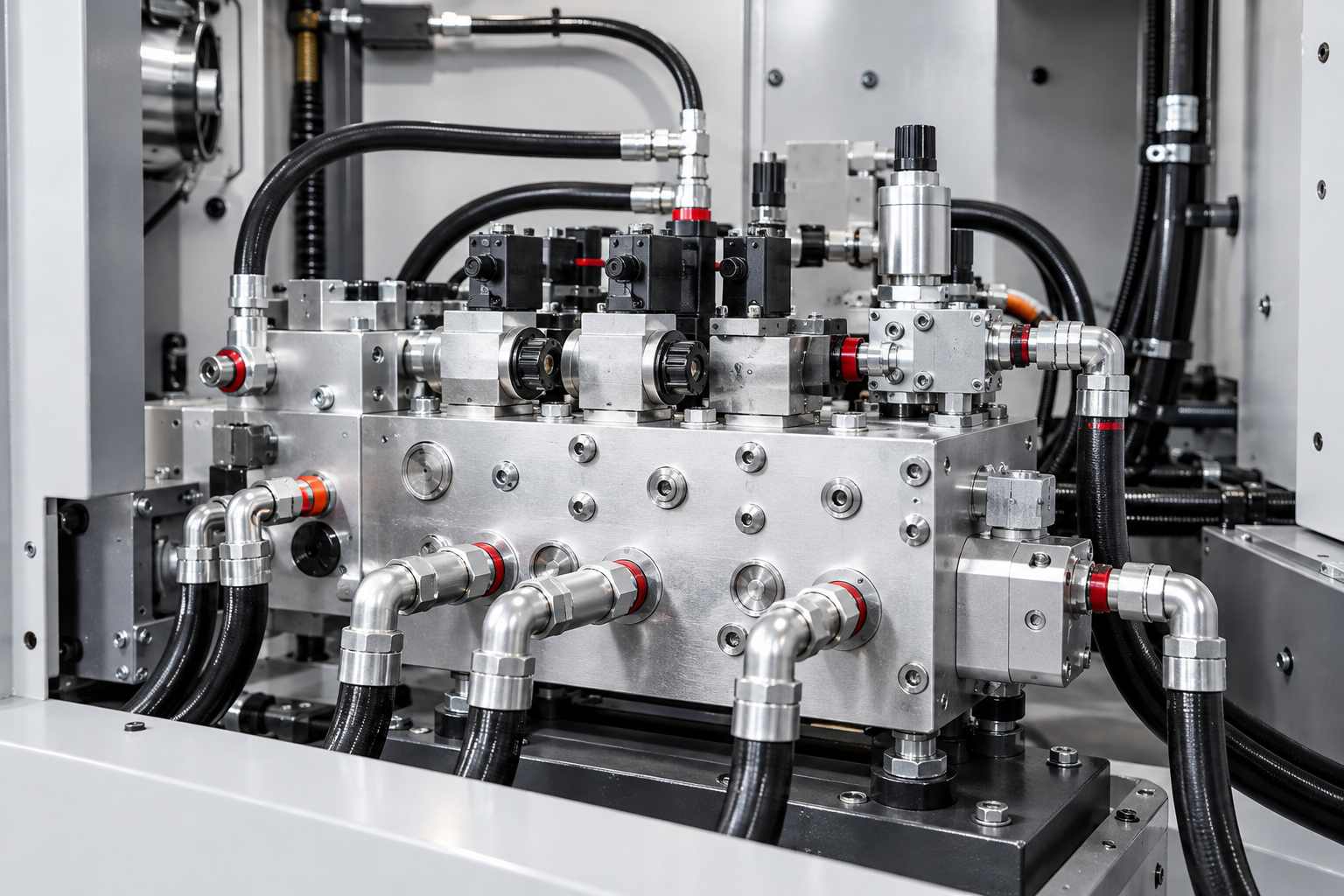
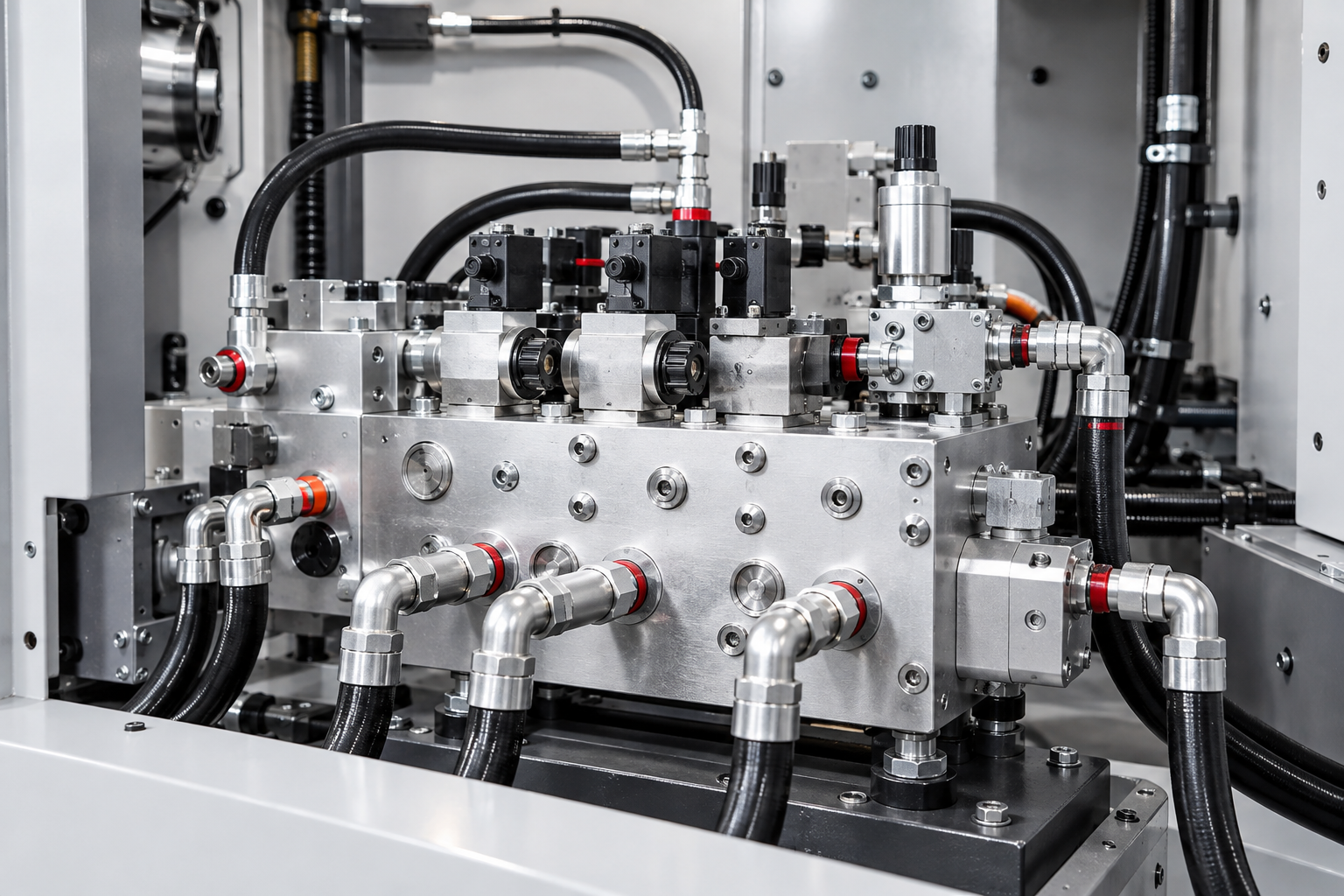
Cover image: AI-generated editorial illustration, not a model-specific product drawing or a photograph of a JIUDING facility.