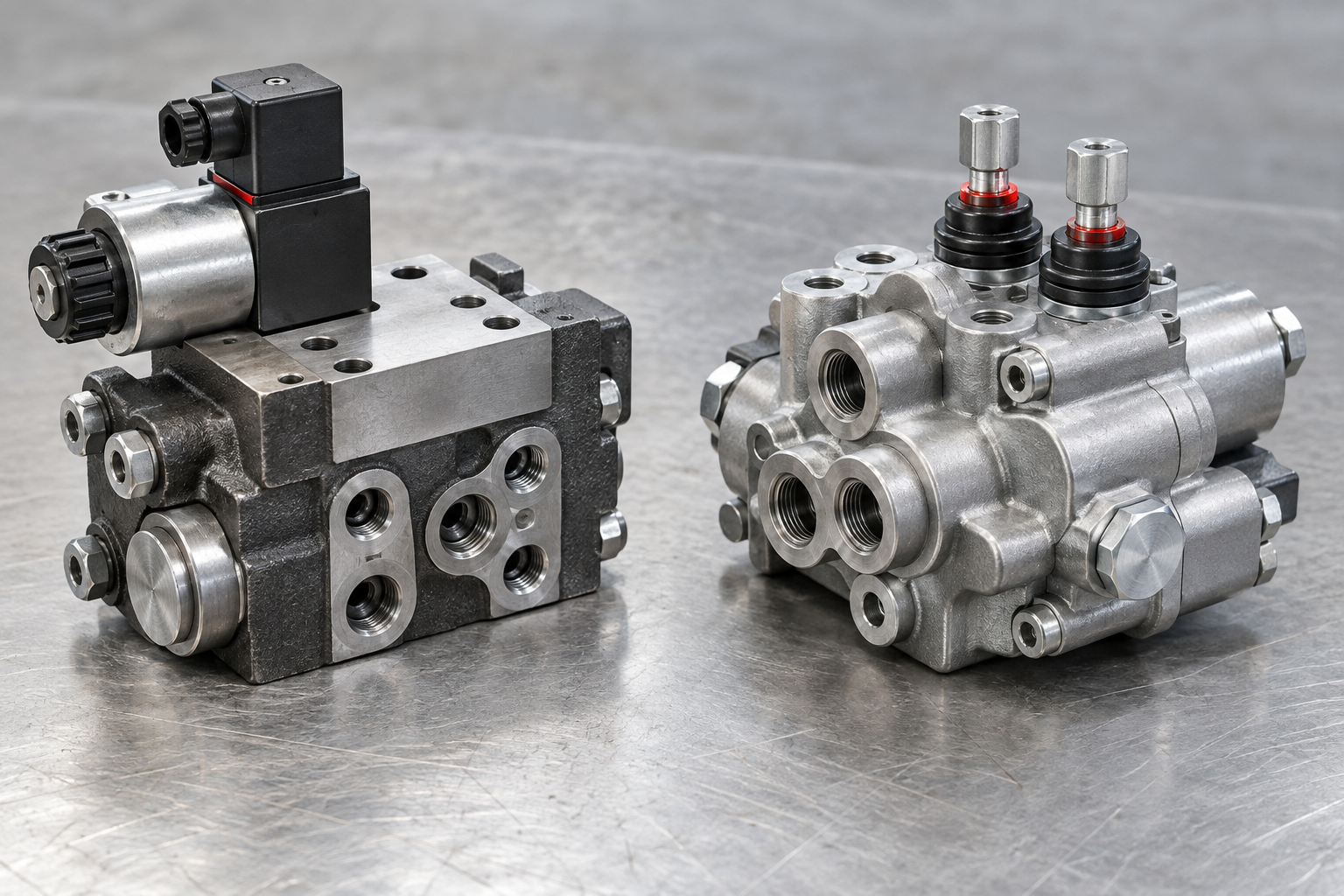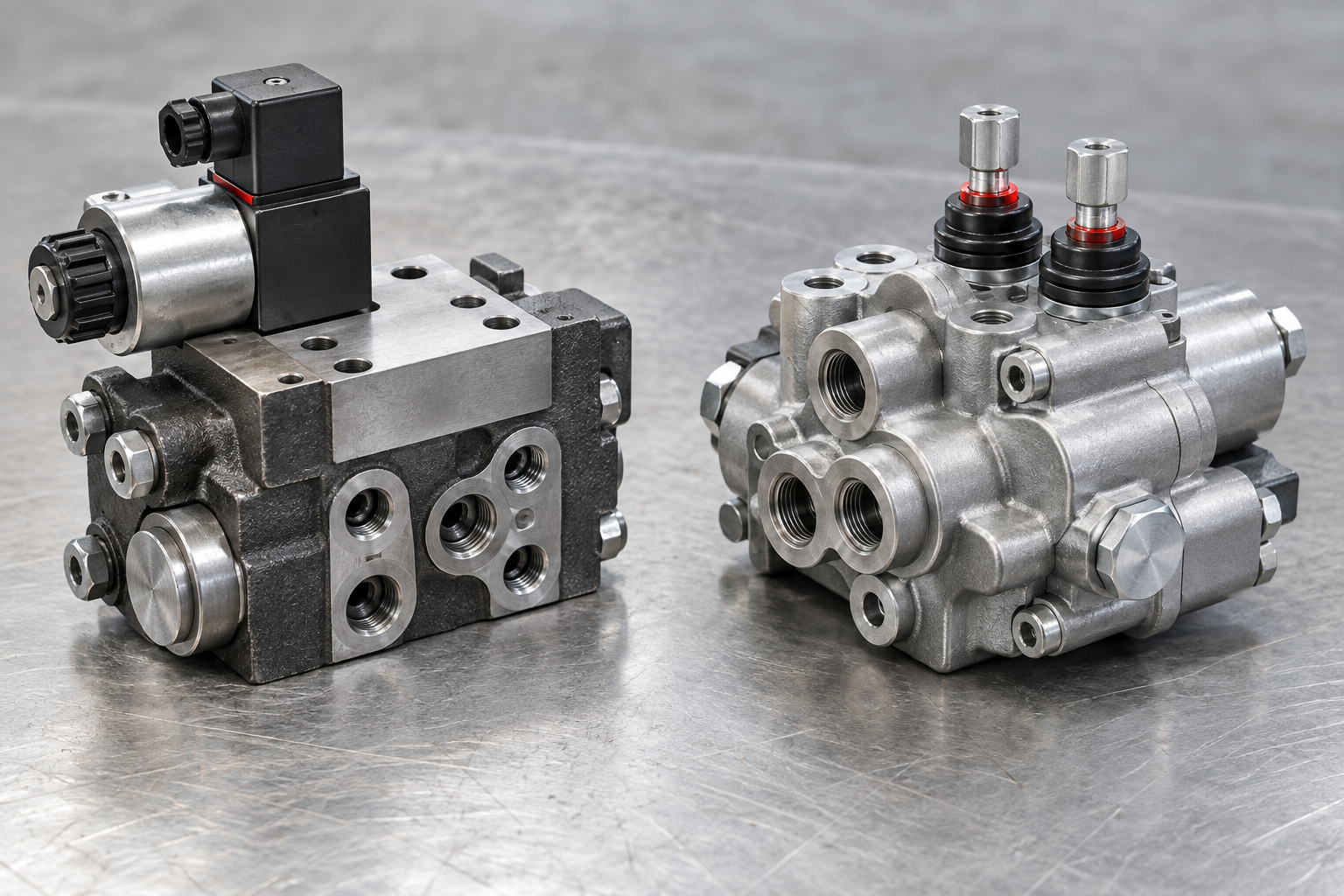
A sandwich valve places a function within a stacked mounting interface. An inline valve places it in external pipework. Neither arrangement is inherently best; installation space, service access and circuit routing decide the trade-off.
Compare the hydraulic path
A sandwich assembly can reduce external connections, but its internal port paths and stack order must match the circuit. An inline arrangement offers routing flexibility but adds fittings and line length. Check pressure losses and every required pilot or drain connection.
Compare mechanical requirements
Stacked assemblies need the correct interface, seals, fastener length and clamping requirements. Increasing stack height can affect access and mounting loads. Inline components need suitable support so hoses and pipes do not impose unacceptable stress on connections.
Compare maintenance access
Consider how a technician will identify, isolate and replace the component. Removing one layer may require dismantling other layers. Document the stack order and orientation; for inline valves, label flow direction and connections. Choose based on lifecycle access, not only a compact photograph.
Practical checklist
- Review port routing and stack order on a circuit drawing.
- Check fasteners, supports and seal interfaces.
- Confirm replacement access in the actual machine envelope.
Discuss your application
Explore related hydraulic products, or send JIUDING your model code and application details. Include the circuit drawing and the operating conditions relevant to the checks above so the required configuration can be reviewed.
Cover image: AI-generated editorial illustration, not a model-specific product drawing or a photograph of a JIUDING facility.