When several functions share a pump, their flow demands interact. A circuit that works well with one actuator at a time may behave differently when operators command two movements together.
Create a simultaneous-demand map
List the flow and pressure needed by each function and mark which combinations are permitted. The sum of peak flows is only relevant when those peaks can occur together. Record which function has priority if demand exceeds available delivery.
Review flow-sharing behavior
Simple parallel branches do not guarantee equal or predictable flow distribution. Different loads can direct flow toward the lower-resistance path. Valve compensation, priority arrangements and pump controls influence the result and must be assessed together.
Test the transitions
Evaluate one function starting or stopping while another remains active. Watch for speed changes, pressure transients and unstable control. Specify acceptance criteria for both individual and simultaneous operation so supplier quotations address the actual machine requirement.
Practical checklist
- List allowed combinations of active functions.
- State priority and minimum required performance for each.
- Validate starting and stopping interactions under load.
Discuss your application
Explore related hydraulic products, or send JIUDING your model code and application details. Include the circuit drawing and the operating conditions relevant to the checks above so the required configuration can be reviewed.
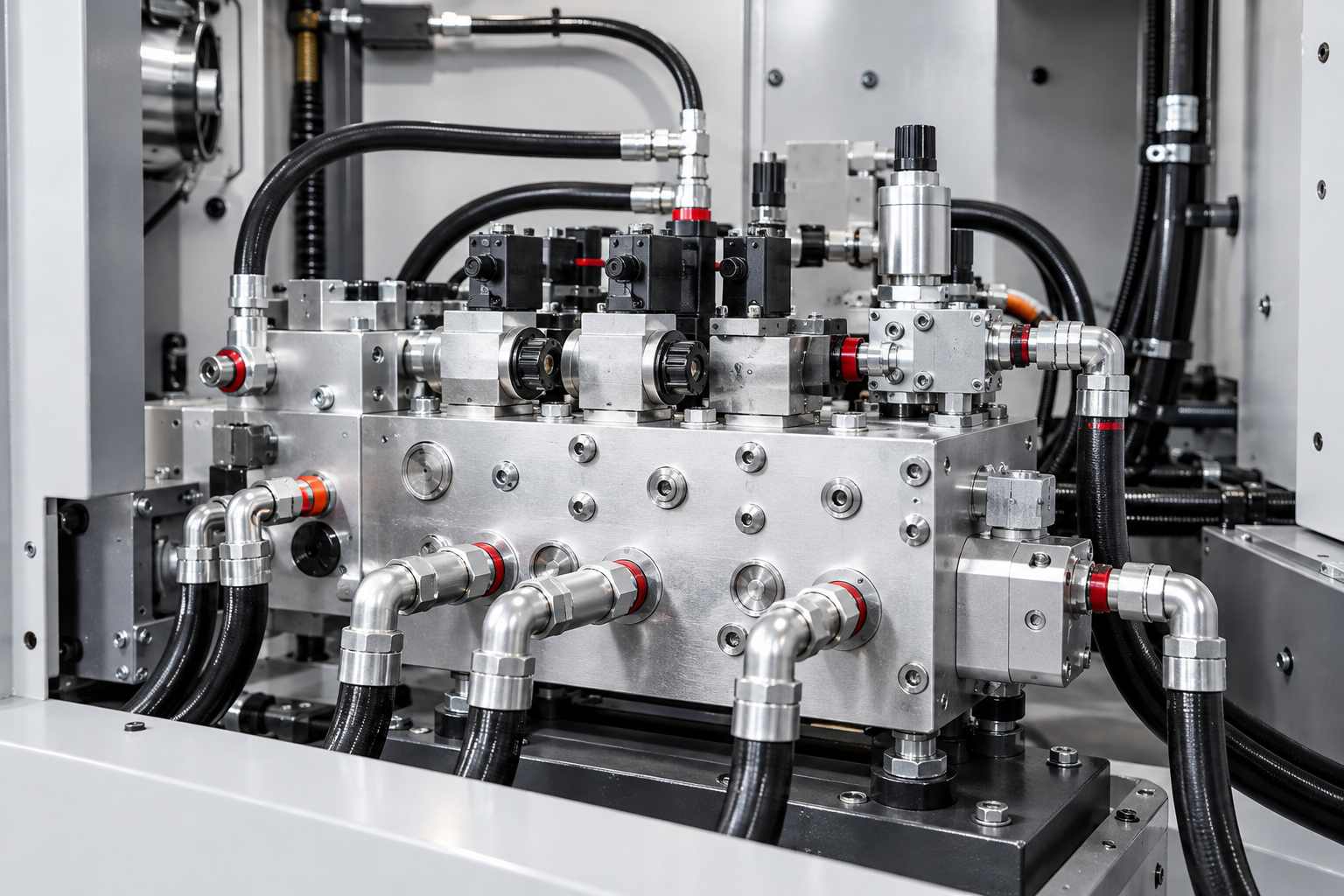
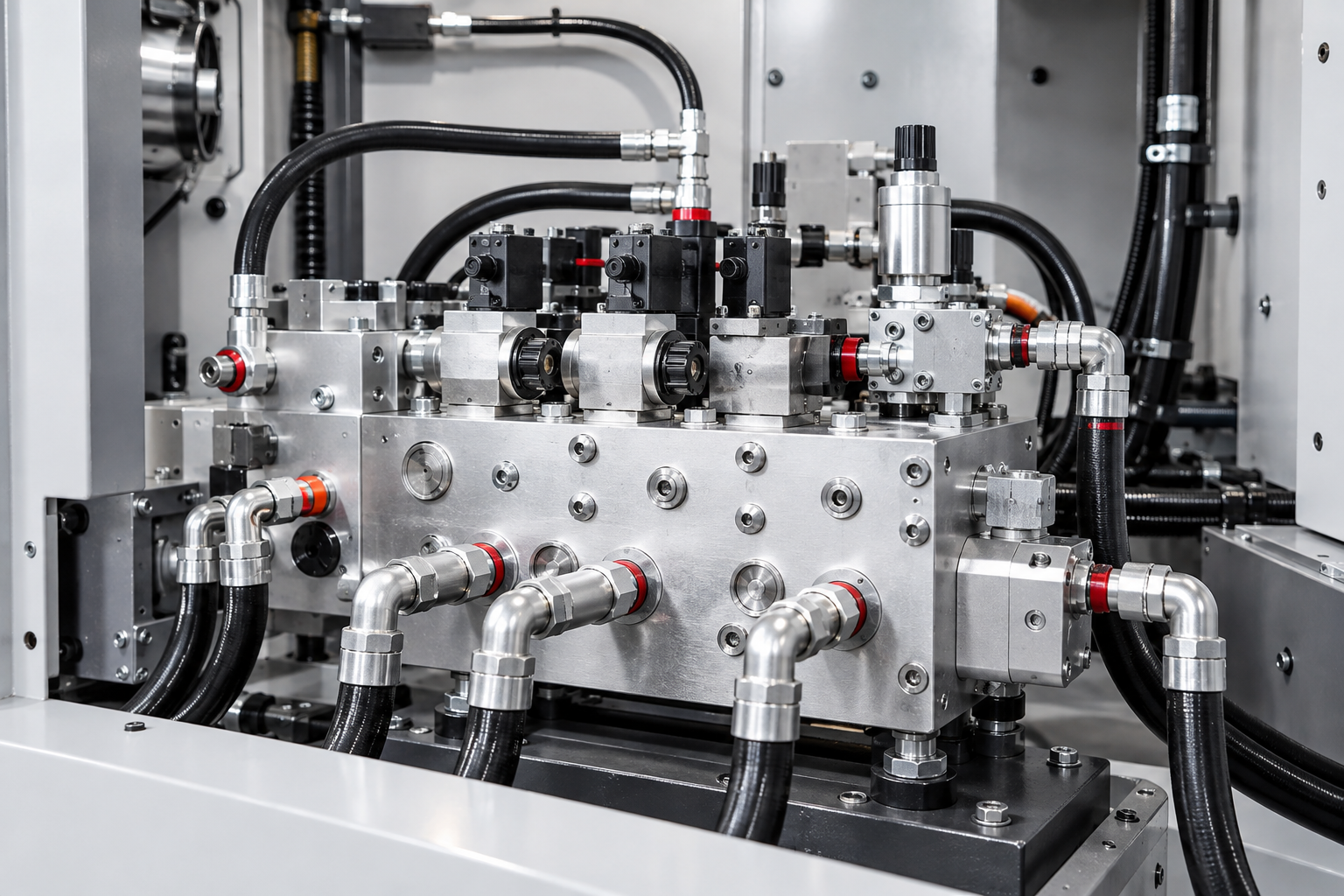
Cover image: AI-generated editorial illustration, not a model-specific product drawing or a photograph of a JIUDING facility.