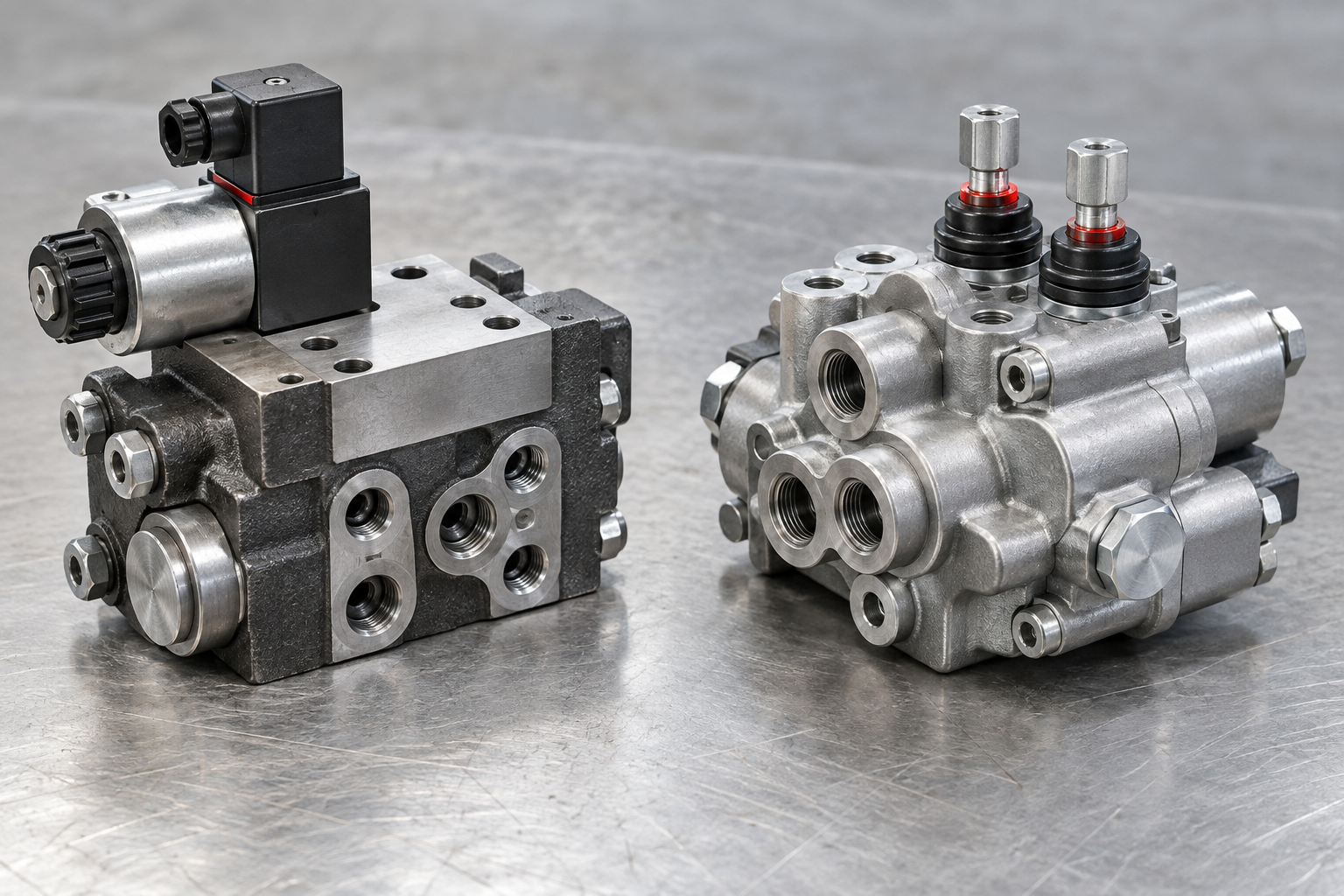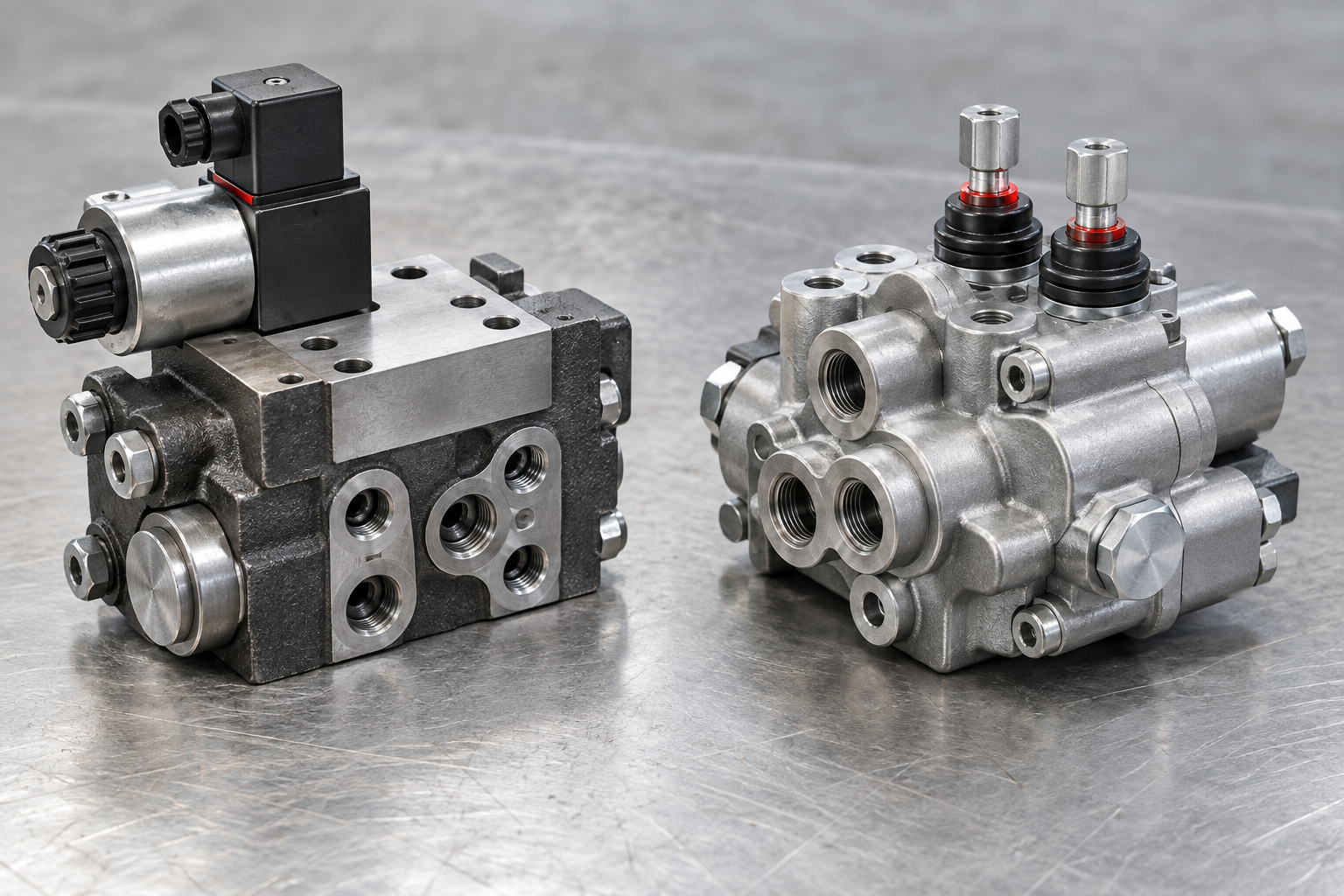
An on-off valve selects defined states, while a proportional valve responds over a command range. The latter can support adjustable motion, but it also adds electronic and commissioning requirements.
Match the process requirement
If the machine only needs repeatable end-to-end movements, an on-off circuit with appropriate speed control may be sufficient. If speed or pressure must change during a cycle, proportional control may offer a more direct way to shape that behavior.
Budget for the control chain
A proportional installation may require a compatible driver, command signal, wiring and tuning. Feedback sensors may be necessary when the controlled result must remain accurate under changing load. The valve alone does not create a closed-loop motion system.
Define power-loss behavior
Both types require a clear review of de-energized connections and any stored load. A smooth commanded stop does not establish the behavior after electrical failure. Compare fault handling, maintenance skills and acceptance tests alongside normal production performance.
Practical checklist
- State whether variable speed or pressure is actually needed.
- Include electronics and commissioning in project scope.
- Verify the unpowered hydraulic state and fault response.
Discuss your application
Explore related hydraulic products, or send JIUDING your model code and application details. Include the circuit drawing and the operating conditions relevant to the checks above so the required configuration can be reviewed.
Cover image: AI-generated editorial illustration, not a model-specific product drawing or a photograph of a JIUDING facility.