A sharp reversal changes fluid momentum and actuator motion. Noise or vibration during switching may involve the valve, fluid columns, load inertia and control timing together.
Locate the event in the cycle
Record whether the shock occurs at start, reversal, stopping or end of stroke. Note actuator speed, load and fluid temperature. A consistent timing record helps distinguish valve switching from mechanical impact at an end stop.
Review the available control options
Command ramps, suitable spool characteristics or circuit changes can influence transitions. Their suitability depends on the valve and machine design. Slowing an electrical command will not necessarily change an on-off valve's hydraulic transition in the desired way.
Validate more than perceived noise
A quieter machine is not proof that peak pressures are acceptable. Use an approved measurement plan with instruments capable of capturing the event. Review stopping distance, cycle time and protective functions whenever motion profiles are changed.
Practical checklist
- Identify the exact transition and operating conditions.
- Check whether the valve supports the proposed control method.
- Measure transient behavior and confirm stopping requirements.
Discuss your application
Explore related hydraulic products, or send JIUDING your model code and application details. Include the circuit drawing and the operating conditions relevant to the checks above so the required configuration can be reviewed.
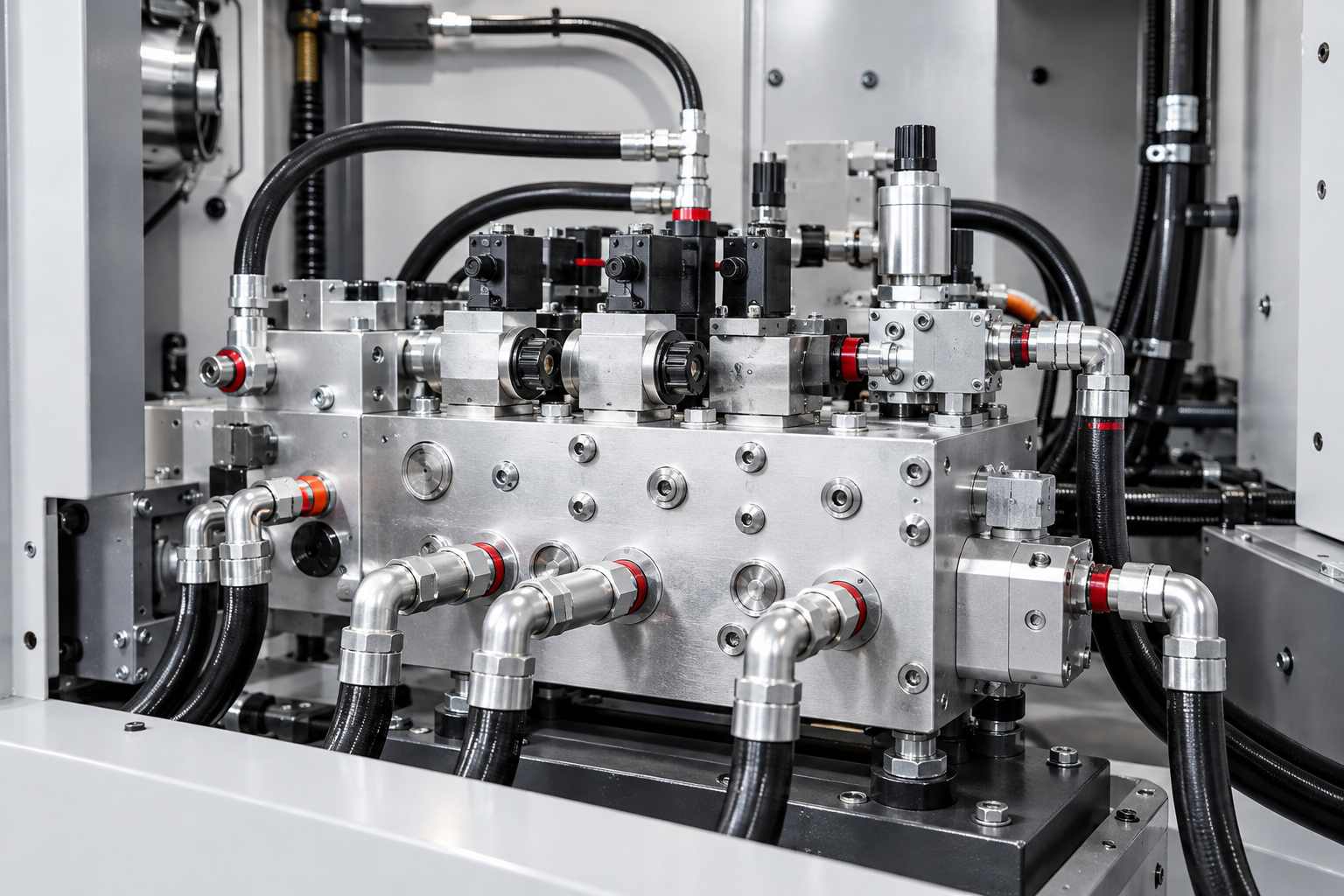
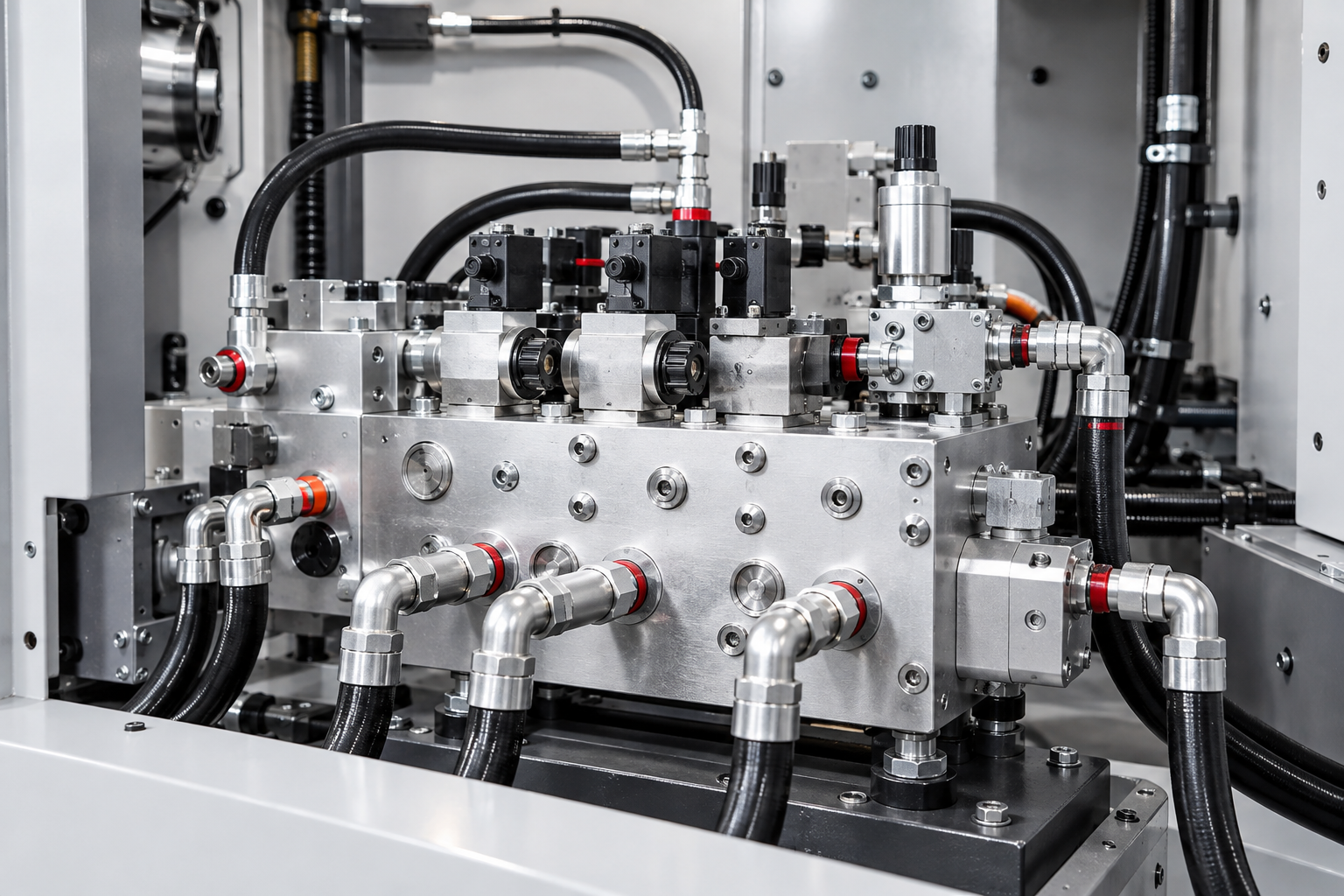
Cover image: AI-generated editorial illustration, not a model-specific product drawing or a photograph of a JIUDING facility.