A retrofit should begin with a clear account of what the machine currently does and what must improve. Without that baseline, a new valve or pump can solve one issue while creating another.
Define the current configuration
Collect schematics, complete model codes, settings and operating measurements. Record known faults separately from normal behavior. Identify undocumented modifications before deciding that the original drawing represents the installed machine.
State measurable changes
Examples include a defined reduction in cycle-time variation or a required controllable speed range. Avoid vague objectives such as better performance. List the functions, interfaces and safety requirements that the retrofit must continue to satisfy.
Plan validation and recovery
Use a qualified design review to evaluate electrical and hydraulic compatibility. Establish commissioning tests, authorized adjustments and a recovery plan if acceptance is not achieved. Update drawings and maintenance records when the final configuration is approved.
Practical checklist
- Document the installed circuit and baseline measurements.
- Define measurable improvement and unchanged requirements.
- Approve testing, recovery and documentation before installation.
Discuss your application
Explore related hydraulic products, or send JIUDING your model code and application details. Include the circuit drawing and the operating conditions relevant to the checks above so the required configuration can be reviewed.
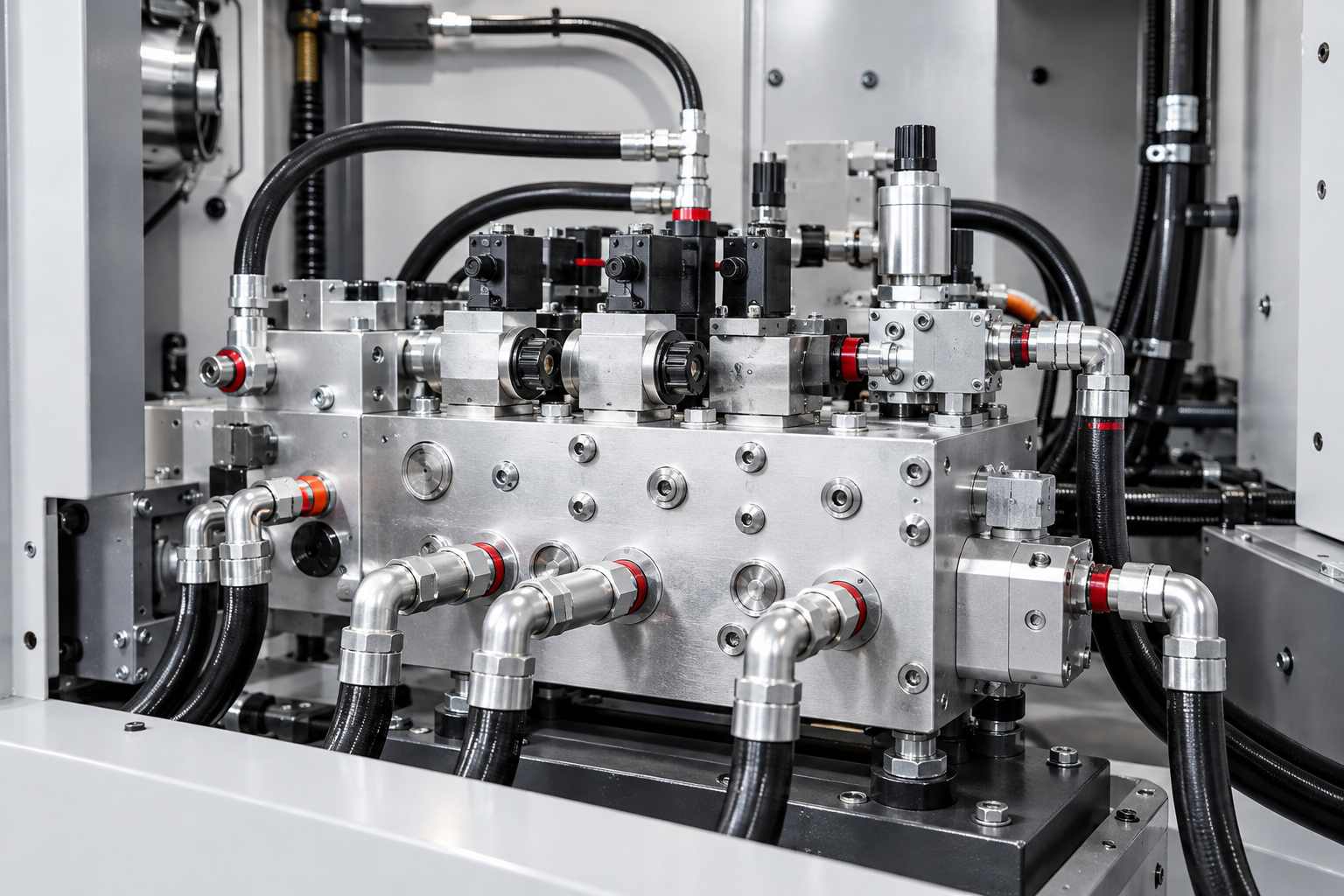
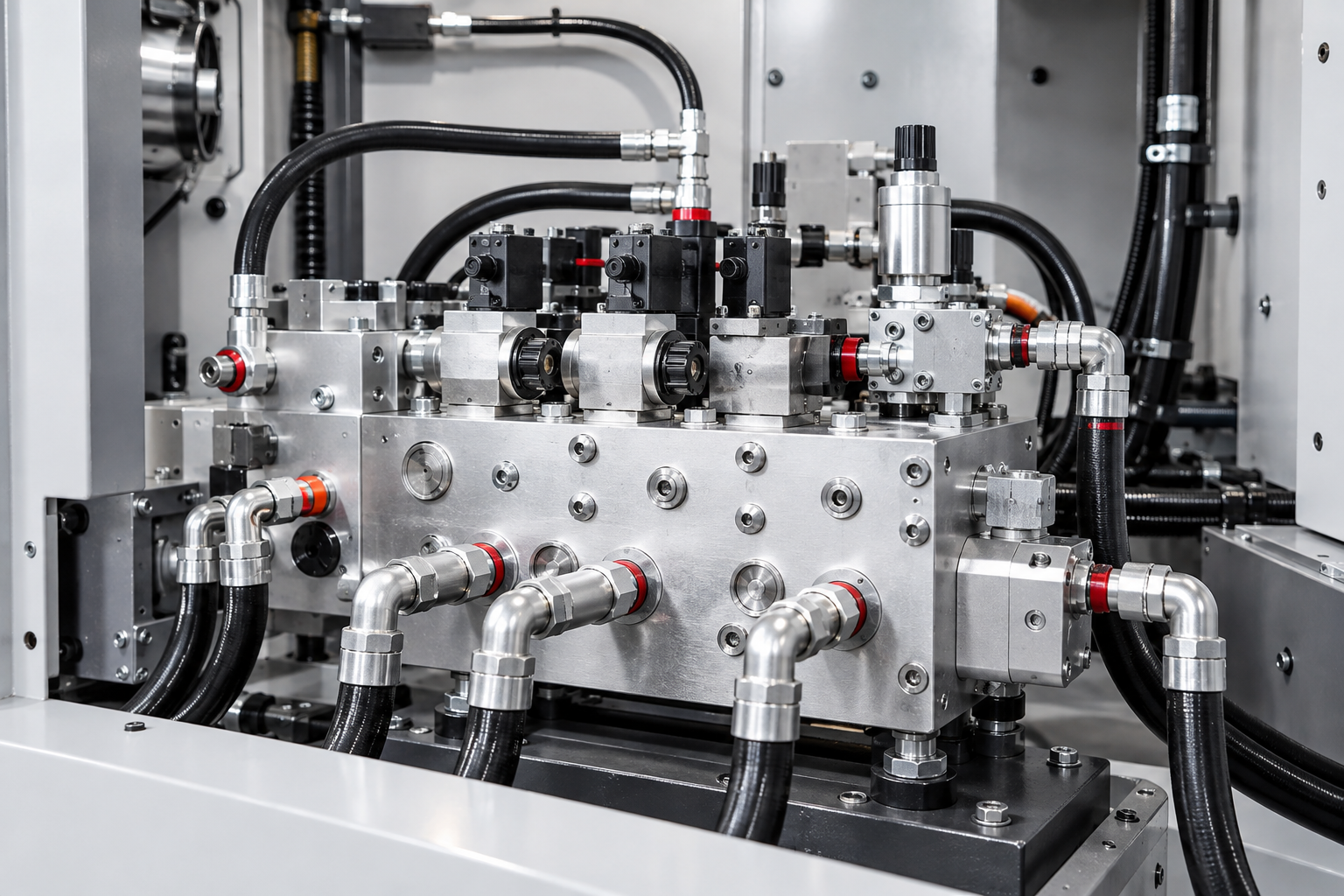
Cover image: AI-generated editorial illustration, not a model-specific product drawing or a photograph of a JIUDING facility.