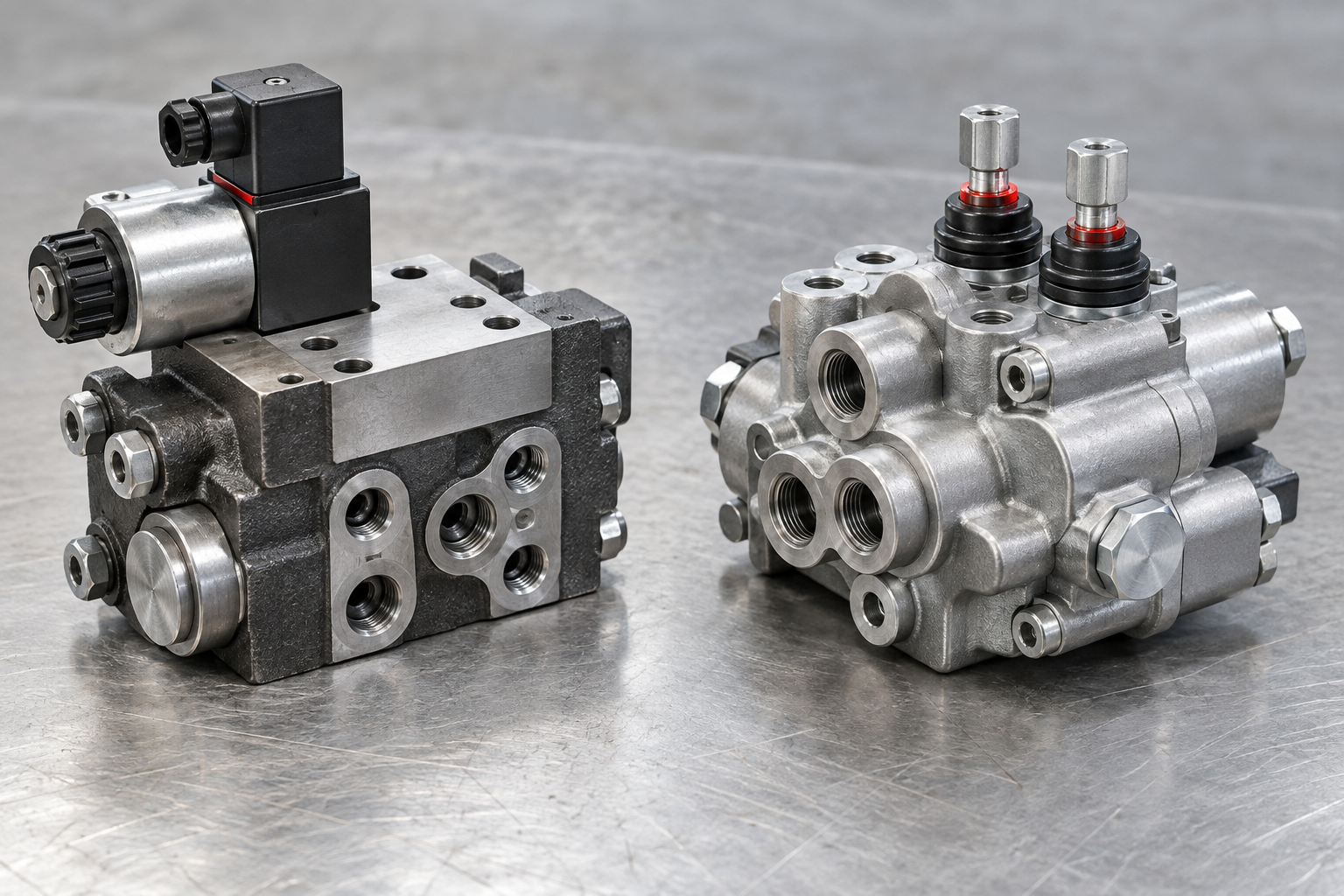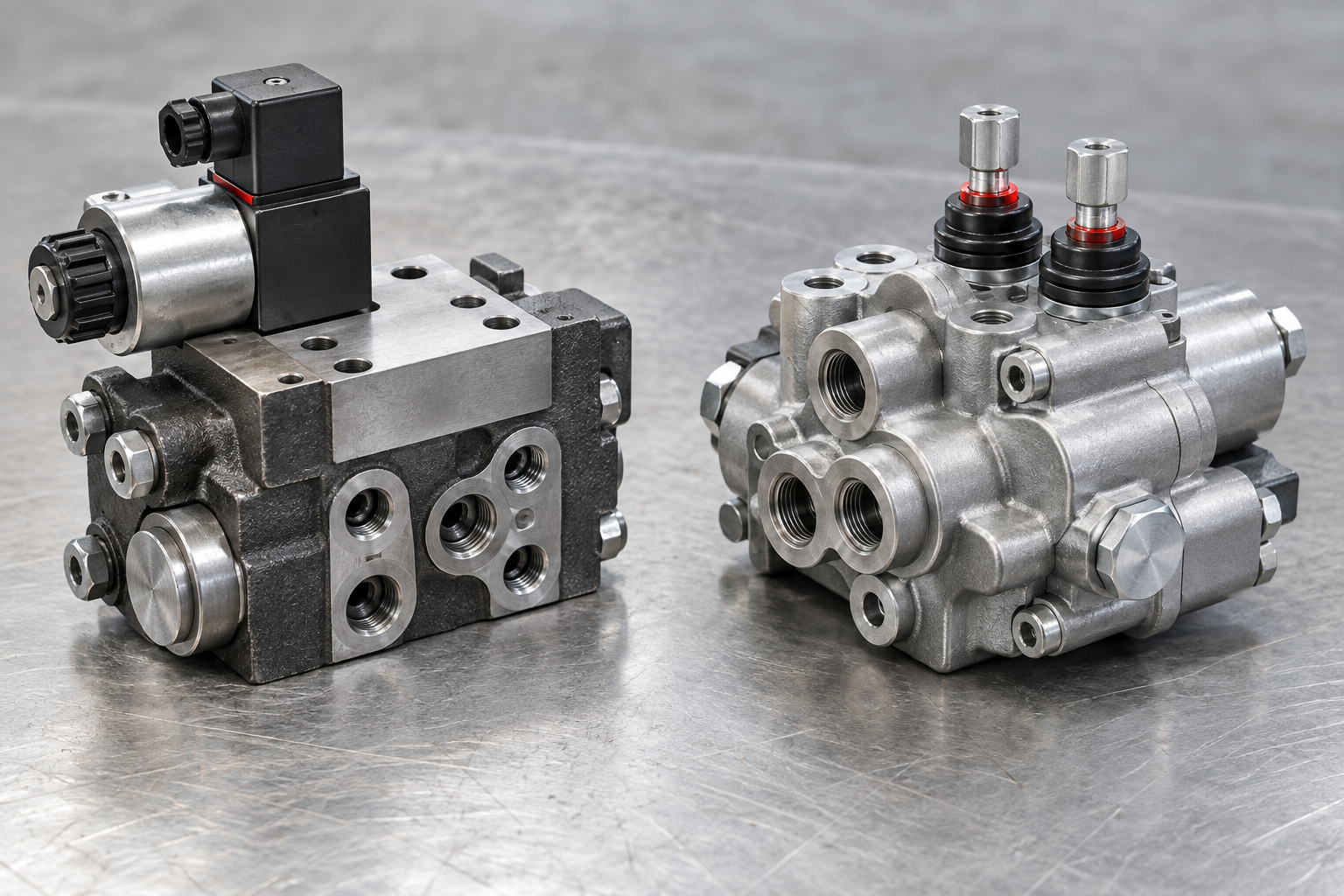
A sequence valve and a pressure switch can both react to rising pressure, but they produce different outputs. One changes a hydraulic flow path; the other provides a signal to a control system.
Compare what happens at the threshold
A sequence function opens a hydraulic path according to its pressure characteristic. A pressure switch changes an electrical state under its specified switching behavior. The switch still needs a controller and actuator arrangement to cause the next machine action.
Consider what pressure proves
A pressure increase can indicate that a cylinder contacted a workpiece, but it can also result from a blockage or another load. Pressure alone does not universally prove position, completed clamping or a safe process state. Additional sensing may be required.
Account for reset behavior
Review hysteresis, pressure fluctuations, drainage and timing as applicable. A hydraulic sequence and an electrically sequenced circuit have different failure modes. Define the required sequence and confirmation conditions before selecting either approach.
Practical checklist
- Specify whether you need fluid routing or an electrical indication.
- Identify what a pressure threshold actually confirms.
- Define reset, timeout and fault-handling behavior.
Discuss your application
Explore related hydraulic products, or send JIUDING your model code and application details. Include the circuit drawing and the operating conditions relevant to the checks above so the required configuration can be reviewed.
Cover image: AI-generated editorial illustration, not a model-specific product drawing or a photograph of a JIUDING facility.