Spool and poppet constructions control fluid with different moving elements. Their practical advantages depend on the complete design, so a broad construction label should not replace a model-specific performance check.
Compare the sealing principle
A poppet closes against a seat, while a spool typically controls ports through lands and clearances. Seat-based designs can offer low leakage under specified conditions. Actual allowable leakage must come from the tested product, not an assumption that every poppet is perfectly leak-free.
Compare the required routing
Spools are widely used where several flow connections change together. Poppet arrangements can be used for blocking and other functions, sometimes combining multiple elements. Compare the full hydraulic symbol, actuation requirements and switching behavior for the task.
Compare sensitivity in the real circuit
Contamination, pressure forces and fluid condition affect both constructions in different ways. Verify permitted flow direction, cracking or opening behavior, pressure limits and service requirements. A low-leakage component alone does not make a complete machine safe for suspended loads.
Practical checklist
- Specify the required function before construction preference.
- Compare leakage under matching pressure and temperature conditions.
- Check bidirectional behavior and actuation requirements.
Discuss your application
Explore related hydraulic products, or send JIUDING your model code and application details. Include the circuit drawing and the operating conditions relevant to the checks above so the required configuration can be reviewed.
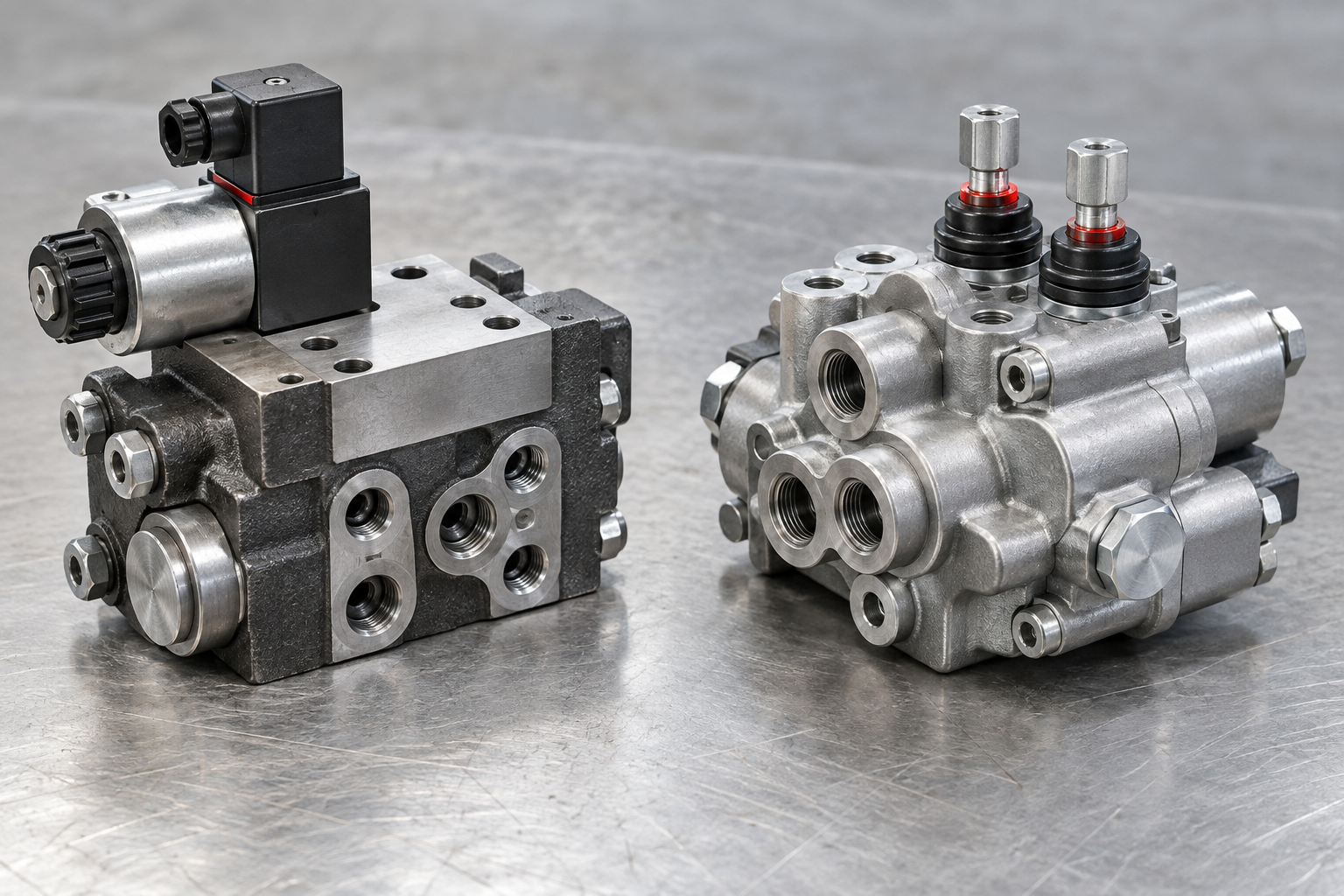
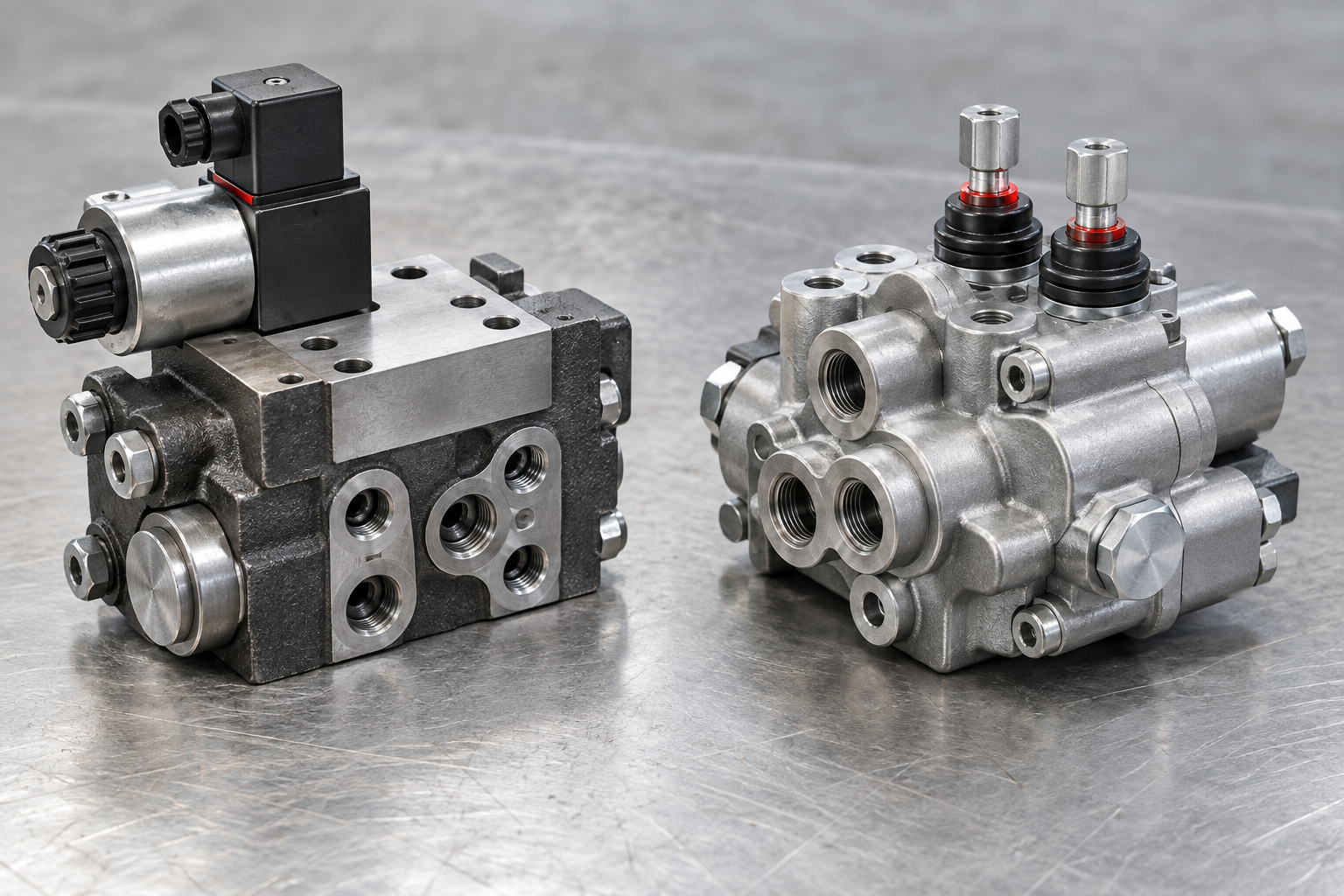
Cover image: AI-generated editorial illustration, not a model-specific product drawing or a photograph of a JIUDING facility.